Seeing red, itchy patches suddenly appear on your child’s skin can be worrying. You may wonder whether it was something they ate, a new soap, a plant they touched outside, or simply sensitive skin acting up again.
Skin reactions are common in childhood, but they do not all have the same cause. Eczema, contact dermatitis, and hives can look similar at first, yet they often need slightly different care. Some rashes are not allergies at all, which is another reason it helps to pay attention to how the rash started and what other symptoms your child has.
If you’re wondering how to handle skin allergies in kids, start with three things: keep your child comfortable, remove any suspected trigger when possible, and watch for signs that the reaction needs medical attention.
Quick Answer: How Do You Treat Skin Allergies in Kids?
Managing skin allergies in children usually starts with identifying possible triggers, keeping the skin moisturized, avoiding irritating products, and using appropriate treatments recommended by a healthcare professional. The right approach depends on whether the reaction is eczema, contact dermatitis, hives, or another skin condition.
What Do Skin Allergies Look Like in Children?
A skin allergy happens when the skin reacts to an allergen or another substance that triggers an immune response. However, irritation, infections, heat, and other childhood skin conditions can also cause rashes, so appearance alone does not always tell you the cause.
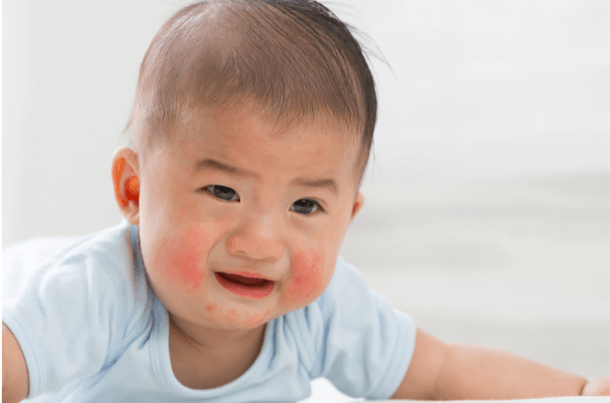
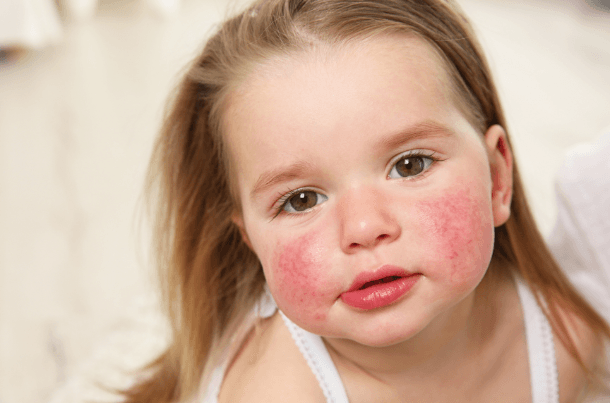
Depending on the reaction, you might notice itching, raised bumps, dry or cracked patches, redness or discoloration, swelling, or small blisters.
The location and timing can offer useful clues. A rash exactly where a bracelet or skin product touched your child’s skin, for example, may suggest contact dermatitis. Raised itchy welts that appear suddenly and move around the body are more typical of hives.
Skin Allergy vs Other Childhood Rashes
Many childhood rashes can look similar at first, which can make it difficult for parents to know whether they are seeing an allergy, irritation, or another skin condition. Looking at symptoms, possible triggers, and how the rash behaves over time can provide helpful clues.
| Feature | Skin Allergy | Other Rashes |
|---|---|---|
| Itching | Very common | May or may not occur |
| Trigger | Often linked to an allergen or irritant | Can be caused by infections or other conditions |
| Appearance | Redness, bumps, hives, or dry patches | Depends on the cause |
| Repeated episodes | May happen with the same trigger | Varies |
However, appearance alone cannot always identify the cause of a rash. If a rash is persistent, severe, spreading, or accompanied by other symptoms, a healthcare professional can help determine the reason.
Common Skin Allergies in Kids
Understanding the most common skin reactions in children can help you notice important differences in symptoms, possible triggers, and how the rash behaves. This makes it easier to know when gentle home care may be enough and when your child may need medical advice.
1. Eczema
Eczema, also known as atopic dermatitis, is especially common in children. It causes dry, sensitive and intensely itchy areas of skin. In babies, eczema commonly affects the face, while older children may develop patches around the elbows, wrists, knees and other skin folds.
You may notice:
Dry or rough skin, itchy patches, redness or changes in skin color, cracking, thickened skin from repeated scratching, or crusting and oozing when the skin becomes irritated or infected.
Eczema can flare because of dry skin, heat and sweating, fragrances, irritating skin products, certain fabrics and other environmental triggers. Food is sometimes involved, particularly in certain children with severe eczema, but parents should not automatically eliminate foods from a child’s diet without discussing it with their pediatrician.
Skin Allergies in Babies
Babies have delicate skin that can react easily to irritants, fragrances, fabrics, heat, and other triggers. Eczema is one of the most common skin conditions in infants, often appearing as dry, itchy patches on the face or body.
Not every dry or flaky patch on a baby’s skin is caused by an allergy. Newborns, for example, commonly experience skin peeling during the first few weeks
Because babies cannot always communicate discomfort, parents may notice signs such as increased scratching, redness, dryness, or changes in the skin’s texture. Any rash in a young baby that is severe, spreading quickly, or accompanied by fever or unusual behavior should be discussed with a healthcare professional.
How to Handle Eczema in Kids
Daily gentle skin care is one of the most important parts of eczema management.
Use lukewarm rather than hot water for baths, keep bathing relatively short, avoid harsh scrubbing, and choose gentle fragrance-free cleansers. After bathing, gently pat the skin dry and apply a thick fragrance-free moisturizer while the skin is still slightly damp.
Creams and ointments generally provide better moisture than thin lotions for children with very dry eczema-prone skin. Keeping fingernails short may also reduce skin damage caused by scratching.
If eczema remains inflamed, your child’s doctor may recommend a topical medicine such as a corticosteroid or another eczema treatment. These medications should be used according to the child’s treatment plan rather than applying stronger products without medical guidance.
2. Contact Dermatitis
Sometimes the problem is not something your child ate but something that touched their skin.
Contact dermatitis develops when the skin reacts to an irritant or allergen. Common triggers can include soaps, detergents, fragrances, skin-care products, nickel jewelry and plants such as poison ivy.
The rash may appear as:
Itchy or irritated skin, dry and cracked patches, discoloration, swelling or small blisters.
Unlike hives, contact dermatitis often stays concentrated around the area that came in contact with the offending substance.
How to Handle Contact Dermatitis
The first step is to identify and stop exposure to the suspected trigger.
If your child’s skin has recently come in contact with something irritating, gently wash or rinse the area rather than aggressively scrubbing it. Switch to mild, fragrance-free skin products while the skin recovers.
A cool compress can also feel soothing when the skin is itchy.
If the rash keeps returning, covers a large area, becomes severe or you cannot identify what is causing it, your pediatrician or dermatologist may recommend further evaluation. Avoiding the substance responsible for contact dermatitis is an important part of preventing future reactions.
3. Hives
Hives, also called urticaria, usually look like raised, itchy welts or patches. They may suddenly appear in one area and later show up somewhere else.
Although parents often associate hives with food allergies, allergies are not the only possible cause. In children, hives can also occur with viral infections, medicines, insect bites, heat, cold, pressure and other triggers. Sometimes no obvious trigger can be found.
Individual hives often disappear and new ones may develop elsewhere.
How to Handle Hives in Kids
Try to keep your child from scratching because scratching and rubbing can further irritate the skin.
A cool compress can provide temporary relief from itching. Gentle fragrance-free cleansers and loose, soft clothing may also reduce irritation.
Antihistamines are commonly used to manage hives, but the right medicine and dose depend on your child’s age, weight, medical history and symptoms. Ask your pediatrician or pharmacist before giving a new allergy medication, particularly to babies or young children.
If your child repeatedly develops hives, keeping a simple record of meals, medicines, illnesses, activities and products used before the rash appeared may help you and your child’s doctor identify possible patterns.
4. Hives With Swelling
Hives can sometimes occur along with deeper swelling known as angioedema.
It may be especially noticeable around the eyelids, lips, face, hands, feet or other soft tissues.
Mild localized swelling should still be watched carefully because an allergic reaction can sometimes progress.
Swelling involving the tongue or throat, difficulty breathing or swallowing, wheezing, faintness or other serious symptoms requires immediate emergency attention.
Common Skin Allergy Triggers in Children
Different children react to different things, so there is no single trigger parents need to eliminate.
Possible triggers include soaps and detergents, fragrances, cosmetics or skin-care products, nickel, certain plants, medicines, insect bites or stings, latex and certain foods.
Heat and sweating may aggravate eczema or hives in some children as well.
The goal is not to remove dozens of foods and household products “just in case.” Instead, look for a consistent relationship between exposure and symptoms and discuss recurring reactions with your child’s healthcare professional.
Understanding how to handle skin allergies in kids also means learning to recognize recurring triggers without unnecessarily restricting foods or everyday activities.
How to Handle Skin Allergies in Kids at Home
When the reaction appears mild and your child otherwise seems well, gentle skin care can make them much more comfortable.
Start by removing a suspected new product or irritant. Keep baths lukewarm, choose fragrance-free products and avoid aggressively rubbing the rash.
A cool damp cloth can help calm itching. For dry or eczema-prone skin, regularly applying a thick fragrance-free moisturizer helps support the skin barrier. Soft cotton clothing can also be more comfortable than rough or tight fabrics.
Try to discourage scratching whenever possible. Scratching can damage the skin, intensify the itch-scratch cycle and increase the chance of infection.
For recurring reactions, take photos and note when the rash started, what your child had eaten, any medicine they had taken, recent illnesses, outdoor activities and any new soap, lotion, sunscreen, detergent or clothing they used.
That information can be surprisingly useful during a medical appointment.
What Should You Avoid Doing?
One of the biggest mistakes is assuming every childhood rash is an allergy.
Viral illnesses and several other skin conditions can cause rashes that resemble allergic reactions. If you are unsure what you are looking at, especially when your child is sick at the same time, getting medical advice is safer than repeatedly trying different allergy treatments.
Also avoid removing major foods such as milk, eggs, wheat or other important parts of your child’s diet simply because eczema has appeared. Food allergy testing and elimination diets are most helpful in selected situations and should be discussed with the child’s healthcare professional.
Do not use another family member’s prescription cream or assume that a stronger steroid cream will clear the rash faster. The correct treatment depends on the type of rash, its location and your child’s age.
When Should You Call Your Child’s Doctor?
Contact your pediatrician when the rash is persistent, severe or repeatedly returns without an obvious explanation.
Medical advice is also important if the skin becomes increasingly painful, warm, swollen, crusted or starts producing pus or fluid. These can be signs of a skin infection, particularly in a child who has been scratching eczema.
You should also speak with your child’s healthcare professional if the rash started soon after a new medication or repeatedly appears after eating the same food.
Children with severe or difficult-to-control eczema may sometimes need evaluation by a dermatologist or allergy specialist.
When Is a Skin Allergy an Emergency?
Most skin rashes are uncomfortable rather than dangerous, but sometimes skin symptoms are part of a serious allergic reaction called anaphylaxis.
Get emergency medical help if your child develops symptoms such as trouble breathing, wheezing, throat or tongue swelling, difficulty swallowing, fainting or loss of consciousness, especially after eating a food, taking medicine or being stung by an insect. Anaphylaxis can occur even without obvious hives.
If your child has previously been prescribed epinephrine for severe allergies, follow their allergy action plan and use epinephrine when the plan indicates it is needed. Antihistamines should not be used as a substitute for epinephrine during anaphylaxis.
How Can Parents Help Prevent Future Skin Reactions?
Learning how to handle skin allergies in kids includes preventing future reactions whenever possible. Once you know what causes your child’s skin reaction, prevention becomes much easier.
Use simple fragrance-free skin products if your child has sensitive or eczema-prone skin. Keep their skin moisturized, particularly after bathing. Wash new clothing before use and consider soft fabrics when rough materials make eczema worse.
If a specific product repeatedly causes a rash, stop using it and check its ingredients so you can recognize similar products in the future.
Children with diagnosed food, medication or insect-sting allergies should have an allergy management plan created with their healthcare professional. Make sure other caregivers, schools and family members understand your child’s known triggers and what to do if a reaction occurs.
Frequently Asked Questions
Can food allergies cause a skin rash in children?
How do I know whether my child’s rash is an allergy?
What is the best thing to put on an allergic skin rash?
Should I give my child antihistamine for a skin allergy?
How long does a skin allergy last in kids?
Can skin allergies go away in children?
Final Thoughts
Learning how to handle skin allergies in kids starts with recognizing the type of reaction and keeping your child’s skin as comfortable as possible.
Gentle skin care, regular moisturizing, avoiding known triggers and preventing scratching can help with many mild reactions. At the same time, persistent or frequently recurring rashes deserve medical evaluation rather than repeated home treatment.
And if a skin reaction comes with trouble breathing, throat or tongue swelling, fainting or other signs of anaphylaxis, treat it as an emergency.
Trusted Resources for Parents
For more detailed information about children’s skin conditions, eczema, and skin allergies, parents can explore these reliable medical resources:
Cleveland Clinic: Skin Conditions in Children
American Academy of Pediatrics: Eczema (Atopic Dermatitis)
Disclaimer
This article is for general educational and informational purposes only and is not a substitute for professional medical advice, diagnosis, or treatment. If your child has a persistent or severe rash, signs of skin infection, swelling, breathing difficulty, throat or tongue swelling, fainting, or other concerning symptoms, contact a pediatrician or another qualified healthcare professional. Severe allergic reactions require immediate emergency medical care.
About the Author
Geeta Yogi writes practical, parent-friendly content about children’s health, skin care, allergies, development, and everyday family wellbeing. She focuses on helping parents understand common childhood skin reactions, recognize possible triggers, support sensitive skin with gentle care, and know when symptoms may require professional medical attention.