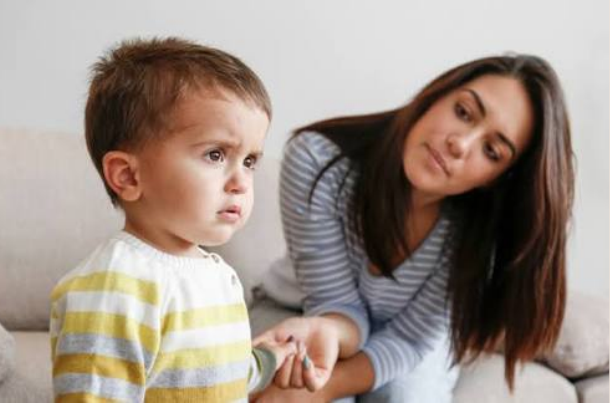
4 Year Old Not Talking can be worrying for parents, especially when you are unsure whether your child simply needs more time or may need extra support. Children develop at different rates, but by age four, spoken language usually plays a much bigger role in everyday communication.
Children do develop at different rates, and comparing one child with another is rarely helpful. Still, by age four, spoken language usually plays a much bigger role in everyday communication. According to the CDC, most children at this age can say sentences containing four or more words, answer simple questions and talk about at least one thing that happened during their day.
That does not mean every four-year-old will speak in exactly the same way. It does mean that a child who is saying very few words, or is not using spoken words at all, deserves a closer look rather than simply waiting and hoping speech will appear on its own.
The goal is not to put a label on your child. It is to understand how they currently communicate and find out what type of support, if any, could help.
Quick Answer: Should I Worry If My 4-Year-Old Is Not Talking?
A four-year-old who is not talking, uses only a few words, or has difficulty understanding everyday language should be discussed with a pediatrician or qualified child-development professional. There can be many reasons for delayed speech or language, so an evaluation may include hearing, communication, and overall development rather than assuming a specific diagnosis.
What Should Speech and Language Look Like at Age 4?
Before talking about speech delay in a 4 year old, it helps to understand that speech and language are related but are not exactly the same thing.
Speech refers to the way a child produces sounds and words. A child may know exactly what they want to say but have difficulty producing certain sounds clearly.
Language, on the other hand, includes understanding words and sentences and using words, gestures or other forms of communication to share ideas, needs and feelings.
This difference matters because two children who are both described as “not talking” can have very different needs. One child may understand almost everything, use gestures effectively and attempt many sounds but struggle to form clear words. Another child may have difficulty understanding spoken instructions as well as expressing themselves.
By age four, many children can have short back-and-forth conversations, use sentences, answer everyday questions and tell a parent something about what they did earlier. These are developmental milestones rather than a test that every child must pass on an exact birthday.
So a missed milestone does not tell you why a child is delayed. It simply tells you that it may be time to ask more questions.
| Speech Delay | Language Delay |
|---|---|
| Difficulty producing sounds or words clearly | Difficulty understanding or using language |
| Child may know what they want to say | Child may struggle to form or understand messages |
| Speech sounds may be hard to produce | Vocabulary, sentences or comprehension may be affected |
| Speech-language assessment can identify the specific difficulty | Assessment can examine both understanding and expression |
Is a 4 Year Old Not Talking Something to Worry About?
A four-year-old who is not talking at all should be discussed with a pediatrician or another qualified child-development professional.
This does not automatically mean that the child has autism, a neurological condition or any other specific diagnosis. There are many possible explanations for delayed communication, and an appropriate evaluation looks at more than the number of words a child says.
Professionals may consider how well the child understands language, whether they respond to sounds, how they use gestures, how they play and interact with other people, whether they try to imitate sounds, and whether other areas of development are progressing as expected.
The National Institute on Deafness and Other Communication Disorders recommends talking with a child’s doctor when there are concerns about speech or language development. A child may be referred to a speech-language pathologist, and a hearing test is often included because hearing problems can affect speech and language development.
This is why “wait until school starts” is not usually the most helpful approach when a four-year-old has little or no spoken language.
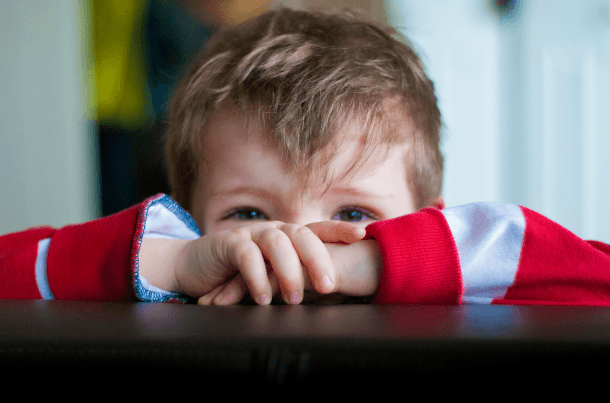
Possible Reasons a 4-Year-Old May Not Be Talking
When a 4 year old is not talking, there is rarely one explanation that applies to every child. In some children, the difficulty mainly affects language, while in others it may be connected with hearing, speech production, or a broader developmental difference.
Hearing difficulties
Children learn spoken language partly by listening to the speech around them. If sounds are not reaching a child clearly, learning to recognize and reproduce words may become more difficult.
Hearing differences are not always obvious to parents. A child may react to loud noises or appear to hear some sounds while still having difficulty hearing speech clearly. Temporary hearing changes can also occur with middle-ear fluid associated with colds or ear infections.
For this reason, a hearing assessment can be an important part of evaluating a child with significant speech or language delay.
Developmental language difficulties
Some children have persistent difficulty learning and using language even when there is no obvious hearing problem or another condition explaining the difficulty. Developmental Language Disorder, or DLD, is one example.
Children with DLD may have been late to begin talking and can continue to find vocabulary, sentence formation, understanding language or conversation more difficult than expected for their age. Not every late talker has DLD, so this is something that needs professional assessment rather than self-diagnosis.
Speech or oral-motor difficulties
Sometimes a child knows what they want to communicate but has difficulty coordinating the movements needed for speech or producing speech sounds clearly.
Speech involves extremely precise coordination of the lips, tongue, jaw, breath and voice. Different speech disorders can affect this process in different ways. A speech-language pathologist can assess whether the main challenge appears to involve language, speech sounds, motor planning or another area of communication.
Autism or other developmental differences
Delayed spoken language can occur in some autistic children, but speech delay by itself does not diagnose autism.
When professionals consider autism, they look more broadly at social communication and patterns of behavior. For example, they may consider how a child shares attention with other people, uses gestures, responds socially, plays and communicates both verbally and nonverbally.
If your child has a language delay together with differences in social interaction, play, repetitive behaviors or other aspects of development, mention those observations to their pediatrician. The aim is not to attach a label quickly but to understand the child’s overall developmental picture.
Broader developmental or neurological conditions
In some cases, delayed language occurs alongside delays in movement, learning, social development or other skills. A healthcare professional may therefore ask about the child’s complete developmental and medical history instead of looking at speech in isolation.
Further assessment may be recommended when there are concerns outside communication as well.
Signs That Should Prompt an Evaluation
Parents do not need to diagnose the cause themselves. What matters is noticing communication patterns and sharing them clearly with a professional.
Speak with your child’s healthcare provider particularly if your four-year-old:
- is using no spoken words or only a very small number of words;
- rarely combines words into meaningful phrases or sentences;
- seems to have difficulty understanding simple everyday language;
- frequently appears not to hear or respond to sounds or their name;
- relies almost entirely on pulling, crying or other actions to communicate needs;
- has significant difficulty interacting or communicating with other people;
- or has lost words, social skills or other abilities they previously used.
A loss of previously learned skills is especially important to take seriously. If your child stops using words or abilities they once had, it is best to speak with a healthcare professional rather than waiting to see if the skills return on their own.
What Should Parents Do If Their 4-Year-Old Is Not Talking?
Start by sharing your concerns with your child’s pediatrician. Bring specific examples of the words, sounds, gestures, and instructions your child currently uses or understands. Your healthcare provider may recommend a hearing test, a speech-language evaluation, or a broader developmental assessment depending on what they observe.
You do not need to determine the cause yourself before asking for help. The purpose of an evaluation is to understand your child’s individual communication strengths and identify where additional support may be useful.
What Happens When a 4-Year-Old Is Evaluated for Speech Delay?
An evaluation is much more than asking your child to say a list of words.
Your pediatrician may first discuss pregnancy and birth history, medical conditions, ear infections, family history, developmental milestones and what you currently notice at home. Depending on those findings, further developmental assessment may be recommended.
A hearing evaluation may also be arranged. Even when parents feel that their child can hear, checking hearing can help rule out a factor that could be interfering with language development.
A speech-language pathologist may then look at how your child understands language, communicates needs, uses gestures, produces sounds and words, participates in play and responds during interaction. The exact assessment varies depending on the child.
Most importantly, evaluation is not about comparing your child negatively with other children. It is about finding their current communication strengths and identifying the areas where they may need additional support.
How to Help a 4-Year-Old Talk at Home
Professional support and everyday family interaction can work alongside one another. Home activities do not need to feel like formal lessons.
Simple daily interaction can make communication practice feel much less stressful. You can also try these speech exercises for toddlers
Talk about what your child is already doing
Instead of constantly asking your child questions such as “What is this?” or “What color is that?”, describe what is happening.
If your child is pushing a toy car, you could say, “The car is going fast,” or, “Red car goes up.” If they are eating a banana, you might say, “You’re eating banana. Yummy banana.”
Simple, repeated language gives the child many opportunities to connect words with actions and objects.
Build on whatever your child already communicates
Communication does not begin only when a child says a perfect word.
If your child points toward the fridge, you might respond, “You want water,” before giving them the drink. If they say “car,” you can naturally expand it to “blue car” or “car is going.”
You are giving them a slightly richer language model without turning the interaction into a test.
Give your child time to respond
Adults often fill quiet moments quickly. A child who is learning to communicate may need more processing time.
After saying something or offering a choice, pause for several seconds. Watch for a word, sound, gesture, facial expression or point. Respond to the communication attempt rather than insisting that the child must repeat a particular word before receiving what they need.
Read together without making reading a quiz
Books create natural opportunities for language, but you do not need to read every sentence exactly as written.
Look at pictures together. Comment on what the characters are doing. Make animal noises. Predict what might happen next. If your child points to a dog, you can say, “Yes, a dog! The dog is running.”
Shared reading works best as interaction, not an examination.
Use songs, routines and repetitive phrases
Children often hear the same language repeatedly during everyday routines. Bath time, meals, getting dressed, cleaning toys and bedtime all provide opportunities to use simple phrases again and again.
Songs and nursery rhymes can also make sounds and words predictable. You can occasionally pause before a familiar word and allow your child an opportunity to make a sound, gesture or word before continuing.
Make space for face-to-face play
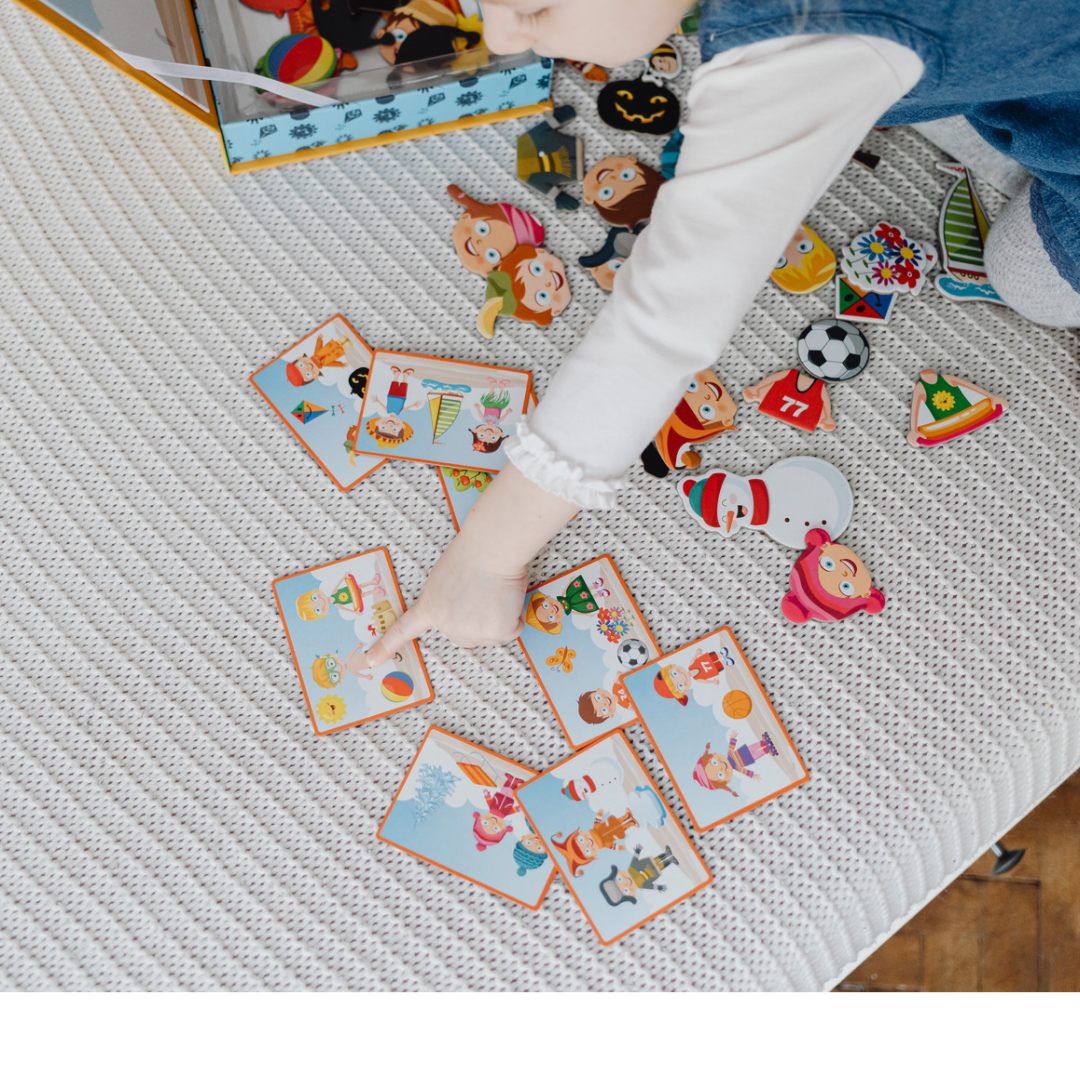
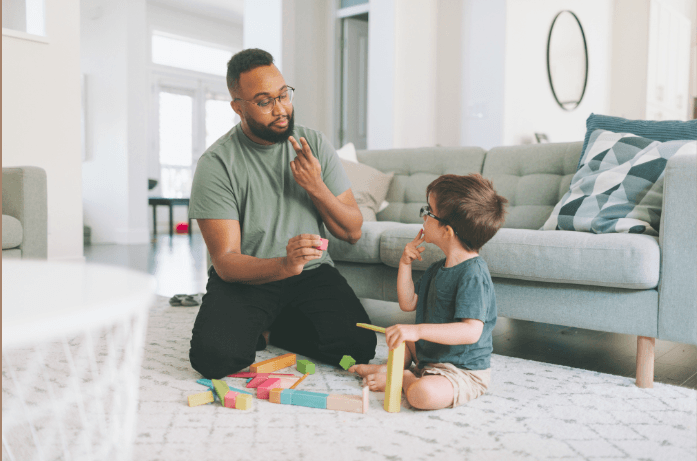
Blocks, toy animals, pretend cooking, puzzles, outdoor play and other shared activities naturally create reasons to communicate.
Instead of directing every part of the game, join what your child is already interested in. If they are stacking blocks, talk about “up,” “more,” “fall down” and “big tower.” Language becomes more meaningful when it connects with something the child is enjoying.
What Parents Should Avoid
One of the hardest parts of having a child with delayed speech is resisting the urge to turn every interaction into practice.
Repeatedly saying “Say ball. Say ball. Come on, say ball” can make communication feel demanding. Modeling the word naturally, “Ball! You found the ball”, keeps the interaction more relaxed.
Similarly, avoid comparing your child aloud with siblings, cousins or classmates. Children have different developmental profiles, and comparison does not explain why a particular child is having difficulty communicating.
Parents also should not be made to feel that a speech delay exists simply because they did not “talk enough” to their child. Communication development is complex. When a four-year-old has a significant delay, the useful question is not who is to blame, it is what the child needs now.
Can a 4-Year-Old With Speech Delay Catch Up?
Some children with earlier language delays make substantial progress, while others continue to need language or speech support. There is no reliable way to determine a particular child’s outcome simply from an online description.
The child’s understanding of language, social communication, hearing, developmental history and nature of the speech or language difficulty all matter.
What parents can control is how quickly concerns are addressed. Professional organizations recommend assessment when speech or language development is concerning rather than depending solely on a “wait and see” approach.
Support can then be tailored to the individual child instead of using the same exercises for every late talker.
When Should You Talk to a Pediatrician?
If your 4 year old is not talking, is speaking only a few words, has difficulty understanding everyday language, or you feel their communication is not progressing as expected, bring the concern to their pediatrician.
You can ask whether your child needs a hearing test, speech-language evaluation or broader developmental assessment.
If someone tells you to “just wait,” but you continue to be concerned, it is reasonable to ask what developmental milestones they are using to make that recommendation and whether an assessment would help clarify the situation.
Parents notice their child’s everyday communication more closely than anyone else. Sharing specific examples, such as the words your child uses, instructions they understand, gestures they make and changes you have noticed, can help professionals understand the situation much better.
Frequently Asked Questions (FAQs)
Is It Normal for a 4-Year-Old Not to Talk?
Why Is My 4-Year-Old Not Talking but Understands Everything?
Does Speech Delay Always Mean Autism?
Should a 4-Year-Old With Speech Delay Have a Hearing Test?
Can a 4-Year-Old With Speech Delay Catch Up?
A Final Word for Parents
Seeing other four-year-olds chatting, asking endless questions and telling stories can make it especially worrying when your own child is not yet talking.
Try to remember that the next step is not to guess the diagnosis from symptoms you read online.
A 4 year old not talking may need support for a variety of reasons, including hearing difficulties, a speech or language disorder, or a broader developmental difference. A proper evaluation can help identify what is happening and what kind of support is appropriate.
In the meantime, keep communication warm and enjoyable. Talk during everyday routines, respond to gestures and sounds, read together, follow your child’s interests and notice every genuine attempt they make to connect with you.
The aim is not to pressure a child into talking. It is to give them plenty of safe, meaningful opportunities to communicate while making sure they receive professional support when they need it.
This article is for educational purposes and is not a substitute for evaluation or medical advice from your child’s pediatrician, audiologist, speech-language pathologist or other qualified healthcare professional.
Helpful Resources for Parents
- University of Utah Health: Child Not Talking Yet? When to Worry About a Speech Delay
- The Hanen Centre: How to Tell if Your Child Is a Late Talker – and What to Do About It
- Johns Hopkins Medicine: Identifying Speech and Language Concerns About Your Child and When to Seek Help
Disclaimer
This article is for educational purposes and is not a substitute for evaluation or medical advice from your child’s pediatrician, audiologist, speech-language pathologist or other qualified healthcare professional.
About the Author
Geeta Yogi writes practical, parent-friendly content about child development, speech and language milestones, communication, learning, and everyday parenting concerns. She focuses on helping parents understand developmental differences, support communication through simple daily interactions, and recognize when professional evaluation may be helpful.