
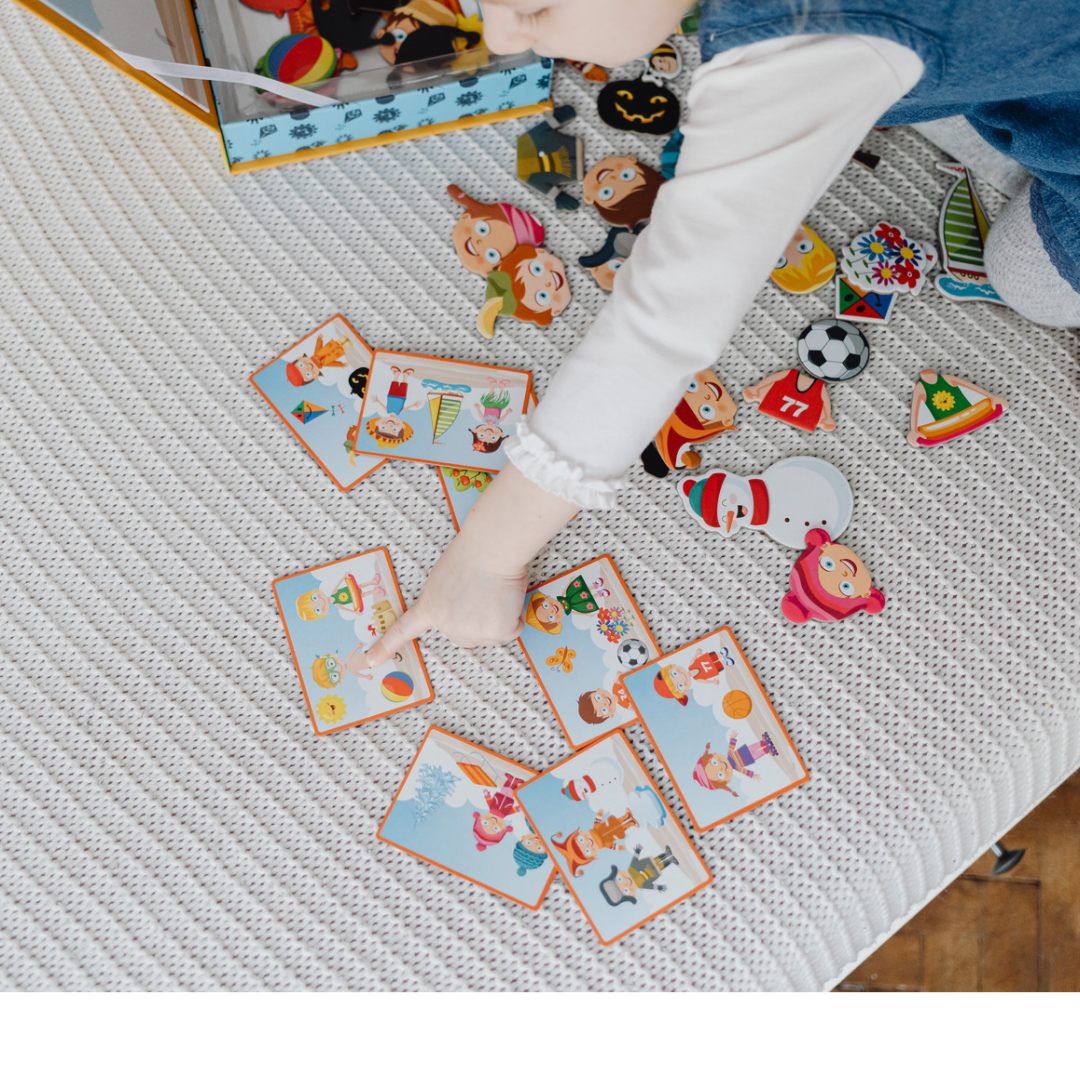
Stickers may not look like much, but they can keep little hands surprisingly busy. Peeling them from the sheet, deciding where they should go, and pressing them into place all take a bit of concentration and coordination. There is plenty of room for talking too, about colours, shapes, animals, places or whatever happens to be on the page.
Why sticker play suits toddlers so well
For older toddlers and preschoolers who meet the product’s age guidance, sticker play can fit well into short bursts of focused activity. There is no drying time or cutting involved, although younger children may still need supervision depending on the size of the stickers and the product instructions.
The physical side matters too. Peeling a sticker from a sheet and pressing it into place uses the thumb and index finger together, giving children practice with the small hand movements involved in many everyday tasks. Simple craft activities can also support learning through play by giving children opportunities to explore, make choices, and use their imagination.
Safety first with small hands
- Check the age guidance on each pack, as recommended ages and piece sizes vary by product.Parents should also keep small sticker and craft pieces away from children under 3, since small parts can pose a choking hazard.
- Keep sticker play at a table rather than on the floor, mainly so small pieces do not end up where a crawling baby can find them.
- Peel up one corner of a stubborn sticker to get a toddler started, then let them take over.
- Store full sheets flat, because a bent sheet is harder to peel than a flat one.
How to Set Up Sticker Play at Home
Scene cards. These are an easy place to start because the child is not facing a completely blank page. A typical set comes with a background scene and a few sheets of stickers, so there is already a little world to add to. Toddlers can move the pieces around, decide what belongs where and build up the picture at their own pace.
Washi tape roads. Two strips of washi tape across the table can become a road in about thirty seconds. Add a few toy cars and that is often enough to get the game going. Masking tape works too, and both are handy because they can usually be lifted away again when the play is finished.
Sticker stories. This one needs almost no set-up. Let your child choose a few stickers, place them on a page and tell you what is happening. The story may end up being about a cat on a bus or a dinosaur at the supermarket, but that is part of the fun. They get to make up a story in their own way, without it feeling like an activity they have to get “right.”
What to buy first
- A deco scene sticker set, because the folded card gives the play a structure.
- A sheet of 3D or Puffy or raised stickers may be easier for some children to pinch and lift than very thin paper stickers.
- One roll of washi tape, which covers both the road game and decorating a finished page.
- A blank notebook or journal to stick finished work into, so pages do not end up loose around the house.
Illustrated sticker sheets are worth a mention for a different reason. More detailed illustrated sticker sheets may appeal to older children who enjoy decorative scenes, journaling, or more intricate designs.
Keeping the mess contained
- Give each child a shallow tray and one sheet at a time. The whole box at once is the fastest route to stickers on the wall.
- Keep the backing sheet and use it to store part used stickers, since they can be re-peeled later.
- Finish with a two minute tidy where the child puts the peels in the bin. It becomes part of the activity rather than a punishment after it.
How long should it last?
Ten to twenty minutes is a realistic span for a toddler, and two short sessions beat one long one. If your child is still working after twenty minutes, let them keep going. If they have wandered off after five, put the tray away and try again tomorrow with a different scene card.
Making Use of Leftover Stickers
Leftover stickers make good gift decorations, page markers for library books and labels on storage boxes. Offcuts from washi tape can be layered along the edge of a card. Nothing needs to be thrown out, which matters when a set of sheets has four or five stickers left over.
The quiet craft supplies range is arranged by type, including deco scene sets, 3D puffy stickers, washi tape and sticker sheets, so it is easy to start with one set and add to it later.
Sticker play with more than one child
Two children and one set of sheets is a negotiation. Give each child their own scene card and their own tray, then split the sheets evenly before anyone starts rather than refereeing a shared pile. Hand the detailed sheets to the older child and the large puffy stickers to the younger one, which keeps the difficulty roughly matched and the arguments short.
Storing what is left
A simple folder is usually enough to keep half-used sticker sheets from disappearing. I slip them back onto the backing paper, tuck each one into a plastic sleeve and keep everything together in a ring binder.
It is surprisingly useful on a rainy afternoon. Instead of digging through drawers or buying something new, children can flip through the folder, see what is there, and pick whatever catches their eye. Quite often, that is all it takes to get them interested again.
When they are ready for something different, try a few more indoor activities for toddlers to keep the afternoon playful with simple supplies you already have at home.