

Watching your baby grow is full of exciting little milestones, and that first tiny tooth is one of them. But before it appears, you may notice extra drooling, chewing, fussiness, or restless nights and wonder what is going on.
Baby teething symptoms often begin before a tooth becomes visible. Common signs include sore or swollen gums, increased drooling, chewing on anything within reach, mild irritability, and changes in sleep. Some babies hardly seem bothered at all, while others need a little more comfort during this stage.
Understanding what is normal, and what may point to an illness instead, can make the teething stage feel much less confusing.
Quick Answer: What Are the Most Common Baby Teething Symptoms?
Common baby teething symptoms include increased drooling, chewing, tender or swollen gums, mild fussiness, and temporary sleep changes. Teething should not cause significant illness, so symptoms such as true fever, persistent diarrhea, repeated vomiting, or unusual lethargy should not automatically be blamed on teething.
What Is Teething?
Teething is the natural process of a baby’s first teeth moving through the gums and becoming visible.
Every baby experiences this stage a little differently. Some seem hardly bothered, while others may have tender gums, extra drooling, or need more comfort as a tooth begins to emerge.
So if another baby already has two tiny teeth while yours still has a gummy smile, there usually is no reason to compare. Teething timelines can vary quite a bit.
When Do Babies Start Teething?
Most babies begin teething sometime during the first year, often around 4 to 7 months of age. For many babies, the first tooth appears close to 6 months, although the timing can vary and some may start a little earlier or later.
However, your baby may show early signs of teething before you can actually see a tooth. You might notice more drooling, chewing, or gum sensitivity before that little white edge finally appears.
Some babies start earlier, while others may not get their first tooth until after their first birthday. Teething timelines can vary quite a bit, so there is usually no need to compare your baby’s progress with another child’s.
What matters more than comparing dates is watching your baby’s overall growth and development.
10 Common Baby Teething Symptoms
Not every baby experiences every symptom. Some seem completely comfortable, while others become noticeably more unsettled for a few days around the time a tooth comes through.
Here are some of the most common baby teething symptoms parents may notice.
1. Increased Drooling
Suddenly changing bibs all day? Extra drooling is one of the classic signs parents associate with teething.
You may notice saliva around your baby’s mouth, chin, clothes, or even chest. Keeping the skin gently clean and dry can help reduce irritation.
2. Sore or Swollen Gums
The gum around an emerging tooth may look slightly red, swollen, or tender.
Your baby may seem especially interested in pressing toys or fingers against that area because the pressure can feel comforting.
3. Chewing on Everything
During teething, your baby’s favorite activity may suddenly become chewing.
Hands, toys, spoons, bibs, and sometimes your shoulder, can all become targets. Providing a safe, age-appropriate teether gives your little one something suitable to gnaw on.
4. More Fussiness Than Usual
Some babies become a little more irritable when their gums are tender.
They may want to be held more often, become impatient during play, or need extra help settling.
However, significant or persistent crying should not automatically be blamed on teething. The AAP advises parents to consider illness or another cause when crying is more intense or frequent than usual.
5. Trouble Sleeping
A baby who normally settles easily may suddenly have a few restless nights.
Tender gums can make it harder to relax, particularly when a tooth is close to emerging.
Keep the normal bedtime routine as consistent as possible and offer comfort when your baby needs it.
Keep the normal bedtime routine as consistent as possible and offer comfort when your baby needs it. If restless nights are becoming a challenge, these baby sleep routine tips can also help you create a calmer, more predictable bedtime routine.
6. Rubbing the Cheek
Some parents notice their baby rubbing one side of the face while teething.
Because the gums, jaw, and cheek are close together, discomfort around an emerging tooth may make babies touch or rub the area.
7. Pulling or Rubbing the Ear
Some babies may pull or rub their ears while teething, especially when they are also drooling more, chewing on things, or dealing with sore gums. This can happen because discomfort in the gums and jaw may sometimes be felt around the nearby ear area.
However, ear pulling does not always mean teething. If your baby also has a fever, significant pain, ear drainage, trouble sleeping, or seems unwell, it is best to check with their pediatrician rather than assuming teething is the cause.
8. A Rash Around the Mouth or Chin
Extra saliva sitting on delicate skin can sometimes lead to redness or irritation around the mouth and chin.
This is often called a teething rash, although the irritation is usually from frequent drooling rather than the tooth itself. The AAP notes that saliva and food particles around the mouth can irritate sensitive skin.
Gently pat the area dry instead of rubbing it repeatedly.
9. Changes in Feeding
Tender gums can sometimes make feeding feel different.
Teething can temporarily make feeding uncomfortable, but not every feeding difficulty is caused by sore gums. If feeding continues to be challenging, learning about other common baby feeding problems can help you understand what may be going on and when to seek support.
One baby may want to nurse more often for comfort, while another may temporarily seem less enthusiastic because sucking or chewing puts pressure on sore gums.
If your baby is consistently refusing feeds, drinking much less than usual, or showing signs of dehydration, contact your pediatrician.
10. Wanting More Comfort
Sometimes the biggest teething sign is simply that your baby wants you more.
Extra cuddles, rocking, gentle play, and reassurance can make an uncomfortable day easier. Teething is temporary, even when a difficult night makes it feel endless.
Does Teething Cause Fever?
This is one of the most common questions parents have.
Some babies may have a slight temperature rise around the time of teething, but a temperature of 38°C (100.4°F) or higher should not simply be attributed to teething.
If your baby has a true fever, especially if they are very young, unusually sleepy, feeding poorly, having breathing difficulties, or showing other concerning symptoms, contact their healthcare professional for advice.

Can Teething Cause Diarrhea or Vomiting?
Teething and diarrhea are often linked in parenting conversations, but medical guidance does not support diarrhea as a normal teething symptom.
Vomiting should not automatically be blamed on teething either.
Babies naturally put many things in their mouths during this stage, so an infection can sometimes happen at roughly the same time as teething. That timing can make the two seem connected even when they are not.
If your baby develops persistent diarrhea, vomiting, signs of dehydration, or seems unwell, contact your pediatrician.
Teething Rash: Why Does It Happen?
All that adorable drool can be surprisingly irritating to sensitive baby skin.
A teething-related facial rash usually develops because saliva repeatedly sits on the skin around the lips, cheeks, or chin.
You can help by gently patting away excess drool with a soft cloth and changing damp bibs regularly.
Avoid aggressively wiping the skin, since repeated friction may make irritation worse.
If the rash spreads, becomes severe, looks infected, or appears somewhere unexpected, ask your child’s healthcare professional to take a look.
Teething vs. Ear Infection: How Can You Tell the Difference?
This one can be tricky because babies may rub or pull their ears while teething.
With uncomplicated teething, you are more likely to see symptoms such as:
- Drooling
- Chewing
- Tender gums
- Mild fussiness
- Restless sleep
- A tooth beginning to appear
An ear infection may cause symptoms that deserve medical evaluation, such as noticeable pain, fever, drainage from the ear, or a baby who generally seems unwell.
Because babies cannot tell us where something hurts, it is always okay to call your pediatrician if you are unsure.
Baby Teething Timeline: Which Teeth Come First?
Every child’s timeline is a little different, but teeth tend to appear in a general pattern.
| Teeth | Approximate timing |
|---|
| Central incisors | Around 6 months onward |
| Lateral incisors | Around 8 months onward |
| First molars | Around 12 months onward |
| Canines | Around 18 months onward |
| Second molars | Around 24 months onward |
Think of this as a guide rather than a deadline.
How Long Does Teething Last?
Teething is not usually one continuous painful period lasting for years.
Instead, discomfort tends to come and go as individual teeth move toward and through the gums. A baby may have a few uncomfortable days, settle again, and then show similar signs when another tooth is preparing to appear.
By around age 3, most children have all 20 primary teeth.
So while the overall teething stage lasts a long time, your baby should not be constantly uncomfortable throughout it.
How to Soothe a Teething Baby Safely
You do not need complicated products to comfort sore gums. Some of the simplest methods are also the ones recommended by pediatric health authorities.
Gently Massage the Gums
Wash your hands and gently rub your baby’s sore gums with a clean finger.
The light pressure can be soothing and gives your baby something firm to press against.
The AAP and FDA both recommend gentle gum massage as a simple teething relief option.
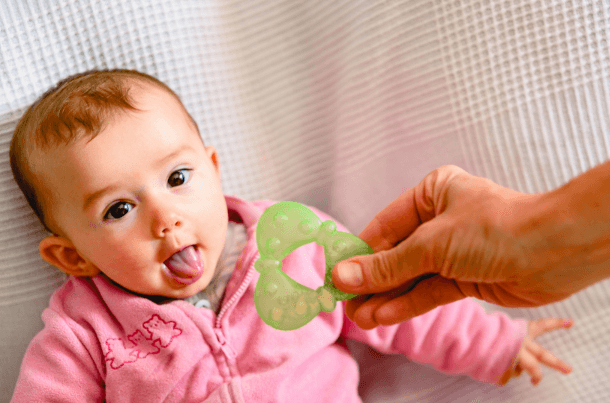
Offer a Firm Rubber Teether
A firm, baby-safe rubber teething ring can give your little one something satisfying to chew.
Always supervise your baby while using a teether and check it regularly for signs of damage.
The FDA recommends firm rather than liquid-filled teethers.
Try a Cool Washcloth
A cool, clean washcloth can feel soothing against tender gums.
Cold can offer temporary comfort, but avoid giving your baby objects that are frozen rock-solid. Very hard frozen items can hurt delicate gums.
Keep Drool Under Control
Use soft bibs and gently pat your baby’s face dry throughout the day.
Keeping the chin and mouth area reasonably dry may help prevent the irritation often called teething rash.
Offer Extra Comfort
Sometimes your baby simply needs more closeness.
A cuddle, quiet feeding, gentle rocking, or a familiar bedtime routine can provide reassurance while the discomfort passes.
What About Teething Medicine?
If your baby seems very uncomfortable, speak with your pediatrician before giving pain medicine.
Your doctor can advise whether a medication such as acetaminophen is appropriate and, importantly, tell you the correct dose based on your child’s age and weight.
Avoid guessing doses or using a product simply because it is marketed for babies.
Teething Remedies Parents Should Avoid
Not every product labeled “natural” or “for teething” is automatically safe.
Benzocaine Teething Gels
The FDA warns against using benzocaine-containing products for children’s teething pain. Benzocaine can cause methemoglobinemia, a serious condition that reduces the blood’s ability to carry oxygen.
Lidocaine Products
Lidocaine should also not be used to treat teething pain in infants and young children. The FDA reports serious risks if too much is applied or swallowed.
Homeopathic Teething Tablets or Gels
The FDA and AAP advise against relying on homeopathic teething products. Some have been associated with potentially harmful ingredients, while their benefits for teething have not been established.
Amber Teething Necklaces
Amber necklaces may look harmless, but they create choking and strangulation risks.
The FDA has received reports of serious injuries and deaths associated with teething jewelry, and the AAP advises parents not to use these products.
Frozen-Solid Teethers
A cool teether can feel nice. A frozen-solid one may become too hard and injure tender gums.
Choose chilled or appropriately cooled items instead of extremely hard frozen objects.
How to Care for Your Baby’s First Teeth
That tiny first tooth needs care from the beginning.
Before teeth appear, you can gently wipe your baby’s gums with a clean, damp washcloth or gauze.
Once the first tooth comes through, the American Dental Association recommends brushing twice daily with a child-size toothbrush and a smear of fluoride toothpaste no larger than a grain of rice for children younger than 3.
Try to make brushing part of the normal daily routine rather than something stressful.
The ADA also recommends a child’s first dental visit within six months of the first tooth appearing and no later than the first birthday.
Starting early gives you a chance to ask questions about brushing, fluoride, feeding habits, tooth development, and cavity prevention before problems begin.
When Should You Call Your Pediatrician?
Teething may make a baby a little uncomfortable, but it should not make them seriously ill.
A temperature of 100.4°F (38°C) or higher in a baby younger than 3 months requires prompt medical evaluation.
Contact your pediatrician if your baby has symptoms such as:
- Fever
- Persistent diarrhea
- Repeated vomiting
- Significant or unusual crying
- Poor feeding
- Signs of dehydration
- Difficulty breathing
- Severe lethargy or unusual sleepiness
- Significant gum swelling, pus, or bleeding
- Symptoms that are getting worse rather than improving
And remember: you do not need a perfect checklist before asking for help. If your baby’s behavior or symptoms concern you, contacting their healthcare professional is reasonable.
FAQs About Baby Teething
Can a 3-Month-Old Start Teething?
Keep in mind that drooling and hand-chewing are also common developmental behaviors at this age, so they do not always mean a tooth is about to come through.
What Teeth Usually Come in First?
Does Teething Make Babies Sleep More?
If your baby is unusually sleepy, difficult to wake, or seems unwell, it is best not to assume teething is the reason.
Can Teething Cause a Fever?
If your baby has a fever or seems unwell, look for other possible causes and contact your pediatrician if you are concerned.
Does Teething Cause Diarrhea?
Contact your healthcare professional if diarrhea continues or your baby seems unwell.
Why Does My Baby Pull Their Ear While Teething?
However, ear pulling can have other causes too. Fever, significant pain, ear drainage, or other signs of illness should be discussed with your pediatrician.
Can Teething Make a Baby Refuse Milk?
Persistent refusal to breastfeed or bottle-feed deserves attention, especially if your baby is taking much less fluid than normal or showing signs of dehydration.
How Long Do Teething Symptoms Last Before a Tooth Appears?
Every baby is different, so the timing and intensity of symptoms can vary from one tooth to the next.
Final Thoughts
Baby teething symptoms can bring a few fussy days and restless nights, but teething is a normal part of your little one’s development. Extra drooling, chewing, tender gums, and mild irritability are common, and simple comfort measures such as a cool teether, gentle gum massage, and extra cuddles can often help.
Most importantly, do not automatically blame fever, diarrhea, vomiting, or significant illness on teething. When something feels different from ordinary teething discomfort, your pediatrician can help you figure out what is going on.
Soon enough, that sore little gum may reveal a brand-new tooth, and another sweet milestone worth celebrating.
Want more simple, reassuring tips for caring for your little one? Explore our Baby Care Guides for helpful advice on feeding, sleep, development, teething, and everyday baby care.
Resources
- American Academy of Pediatrics – HealthyChildren: Guidance on teething symptoms, safe pain relief, teething products to avoid, and first-tooth care.
- U.S. Food and Drug Administration: Safety guidance on benzocaine, lidocaine, teething jewelry, and safer teething relief methods.
Disclaimer
This article is for general educational and informational purposes only and is not a substitute for professional medical or dental advice, diagnosis, or treatment. If your baby has a fever, persistent diarrhea or vomiting, poor feeding, signs of dehydration, difficulty breathing, unusual sleepiness, severe gum symptoms, or other concerning changes, contact your pediatrician or another qualified healthcare professional.
About the Author
Geeta Yogi writes practical, parent-friendly content about baby care, teething, feeding, sleep, development, and everyday parenting concerns. She focuses on helping parents understand common baby milestones and symptoms while sharing gentle, safety-conscious guidance for caring for little ones through each stage of growth.