Looking for quick activities that can turn an ordinary afternoon into an exciting competition? Minute to win it games for kids are simple, energetic challenges that usually take just 60 seconds to complete. They are perfect for birthday parties, classroom celebrations, family game nights, playdates and rainy days at home.
Most of these games use inexpensive household supplies, require very little preparation and can be adjusted for different skill levels. Children ages 6–9 can practise coordination, concentration, teamwork and problem-solving while laughing and cheering for one another.
Set a timer, gather a few basic materials and get ready for some fast-paced fun.
What Are Minute to Win It Games?
Minute to win it games are short challenges in which players attempt to complete a task before a 60-second timer runs out.
Some challenges involve stacking, balancing or transferring objects. Others require speed, accuracy or careful movements. The rules are usually simple enough for children to understand after a quick demonstration.
These games work especially well for younger school-age children because each round is short. Kids do not have to wait long for their turn, and activities can be repeated when they want another chance to improve their score.
You can organise the games as:
- Individual challenges
- Head-to-head competitions
- Team activities
- Game stations
- Cooperative family challenges
The goal does not always have to be winning. Children can also compete against the clock or try to improve their own previous result.
Why Minute to Win It Games for Kids Are So Popular
Minute challenges are easy to prepare and exciting to play. They give children a clear goal without requiring complicated instructions or long periods of concentration.
These games may help children practise:
- Hand-eye coordination
- Fine and gross motor skills
- Balance and body control
- Patience and concentration
- Quick decision-making
- Turn-taking
- Teamwork
- Positive competition
Because the games use simple materials, parents and teachers can often organise several activities without purchasing expensive equipment.
How Minute to Win It Games Support Child Development
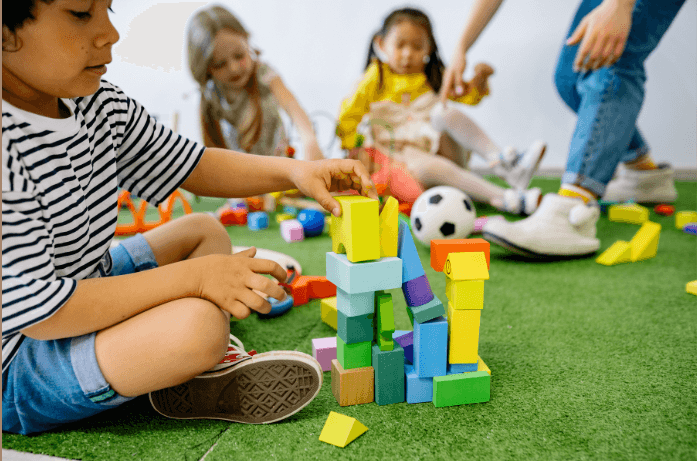
Beyond being entertaining, minute to win it games help children build important developmental skills. Fast-paced challenges encourage hand-eye coordination, fine and gross motor skills, communication, problem-solving, patience, teamwork, and self-confidence. Children also learn to manage emotions, follow rules, and celebrate effort while enjoying friendly competition.
Supplies to Keep Ready
You do not need every item on this list. Choose supplies based on the games you plan to include.
Useful materials may include:
- Paper or lightweight plastic cups
- Cotton balls
- Drinking straws
- Paper plates
- Balloons
- Spoons
- Large craft sticks
- Pom-poms
- Empty tissue boxes
- Painter’s tape
- Pencils
- Dice
- Socks
- Large marshmallows
- Ping-pong balls
- Child-safe bowls and containers
Avoid small items when younger siblings are nearby. Always check that materials are clean, unbroken and suitable for the children participating.
1. Cup Stack Challenge
Give each player 15 lightweight cups. The child must build a pyramid and return the cups to a single stack before the timer ends.
A simple pyramid can have five cups on the bottom row, followed by four, three, two and one.
For younger or less confident players, use only six or ten cups.
Skills supported: Coordination, planning and concentration.
Game tip: Demonstrate how to separate the cups gently so they do not become stuck.
2. Cookie Face Challenge
Place a cookie on each child’s forehead. Players must move the cookie down their face and into their mouth without using their hands.
Children can wiggle their eyebrows, move their cheeks and tilt their heads to guide the cookie.
This game often creates plenty of laughter, but it may not suit children with food allergies or sensory sensitivities.
Skills supported: Facial muscle control, patience and persistence.
Safety tip: Ask children to remain seated and use an allergy-safe alternative when needed.
3. Cotton Ball Scoop
Place two bowls on a table. Fill one bowl with cotton balls and leave the second bowl empty.
The player wears a blindfold or closes their eyes and uses a spoon to transfer as many cotton balls as possible into the empty bowl within one minute.
The lightweight cotton balls make it difficult to tell whether anything is actually on the spoon.
Skills supported: Sensory awareness and controlled movement.
Safety tip: Blindfolded children should remain seated, with an adult nearby.
4. Balloon Keep-Up
Give each child one inflated balloon. Players must keep the balloon from touching the floor for 60 seconds.
They may tap it with their hands, elbows or heads, depending on the rules you choose.
For an extra challenge, older children can try keeping two balloons in the air at the same time.
Skills supported: Tracking, movement and coordination.
Safety tip: Remove broken balloon pieces immediately because they can be choking hazards.
5. Pom-Pom Blow Race
Create a starting line and finish line on a table using painter’s tape. Give each player a straw and a large craft pom-pom.
Players must blow through the straw to move the pom-pom across the finish line.
You can turn this into a head-to-head race or ask each child to complete as many table lengths as possible in one minute.
Skills supported: Breath control and visual tracking.
Safety tip: Each child should have their own straw. Use pom-poms that are too large to be inhaled or swallowed.
6. Spoon Balance Walk
Place a lightweight ball, cotton ball or large pom-pom on a spoon. Children must walk from one marked point to another without dropping the object.
They can earn one point for every successful trip completed within 60 seconds.
Make the course shorter for younger children and longer for experienced players.
Skills supported: Balance, patience and body control.
Safety tip: Keep the walking path clear and use a lightweight object rather than a hard item.
7. Penny Stack Alternative
Traditional versions of this challenge use coins, but large counters, bottle caps or flat game pieces may be easier and safer for children ages 6–9.
Players use one hand to stack as many pieces as possible within one minute. The tower must remain standing when the timer ends.
For an extra challenge, ask children to use their non-dominant hand.
Skills supported: Fine motor control and concentration.
Safety tip: Keep small pieces away from toddlers and supervise the activity closely.
8. Tissue Box Shake
Place several lightweight balls or large pom-poms inside an empty tissue box. Attach the box securely around the child’s waist using a soft ribbon or wide belt.
Without using their hands, players must shake, jump and move until all the objects fall out.
This is one of the most energetic minute to win it games for kids and works well as an outdoor or large-room activity.
Skills supported: Gross motor movement and body awareness.
Safety tip: Provide plenty of open space and avoid tying anything tightly around the child.
9. Sock Toss
Roll clean socks into soft balls. Place a laundry basket or large container several feet away.
Players must toss as many sock balls as possible into the basket before the timer ends.
Give each successful throw one point. Adjust the distance according to each child’s ability.
Skills supported: Aim, distance judgement and hand-eye coordination.
Game tip: Place a tape marker on the floor so everyone throws from the same position.
10. Cup Knockdown
Build a small tower using lightweight paper or plastic cups. Give the child several rolled-up socks or soft foam balls.
The player must knock down all the cups before the minute ends.
You can rebuild the tower and let the child repeat the challenge to see whether they can beat their previous time.
Skills supported: Throwing accuracy and visual focus.
Safety tip: Use soft throwing objects and keep other players behind the throwing line.
11. Marshmallow Transfer
Place large marshmallows in one bowl and an empty bowl beside it. Players use child-safe tongs or two craft sticks to transfer the marshmallows.
Count how many pieces each child moves in 60 seconds.
For a non-food version, use large pom-poms, sponge pieces or crumpled paper balls.
Skills supported: Grip strength and fine motor coordination.
Safety tip: Consider allergies and choking risks. Do not allow children to eat materials that have been handled during the game.
12. Paper Plate Fan Race
Place a lightweight object, such as a large pom-pom or crumpled paper ball, on the floor.
Each child uses a paper plate as a fan to move the object from the starting line to the finish line. They cannot touch the object directly.
This challenge works best on a smooth indoor floor.
Skills supported: Controlled movement, problem-solving and coordination.
Game tip: Create a winding course using tape for a more challenging version.
13. Cup-to-Cup Ball Transfer
Place several ping-pong balls in one cup or bowl. Players must move the balls into another container using a spoon.
Children may hold the spoon in their hand or, for a more difficult version, hold the handle gently in their mouth.
For ages 6–9, the hand-held version is usually safer and easier to manage.
Skills supported: Balance and careful movement.
Safety tip: Avoid the mouth-held version when hygiene or safety is a concern.
14. Dice Stack
Give each player several large dice and a craft stick.
The child holds the craft stick horizontally in one hand and tries to stack dice on top of it. The aim is to balance as many dice as possible before time runs out.
You can also allow children to stack the dice directly on a table for an easier challenge.
Skills supported: Steady hands, patience and concentration.
Safety tip: Use large dice and supervise children when small game pieces are present.
15. Cup Flip Challenge
Place lightweight plastic cups upside down near the edge of a table.
Players gently tap or flick the bottom edge of a cup so it flips through the air and lands upright.
The child can count successful flips or try to land a chosen number before the timer ends.
Skills supported: Force control, coordination and persistence.
Safety tip: Use an open table space and lightweight cups that will not cause injury.
16. Paper Chain Race
Give each player several strips of paper and child-safe tape or glue dots.
Children must connect the strips to create the longest paper chain possible in one minute.
Because cutting can take too much time, prepare the paper strips before the game begins.
Skills supported: Fine motor control, sequencing and speed.
Game tip: This can become a team challenge, with children taking turns adding links.
17. Sticky Note Wall
Give each child a stack of sticky notes. Players must place as many notes as possible on a wall, poster board or door within 60 seconds.
Only notes that remain attached at the end of the minute count toward the score.
You can add a learning element by asking children to sort notes by colour or arrange them into a simple shape.
Skills supported: Speed, reaching and visual organisation.
Safety tip: Make sure children can reach the playing area without climbing on furniture.
18. Straw Pick-Up Challenge
Place large, lightweight paper shapes on a table. Each player uses a straw to lift the shapes through suction and transfer them into a bowl.
The child places one end of the straw on the paper, breathes in gently and holds the suction long enough to move it.
Use larger paper circles or squares rather than tiny pieces.
Skills supported: Concentration and breath control.
Safety tip: Explain that children should only breathe inward gently and should never run while holding a straw.
19. Pencil Bounce
Place several unsharpened pencils near a cup. Players bounce each pencil gently off the table and try to make it land inside the cup.
Count how many pencils successfully enter the cup during the minute.
This activity may require practice, so allow children to experiment before the official round begins.
Skills supported: Timing, control and problem-solving.
Safety tip: Use unsharpened pencils and make sure children do not point them toward others.
20. Build the Tallest Tower
Provide paper cups, cardboard tubes, lightweight blocks or empty boxes.
Players have one minute to build the tallest freestanding tower they can. The structure must stay upright for at least three seconds after the timer ends.
Children can play individually or work in teams.
Skills supported: Creativity, engineering skills and teamwork.
Game tip: Give every player the same number and type of materials to keep the challenge fair.
How to Organise Minute to Win It Games for Kids
A little preparation can help the event run smoothly.
Choose Five to Eight Games
You do not need to play every challenge in one session. Select a mixture of active, quiet and skill-based games.
For example, you might combine:
- Balloon Keep-Up
- Cup Stack Challenge
- Sock Toss
- Paper Chain Race
- Spoon Balance Walk
- Build the Tallest Tower
Changing the type of movement between games can help children remain interested without becoming overstimulated.
Prepare Separate Game Stations
For a classroom, birthday party or larger group, create stations around the room. Place the necessary materials and simple instructions at each station.
Divide children into small groups and rotate them every few minutes. An adult or older helper can supervise each activity.
Demonstrate Every Challenge
Children ages 6–9 usually understand simple rules, but a visual demonstration makes the instructions much clearer.
Show the correct technique, explain what is not allowed and answer questions before starting the timer.
Keep the Rules Simple
Use only two or three rules for each game. Complicated scoring systems can reduce the excitement and lead to disagreements.
Clearly explain:
- Where players should stand
- Which materials they can touch
- What counts as completing the game
Allow Practice Time
Some activities require a specific movement that children may not understand immediately.
Give everyone a short practice round before recording scores. This helps children feel more confident and makes the competition fairer.
Simple Scoring Ideas
You can organise the games without keeping scores, especially when the main purpose is fun and participation.
When children want a competition, try one of these simple methods.
Point System
Award points according to the final result:
- First place: three points
- Second place: two points
- Third place: one point
Add the scores after all the games to find the overall winner.
Personal Best
Record each child’s result and let them repeat the challenge. The goal is to improve their previous score rather than beat someone else.
This approach can reduce pressure and encourage persistence.
Team Challenge
Divide children into balanced teams. Each team selects a player for every game, or all team members take turns.
Team scoring encourages cheering, communication and cooperation.
Cooperative Challenge
Give the whole group a shared target. For example, children might try to complete 50 successful sock tosses or build four towers before a group timer ends.
This version works well when you want to avoid individual winners and losers.
Birthday Party Minute to Win It Games
These challenges are ideal for birthday parties because they are quick, affordable and easy to customise.
Choose games that require minimal cleanup and organise the supplies before guests arrive. Active challenges can be played outdoors, while quieter games can be saved for later in the party.
You can create a simple competition schedule such as:
- Cup Stack Challenge
- Balloon Keep-Up
- Sock Toss
- Cookie Face Challenge
- Tower Building
- Tissue Box Shake
Small certificates, stickers or pencils can be used as prizes. Consider giving every child a participation award rather than rewarding only the highest scorer.
Possible award categories include:
- Fastest Player
- Best Teamwork
- Most Creative Solution
- Strongest Comeback
- Best Cheerleader
- Most Determined Player
Classroom Minute Games for Ages 6–9
Teachers can use one-minute games as brain breaks, lesson rewards or end-of-term activities.
Quiet challenges such as cup stacking, paper chains, dice balancing and sticky note sorting are easier to manage inside a classroom.
Games can also support academic learning. For example:
- Sort sticky notes into word categories
- Stack cups after answering maths questions
- Transfer paper letters to spell a word
- Roll dice and add the numbers
- Build a tower using a specific number of pieces
Keep activities short and organise materials in labelled containers so they can be reused.
Indoor Minute to Win It Games
Indoor games are useful during rainy days, extremely hot weather or family evenings at home.
Good indoor options include:
- Cotton Ball Scoop
- Cup Stacking
- Paper Chain Race
- Dice Stack
- Sticky Note Wall
- Marshmallow Transfer
- Cup Flip Challenge
Clear the playing space before beginning. Remove breakable objects, secure loose rugs and make sure children are not throwing items near windows or screens.
If you also have younger children at home, explore these indoor activities for toddlers for simpler, age-appropriate play ideas that require minimal setup.
Outdoor Minute to Win It Games
Outdoor spaces allow children to enjoy challenges that involve more movement.
Suitable outdoor activities include:
- Balloon Keep-Up
- Sock Toss
- Tissue Box Shake
- Cup Knockdown
- Spoon Balance Walk
- Paper Plate Fan Race
Use cones, chalk or tape to mark playing areas. Consider the weather and provide water breaks when children are active.
Safety Tips for One-Minute Challenges
Even simple games need appropriate adult supervision.
Before playing:
- Check every item for sharp edges or damage
- Avoid small objects around younger siblings
- Consider food allergies before using edible materials
- Keep active games away from stairs and furniture
- Remove broken balloon pieces immediately
- Give each child a clean straw or spoon
- Avoid blindfold games that involve standing or walking
- Stop any challenge that becomes unsafe or uncomfortable
Children should never be pressured to complete an activity. Offer an alternative role, such as scorekeeper, timer helper or cheerleader, when a child does not want to participate.
How to Keep the Competition Positive
Children may become excited or disappointed during competitive activities. Set expectations before the games begin.
Remind players that:
- Everyone will find different games easy or difficult
- Making mistakes is part of the fun
- Players should cheer without teasing
- Rules must be followed fairly
- Trying again is more important than winning
- A good attitude matters more than the final score
Praise effort, creativity and teamwork instead of focusing only on speed.
Frequently Asked Questions
How many minute to win it games should children play?
Five to eight games are usually enough for one activity session. The ideal number depends on the size of the group, children’s energy levels and the amount of time available.
Do the games have to last exactly one minute?
No. Although 60 seconds creates excitement, some activities may work better with 30, 90 or 120 seconds. Adjust the timer according to the children’s ages and abilities.
What are the easiest minute to win it games for kids?
Cup stacking, sock tossing, balloon keep-up, sticky note wall and cotton ball transfer are easy activities for beginners.
Can these games be played without winners?
Yes. Children can play cooperatively, compete against their own previous score or work together toward a shared goal.
What can I use when I do not have a timer?
A phone timer, kitchen timer, stopwatch or one-minute song can be used. An adult can also count down the final ten seconds aloud.
Are minute games suitable for small spaces?
Many challenges work well in small rooms. Choose seated or table-based activities, such as cup stacking, paper chains, pom-pom transferring and dice balancing.
What supplies do I need for minute to win it games?
Most games only require common household items like cups, balloons, paper plates, straws, socks, pom-poms, spoons, and tape.
Are minute to win it games educational?
Yes. Many challenges help children develop motor skills, teamwork, concentration, problem-solving, and confidence while having fun.
Final Thoughts
The best minute to win it games for kids are easy to explain, quick to prepare and exciting enough to keep children involved. Whether you are planning a birthday party, classroom celebration, family game night or rainy-day activity, these one-minute challenges can create plenty of laughter without requiring expensive supplies.
Choose games that match the children’s abilities, keep the rules simple and focus on participation rather than perfect results. With a timer, a few household items and a little imagination, you can create a memorable activity session that children ages 6–9 will want to play again.
Explore more children’s activity ideas, party games and screen-free challenges to make everyday playtime more active, creative and enjoyable.
Looking for more fun activities for kids? Explore more screen-free games, rainy-day ideas, birthday activities, and creative learning ideas to keep children active, engaged, and having fun all year round.
Looking for more ways to keep younger children active without devices? These screen-free toddler activities offer simple ideas for creative, hands-on play at home.
Looking for more fun ways to keep children active and entertained? Visit Tot Advice to explore more screen-free games, rainy-day activities, birthday party ideas, and creative learning activities for kids. Discover simple ideas that make everyday playtime more active, engaging, and enjoyable throughout the year.