
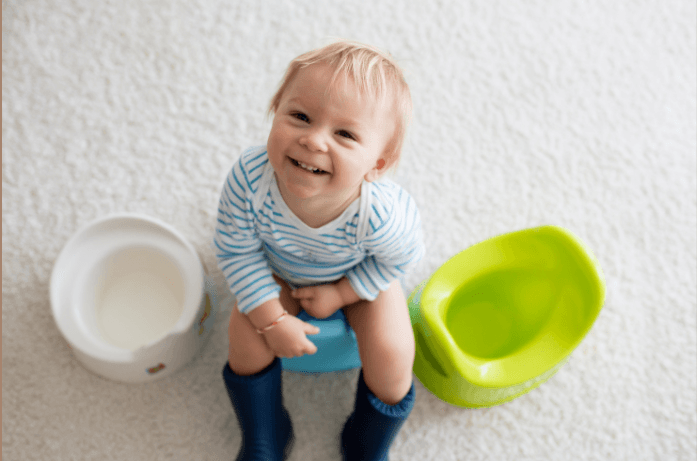
Daytime potty training may finally feel settled, yet your child still wakes with a wet pull-up or damp bedsheet. This can leave parents wondering whether they should begin night time potty training, remove the pull-up, wake their child for bathroom trips, or simply wait a little longer.
The reassuring truth is that staying dry at night is not only a learned skill. It also depends on your child’s bladder capacity, sleep patterns, ho
rmone production, and ability to wake when their bladder is full. A child who happily uses the toilet during the day may still need months, or even years, before consistently achieving dry nights.
Your role is not to force dryness. It is to create a calm routine, notice signs of readiness, and support your child without shame when accidents happen.
Night time potty training is a gradual process, and every child reaches this milestone at their own pace.
What Is Night Time Potty Training?
Night time potty training is the gradual process of helping a child recognise a full bladder during sleep, wake up when necessary, use the toilet, and return to bed.
However, it is slightly different from daytime toilet training.
During the day, children are awake and can notice physical signals, remember reminders, and reach the bathroom quickly. At night, their brain must recognise bladder signals while they are asleep. Their body must also be able to store enough urine or reduce the amount of urine produced overnight.
This is why a child can be completely toilet trained during the day but continue wetting at night. Children normally develop daytime control before nighttime control, and many young children are simply not physically ready to remain dry throughout the night.
Bedwetting during the early years is not laziness, disobedience, or a sign that your child is refusing to cooperate.

When Should You Start Night Time Potty Training?
There is no perfect age that works for every child.
Many children become reliably toilet trained during the day between ages two and four, but nighttime dryness frequently happens later. Some children remain wet at night beyond age five even though they have no difficulty using the toilet during the day.
Instead of choosing a starting date based only on age, pay attention to your child’s natural patterns.
Starting night time potty training according to your child’s readiness can make the experience calmer and less stressful for everyone.
Signs Your Child May Be Ready
Your child may be ready to try sleeping without a pull-up when:
- Their pull-up is dry or only slightly damp on several consecutive mornings.
- They are reliably toilet trained during the day.
- They regularly wake up and ask to use the bathroom.
- They can pull their pyjamas and underwear up and down.
- They understand the bedtime toilet routine.
- They are interested in trying underwear at night.
- They can reach the toilet safely with minimal assistance.
Several dry mornings may suggest your child is ready to try underwear at night.
However, a few dry mornings do not guarantee that every night will be dry. Accidents are still a normal part of the learning process.
During night time potty training, readiness matters more than your child’s exact age or how quickly other children become dry.
Is Your Child Ready for Night Time Potty Training?
| Probably Ready | May Need More Time |
| Dry pull-up on most mornings | Pull-up heavily wet every morning |
| Daytime toilet trained | Frequent daytime accidents |
| Interested in wearing underwear | Resists using the toilet |
| Wakes to use the toilet | Sleeps through wet pull-ups |
| Understands bedtime routine | Doesn’t recognise bladder signals yet |
Why Does Night Time Potty Training Take Longer?
Parents sometimes wonder why their child does not wake up when the bladder is full. Several developmental factors may be involved.
Your Child May Sleep Deeply
Some children do not yet wake in response to bladder signals. Their bladder may be sending the message, but their sleeping brain has not learned to respond to it consistently.
Their Bladder May Still Be Developing
A younger child’s bladder may not be able to comfortably store all the urine produced during a long night.
Their Body May Produce More Urine at Night
The body normally produces an antidiuretic hormone that helps reduce nighttime urine production. In some children, the nighttime pattern of this hormone develops later.
Family History Can Play a Part
Bedwetting often runs in families. A child may take longer to achieve dry nights when one or both parents also experienced nighttime wetting during childhood.
Constipation May Affect Bladder Control
A bowel filled with hard stool can place pressure on the bladder and make wetting more likely. Constipation should not be overlooked when a child has frequent accidents.
None of these factors is under your child’s conscious control. Patience is far more helpful than pressure.
How to Start Night Time Potty Training Gently
Once your child shows signs of readiness, choose a calm period to begin. Avoid starting during a house move, the arrival of a new sibling, travel, illness, or another major family change.
A gentle approach to night time potty training helps your child build confidence without feeling pressured to stay dry.
Explain the plan simply:
“Your pull-up has been dry in the morning, so we can try sleeping in underwear. Sometimes the bed might get wet, and that is okay. We will clean it together and try again.”
This tells your child what is happening without turning dry nights into a test.
1. Build Healthy Daytime Toilet Habits
Successful nighttime toilet training begins during the day.
Encourage your child to use the toilet regularly instead of waiting until they are desperate. Children can become so absorbed in play that they ignore early bladder signals.
Regular daytime bathroom breaks can help your child become more aware of what a full bladder feels like. They should also have enough water throughout the day rather than trying to catch up with several large drinks shortly before bed.
2. Include the Toilet in the Bedtime Routine
Ask your child to use the toilet shortly before getting into bed.
Keep the routine predictable:
Bath, pyjamas, teeth, toilet, story, cuddles, and sleep.
Some children benefit from trying to urinate once during the early bedtime routine and again immediately before settling into bed. Avoid forcing them to sit for a long time when they do not need to go.
The goal is to empty the bladder comfortably before sleep, not to make the toilet feel stressful.
3. Make the Bathroom Easy to Reach
A dark hallway or unfamiliar bathroom can feel intimidating to a sleepy child.
Place a night-light between the bedroom and bathroom. Keep the floor clear of toys, laundry, and anything your child could trip over. Make sure clothing is easy to pull down quickly.
A potty placed safely near the bed may help younger children who cannot reach the bathroom independently. Easy nighttime bathroom access is recommended when children are learning to stay dry.
4. Protect the Mattress
Use a waterproof mattress protector and keep spare sheets, underwear, pyjamas, and a towel nearby.
You can layer the bed to make nighttime changes easier:
- Waterproof protector
- Fitted sheet
- Second waterproof protector
- Second fitted sheet
After an accident, you can remove the top two layers and quickly settle your child back into a dry bed.
This preparation is not expecting failure. It simply makes accidents less disruptive for everyone.
5. Try Underwear Without Creating Pressure
When your child appears ready, allow them to choose comfortable nighttime underwear. Involving them in the decision can help them feel confident and included.
You might begin with a trial of several nights. Explain that returning to a pull-up is always an option if everyone is becoming exhausted or distressed.
Some children feel motivated by underwear, while others feel safer in a pull-up. Neither response is wrong.
6. Respond Calmly to Accidents
When an accident happens, keep your voice neutral and reassuring.
You could say:
“Your bed is wet. Let’s get you cleaned up and comfortable.”
Avoid comments such as:
“You are too old for this.”
“Why didn’t you wake up?”
“You were doing so well.”
Your child did not choose to wet the bed. Punishment and embarrassment do not speed up nighttime bladder development and may make the experience more stressful.
Depending on their age, your child can help place wet clothes in the laundry basket or choose fresh pyjamas. Present this as a normal part of cleaning up, not a consequence.
7. Reward the Routine, Not the Dry Bed
Dryness is not always something your child can control. For that reason, reward behaviours they can choose.
A sticker chart might recognise:
- Using the toilet before bed
- Drinking water regularly during the day
- Helping prepare clean pyjamas
- Walking to the bathroom when they wake
- Cooperating calmly after an accident
Avoid offering rewards only for dry nights. A child who follows every step may still wet the bed because their body is not ready. Health guidance recommends rewarding positive actions rather than outcomes outside the child’s control.
Should You Limit Drinks Before Bed?
Your child should receive enough water during the day. Dehydrating a child in an attempt to prevent bedwetting is neither helpful nor healthy.
Offer drinks regularly from morning through the afternoon. As bedtime approaches, avoid encouraging unusually large drinks unless your child is genuinely thirsty. Caffeinated beverages and fizzy drinks may irritate the bladder and are not suitable bedtime drinks.
A small drink before bed is usually fine. The aim is balanced hydration, not making your child go to sleep thirsty. NHS guidance advises providing enough fluids during the day while supporting regular toilet visits, including a bathroom trip before bed.

Should You Wake Your Child to Use the Toilet?
Carrying a sleeping child to the bathroom may occasionally prevent a wet sheet, but regularly lifting or waking them at a chosen time does not generally teach long-term nighttime dryness.
The child may urinate without becoming fully aware of the bladder signal. Both NHS and NICE guidance state that regularly waking or carrying a child to the toilet is not an effective long-term solution.
When your child wakes naturally, gently encourage them to use the bathroom. However, you do not need to set several alarms every night during ordinary toddler potty training.
Older children with persistent bedwetting may sometimes use a moisture-sensitive bedwetting alarm under professional guidance. The alarm sounds when wetting begins and gradually helps the child connect bladder signals with waking.
Are Pull-Ups Bad for Night Time Potty Training?
Pull-ups are a practical tool, not a parenting failure.
Some families prefer reusable waterproof training pants, while others use disposable nighttime pull-ups. Both can help protect bedding while your child develops nighttime bladder control. The best choice is the one that keeps your child comfortable without creating stress around accidents.
A pull-up will not prevent your child’s bladder, brain, and hormone patterns from maturing. It can protect sleep, reduce laundry, and help your child feel secure while their body develops.
Consider continuing nighttime pull-ups when:
- The pull-up is heavily wet most mornings.
- Your child does not wake when wet.
- Accidents are disturbing the entire family’s sleep.
- Your child feels anxious about removing it.
- Daytime toilet training is still inconsistent.
- Your family is experiencing other significant changes.
You can still encourage your child to use the toilet before bed and immediately after waking.
When the pull-up remains dry or nearly dry for several mornings, discuss trying underwear. If accidents become frequent, calmly return to pull-ups and try again in a few weeks or months.
Common Night Potty Training Mistakes
Starting Before the Child Is Ready
Although every family’s routine is different, avoiding pressure, punishment, and unrealistic expectations can make night time potty training more positive for both parents and children.
Removing pull-ups because another child of the same age is dry can create unnecessary frustration. Development does not follow a competition or fixed calendar.
Making Dryness a Measure of Being a “Big Kid”
Calling underwear a “big kid” achievement may sound encouraging, but it can make a child who wets the bed feel babyish or ashamed.
Praise effort and independence instead.
Punishing Accidents
Taking away privileges, showing disappointment, or discussing accidents in front of siblings can damage your child’s confidence without improving bladder control.
Regularly Carrying a Sleeping Child to the Toilet
This may keep the bed dry temporarily but does not reliably teach the child to recognise bladder signals independently.
Ignoring Constipation
Hard stools, painful bowel movements, stool withholding, or infrequent pooping may contribute to bladder difficulties. Speak with your child’s healthcare professional when constipation continues.
Comparing Siblings
One sibling may remain dry at three, while another needs nighttime protection at six. Both children may be developing normally.
What If Your Child Starts Wetting the Bed Again?
Occasional regression can happen after illness, travel, disrupted sleep, starting school, moving home, family stress, or welcoming a new baby.
Respond with reassurance and temporarily return to protective underwear when needed. Avoid asking your child repeatedly whether something is wrong or treating the accident as deliberate behaviour.
Major emotional changes can sometimes lead to temporary toilet-training regression.
However, contact your child’s healthcare professional when a child who had been consistently dry for six months or longer suddenly begins wetting regularly, particularly when other symptoms are present.
When Should You Speak With a Doctor?
Bedwetting is common, but professional guidance can be helpful when:
- Your child is older than five and frequent bedwetting is upsetting them.
- Bedwetting begins again after at least six months of dry nights.
- Your child also has frequent daytime accidents.
- Urination is painful or unusually frequent.
- Their urine appears cloudy, pink, or bloody.
- Your child is extremely thirsty or losing weight.
- They experience ongoing constipation or stool accidents.
- They snore loudly, gasp during sleep, breathe through their mouth, or seem unusually sleepy during the day.
- Bedwetting is affecting sleepovers, school, confidence, or family life.
Sleep-disordered breathing, urinary problems, constipation, and, less commonly, conditions such as diabetes may sometimes contribute to new or persistent wetting, especially when additional symptoms appear.
A pediatrician can review your child’s bladder and bowel habits, sleep, fluid intake, family history, and general health. For older children, treatment options may include structured routines, bedwetting alarms, or medication when clinically appropriate.
Frequently Asked Questions
At What Age Should a Child Be Dry at Night?
There is no single age. Many children achieve nighttime dryness between ages three and seven, while some take longer. Bedwetting can remain common through age five, and development varies considerably between children.
Can a Three-Year-Old Be Night Potty Trained?
Yes, some three-year-olds naturally remain dry at night. Others need nighttime pull-ups for several more years. Look for consistent dry mornings rather than relying only on age.
How Many Dry Nights Should We See Before Removing Pull-Ups?
Several consecutive dry or nearly dry mornings may suggest readiness. Begin with a low-pressure trial and expect occasional accidents.
Should My Child Use the Toilet Twice Before Bed?
Some children benefit from using the toilet once while getting ready and again immediately before sleep. Do not force repeated toilet trips when your child is uncomfortable or unable to urinate.
Is Bedwetting My Child’s Fault?
No. Bedwetting happens during sleep and is not intentional. Your child needs reassurance, privacy, and practical support, not punishment.
How long does night time potty training usually take?
Every child is different. Some children stay dry within a few weeks, while others need several months or longer before consistently waking with a dry bed. Progress often depends on physical development rather than practice alone.
Should I wake my child every night to use the toilet?
Most experts do not recommend routinely waking or carrying a child to the toilet because it does not usually teach long-term bladder control. Encourage your child to use the toilet if they wake naturally instead.
A Gentle Reminder for Tired Parents
Night time potty training is not a test of your parenting, and a wet bed does not mean your child has failed.
Some children move from dry days to dry nights quickly. Others need more time for their bladder capacity, nighttime hormone production, and waking response to mature.
Build supportive daytime habits, offer a predictable bedtime toilet routine, protect the mattress, and respond to accidents without shame. When your child’s body is ready, dry nights will gradually become more frequent.
Until then, pull-ups, waterproof sheets, spare pyjamas, patience, and a comforting hug are all perfectly reasonable parts of the journey.
This article is for general educational purposes and is not a substitute for individual medical advice. Consult your child’s pediatrician or healthcare professional if you are concerned about bedwetting, painful urination, constipation, excessive thirst, daytime accidents, sleep problems, or changes in your child’s health.
Looking for more potty-training support? Explore our parenting guides for daytime toilet training, common potty-training challenges, toddler routines, and practical tips to help your child build confidence at every stage.
Looking for more practical potty-training guidance? Visit Tot Advice to explore helpful parenting guides on daytime toilet training, common potty-training challenges, toddler routines, and simple tips to help your child build confidence at every stage.
Resources