Baby Not Crying After Birth can feel frightening for parents, especially when they are waiting for that first cry after delivery. However, crying is not the only sign that a newborn is healthy. Some babies begin breathing quietly and may not produce the loud cry many parents expect. So if the room feels quiet for a few seconds, it can naturally feel frightening.
But why do some babies not cry after birth? Simply put, crying is not the only sign that a newborn is doing well. Some babies take their first breaths quietly and may not give that loud, dramatic cry parents often expect. Doctors are usually more focused on whether the baby is breathing comfortably, has a steady heart rate, good muscle tone, and is adjusting normally to life outside the womb. In fact, a healthy newborn may begin breathing on their own without crying right away.
Sometimes, however, a baby who does not cry may also need help starting or maintaining normal breathing. That is why doctors and nurses assess newborns immediately after birth rather than relying on the cry alone.
Here is what parents should know about those first important moments.
Why Do Babies Usually Cry After Birth?
Before birth, a baby receives oxygen through the placenta and umbilical cord. The lungs are not doing the same job they will do once the baby is born.
After delivery, the baby suddenly has to transition to breathing air.
Drying, warmth, gentle stimulation and the natural changes that happen during birth help encourage those first breaths. A strong cry is often a reassuring sign because crying involves moving air through the lungs. ACOG describes early newborn care as including drying and stimulation for a first breath or cry while keeping the newborn warm.
But here is the part many parents do not realize:
A baby does not have to make a dramatic cry to be breathing normally.
Some newborns simply take their first breaths more quietly.
Understanding a Baby Not Crying After Birth helps parents know that a quiet first moment does not always mean there is a problem.
Baby Not Crying After Birth: Why It Happens
There is no single explanation. A baby who does not cry immediately may be perfectly well, or the baby may need a little extra support.
The medical team looks at the whole baby rather than focusing on crying alone.
1. The Baby May Be Breathing Quietly
This is one of the most reassuring explanations.
Movies often show every newborn arriving with an immediate, loud cry. Real births do not always look that way.
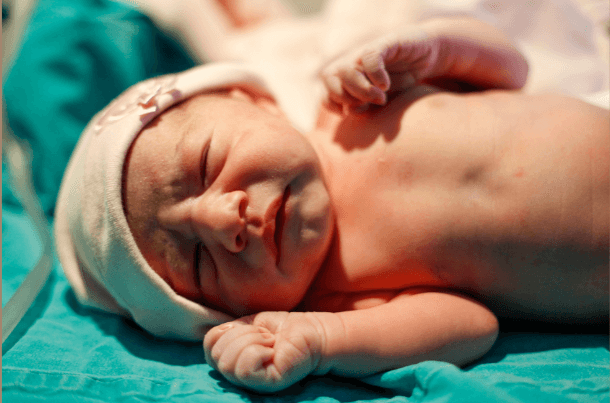
Some healthy babies breathe after delivery without producing a strong cry right away. The American Academy of Pediatrics specifically notes that newborns do not necessarily cry when taking their first breath.
So if your baby did not scream immediately but was breathing well, moving actively and had a healthy heart rate, the lack of an instant cry does not automatically mean something was wrong.
2. Your Baby May Need a Little Stimulation
The transition from the womb to the outside world is a big physical adjustment.
Sometimes a newborn needs gentle stimulation to encourage regular breathing. Healthcare professionals may dry the baby and gently rub the back while keeping the baby warm.
These are normal parts of immediate newborn care.
If the baby begins breathing normally after these initial steps, additional intervention may not be necessary.
Sometimes a Baby Not Crying After Birth only needs gentle stimulation before adjusting normally.
3. Premature Babies May Have More Difficulty Breathing
Babies born prematurely have less mature lungs than full-term babies, which can make the transition to independent breathing more difficult.
The World Health Organization notes that premature babies have an increased risk of breathing difficulties.
Because of this, a premature baby may not produce the strong first cry parents expect and may require additional breathing support.
This is also why neonatal specialists are often present or readily available during a premature delivery.
Premature birth can be one reason for a Baby Not Crying After Birth requiring extra monitoring or support.
4. Medications or Anesthesia Can Affect a Newborn’s Initial Condition
Several things surrounding labor and delivery can influence how alert and responsive a newborn appears during those first minutes.
Maternal medications, anesthesia, gestational age, birth weight and certain medical conditions can all affect a newborn’s immediate assessment after delivery.
This does not mean medication during labor is automatically dangerous or that a baby who seems sleepy will have lasting problems.
It simply means healthcare professionals consider the circumstances of the delivery when evaluating how well a newborn is adapting.
5. The Baby May Have Difficulty Establishing Breathing
This is one of the more serious reasons a baby may not cry.
Occasionally, a newborn does not begin breathing adequately after birth and requires immediate medical support. WHO describes birth asphyxia as a failure to establish breathing at birth and emphasizes rapid newborn assessment and resuscitation when necessary.
In these situations, the important issue is not the missing cry itself, it is the baby’s breathing and overall condition.
Medical professionals are trained to recognize this quickly and begin appropriate newborn resuscitation when needed.
What Do Doctors Check If a Newborn Doesn’t Cry?
It can be.
A baby who is not crying but is breathing effectively may still be doing perfectly well.
This distinction is important because not crying and not breathing are not always the same thing. Research published by the American Academy of Pediatrics has specifically examined this difference, finding that some newborns who do not cry are nevertheless breathing. At the same time, a non-crying baby still needs careful assessment because breathing can become inadequate.
Doctors therefore don’t simply wait to hear a cry.
They watch how the baby breathes, move, responds and transitions after delivery.
What Do Doctors Check If a Newborn Doesn’t Cry?
Immediately after birth, healthcare professionals rapidly assess the newborn.
One well-known assessment performed shortly after delivery is the Apgar score.
Apgar evaluates five areas:
- Appearance or skin color
- Pulse or heart rate
- Grimace or reflex response
- Activity or muscle tone
- Respiration or breathing effort
The assessment is generally performed at one minute and again at five minutes after birth.
A strong cry can contribute to the respiration portion of the score, but crying is only one part of the baby’s overall assessment.
A baby may not be loudly crying yet still have reassuring breathing, heart rate, movement and responsiveness.
It is also important to understand that doctors do not wait for the one-minute Apgar score before helping a baby who needs breathing support. Resuscitation begins immediately when clinically necessary.
What Do Doctors Check If a Newborn Doesn’t Cry?
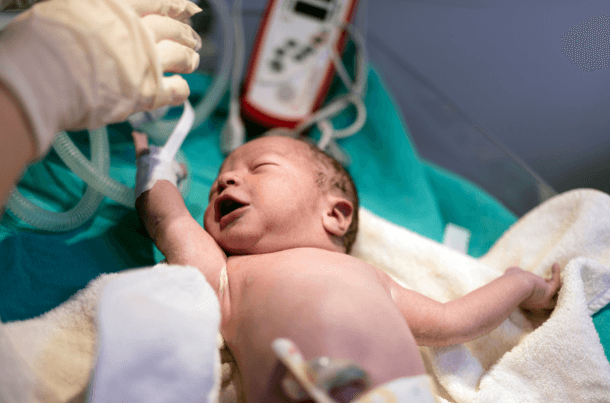
If a baby is not breathing adequately, the birth team acts quickly.
Initial care may include keeping the baby warm, positioning the airway, drying and stimulating the newborn. If effective breathing still does not begin, trained healthcare professionals may provide respiratory support according to neonatal resuscitation guidelines.
For a parent watching from nearby, those moments can feel incredibly long.
You may see several nurses or doctors move toward your baby at once. You may also have to wait before holding your baby.
That does not automatically tell you how serious the situation will eventually be. It simply means the team is focusing on helping your newborn make the transition to breathing independently.
What Happens Immediately After Birth?
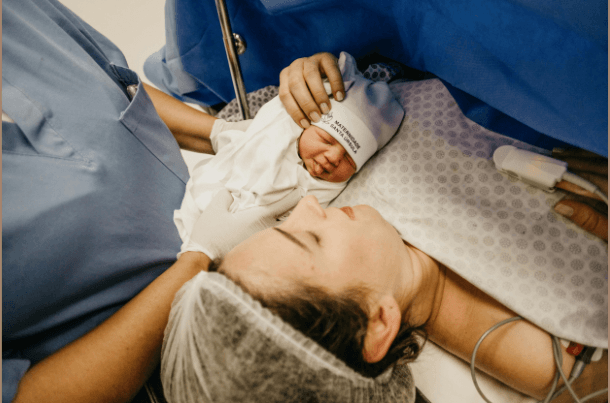
The first few moments after birth are focused on helping your baby adjust to life outside the womb. Healthcare professionals do not wait only for a cry, they quickly check whether your baby is breathing well, maintaining a healthy heart rate, staying warm, and responding appropriately.
The birth team may dry your baby, provide gentle stimulation, and help keep your baby warm while observing breathing and overall condition.
If your baby is breathing normally and adapting well, a loud cry is not required for a healthy transition. Some newborns simply take their first breaths more quietly.
If your baby needs extra help with breathing, trained healthcare professionals are prepared to provide support immediately.
Is Baby Not Crying After Birth Normal?
No.
This is probably the most important reassurance for parents searching why do some babies not cry after birth.
A loud cry is certainly a positive sign because it usually tells the medical team that air is moving through the baby’s lungs.
But crying itself is not the requirement for a healthy newborn. Effective breathing is.
AAP newborn-care guidance says that when a baby is not crying, healthcare professionals should observe the baby’s chest for breathing effort rather than assuming there is no breathing simply because there is no cry.
So the quiet baby you imagined would immediately scream may simply be making a quieter entrance into the world.
What If My Baby Cried Several Seconds Later?
A short delay before the first cry does not automatically mean there was a problem.
Birth is a transition, not a switch that looks identical for every newborn.
Healthcare professionals are watching the baby’s breathing and condition from the moment of delivery. If your medical team was satisfied with your baby’s breathing, heart rate and overall response, the exact number of seconds before that first cry is usually much less meaningful than parents may imagine.
If you’re still worried about something that happened during your delivery, it is completely reasonable to ask your pediatrician or obstetric team what your baby’s initial assessments showed.
You can also ask about your baby’s Apgar scores and whether any breathing assistance was required.
Sometimes simply understanding what happened during those first few minutes can make a frightening birth memory feel much clearer.
What If My Baby Cried Several Seconds Later?
Parents sometimes hear something like “Apgar seven at one minute and nine at five minutes” without really knowing what it means.
The score is simply a quick clinical snapshot of how a newborn is adapting after birth.
Each of the five areas, breathing, heart rate, muscle tone, reflex response and appearance, is scored, creating a total score between 0 and 10.
It is common for the score to improve between the first and fifth minute as the baby continues adjusting to life outside the womb.
Most importantly, the Apgar score was designed to describe a baby’s immediate condition and response after birth. It should not be used by itself to predict a child’s long-term health or development.
So if your newborn’s first score was lower than you expected, talk with your pediatrician before drawing conclusions from the number alone.
When Should Parents Be Concerned About a Newborn’s Breathing?
If you are currently in the hospital, tell your baby’s nurse, pediatrician or neonatal team immediately anytime you are worried about your baby’s breathing.
After going home, seek prompt medical care if your newborn:
- seems to be struggling to breathe
- becomes unusually sleepy or difficult to wake
- has noticeably reduced activity
- has difficulty feeding
- develops concerning changes in color
- has pauses in breathing or other breathing that worries you
WHO advises parents to seek prompt medical attention when a newborn develops danger signs such as difficult breathing, feeding problems or reduced activity.
With newborns, it is always appropriate to ask for medical help when something does not look or feel right.
Questions about a Baby Not Crying After Birth are common because parents expect every newborn to cry immediately.
Frequently Asked Questions
Is it bad if a baby doesn’t cry when born?
How long can a newborn go without crying after birth?
Can a baby be breathing but not crying?
Why did the doctor rub my baby after birth?
Do C-section babies always cry immediately?
Does not crying at birth mean brain damage?
Final Thought
Every baby enters the world in their own way. Some arrive with a loud cry, while others begin life much more quietly. A first cry can be reassuring, but it is only one small part of how healthcare professionals evaluate a newborn’s health.
What matters most is that your baby is breathing, adapting, and receiving the care they need during those first precious moments.
For more simple, supportive, and parent-friendly guidance about babies, pregnancy, and everyday parenting questions, visit TotAdvice.
Resources
- American Academy of Pediatrics (Pediatrics): Not Crying After Birth as a Predictor of Not Breathing
- PubMed: Not Crying After Birth as a Predictor of Not Breathing
Disclaimer
This article is for general educational purposes only and is not a substitute for advice from your pediatrician, obstetrician, or neonatal healthcare team. If a newborn is having difficulty breathing or appears unresponsive, seek immediate medical care.
About the Author
Geeta Yogi writes supportive, parent-friendly content about newborn care, pregnancy, child development, and everyday parenting concerns. She focuses on explaining common questions in a clear and reassuring way while encouraging parents to seek professional medical guidance whenever a baby’s health or breathing is a concern.