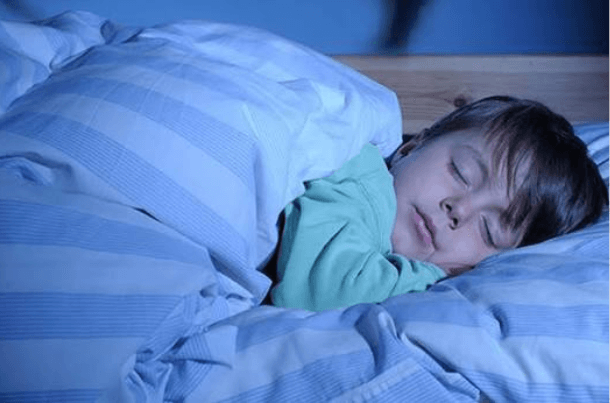
The house is finally quiet. You’ve finished bedtime stories, tucked your little one in, given one last kiss, and you’re halfway down the hallway when you hear it:
“Mommy… I’m scared.”
If this happens night after night, you’re probably wondering how to stop a child from being scared at night without dismissing their feelings, or spending every evening sitting beside their bed until they fall asleep.
Nighttime fears are common in childhood. As children’s imaginations develop, shadows can become monsters, an ordinary noise can sound mysterious, and being alone in a dark bedroom can suddenly feel much scarier than it did during the day.
This advice is mainly for preschool and school-age children who can talk about their fears. Babies’ sleep and settling needs are different.
The goal isn’t to tell your child that they’re being silly. It’s to help them gradually learn something much more powerful:
I feel scared, but I am safe, and I know what to do.

Why Is My Child Suddenly Scared at Night?
A child who happily slept alone a few months ago can suddenly become afraid of bedtime.
That doesn’t necessarily mean something is wrong.
Young children have wonderful imaginations, but they don’t always have an adult’s ability to separate imaginary possibilities from realistic ones, especially when they’re tired and lying in a dark, quiet room.
Common nighttime fears include:
- darkness;
- monsters or imaginary creatures;
- being alone;
- unfamiliar sounds;
- bad dreams;
- burglars;
- thunderstorms;
- shadows;
- separation from parents; and
- something happening to Mom or Dad.
A scary video, overheard adult conversation, story, change at school, family stress, moving home, or other disruption can sometimes make nighttime worries stronger too.
Before trying to “fix” the fear, it helps to understand what your child believes they’re afraid of.
How to Help a Child Who Is Scared at Night
There isn’t usually one sentence that makes nighttime fears disappear.
A combination of reassurance, predictable routines, coping skills, and gradual practice may help. Different children need different levels of support.
Here are some practical ways to start.
1. Listen Before You Reassure
When your child says they’re scared, our first instinct is often:
“There’s nothing to be scared of.”
But to your child, the fear feels completely real.
Instead, try acknowledging the feeling first.
You might say, “That shadow looked scary to you,” or, “I can see you’re feeling worried.”
Then follow it with calm reassurance:
“You’re safe. I’m nearby.”
You’re not agreeing that there’s actually something dangerous in the room. You’re simply showing your child that you understand what they’re feeling.
2. Ask What They’re Actually Afraid Of
“I’m scared” can mean many different things.
Ask gently, preferably during the daytime:
“What feels scary about bedtime?”
You may discover that the problem isn’t darkness at all.
Perhaps your child heard something frightening at school. Maybe the tree outside creates a strange shadow. Perhaps the heating system makes a noise they don’t understand.
Sometimes a surprisingly practical solution appears once you know what’s causing the fear.
A moving shadow might disappear when you reposition a night-light.
A mysterious tapping noise might simply be a branch touching the window.
And sometimes your child won’t know exactly why they feel afraid.
That’s okay too.
3. Create a Predictable Bedtime Routine
Children often feel safer when they know exactly what happens next.
Your routine doesn’t need to be elaborate.
It might simply be:
Bath → pajamas → brush teeth → toilet → one story → cuddle → lights out.
Try to keep the routine relatively consistent each evening.
Predictability sends a quiet message to your child’s brain:
We’ve done this before. I know what comes next.
If bedtime has become a long cycle of extra drinks, another story, checking the wardrobe, rearranging toys, and repeated trips downstairs, gently bring the routine back to something simple and consistent.
4. Use a Night-Light If It Helps
There’s no parenting award for getting your child to sleep in complete darkness.
If a small night-light helps your child feel secure, it’s okay to use one.
Keep it dim rather than turning the bedroom into a brightly lit play space.
You can also involve your child in choosing where the light goes.
Sometimes having even a small amount of control over their environment helps a worried child feel more confident.
5. Give Them a Comfort Object
For an older child, a favorite teddy or familiar comfort object can become part of bedtime. Keep toys, blankets, pillows, and other soft items out of the sleep space of babies under 12 months.
You don’t need to tell your child that the teddy has magical powers or can protect them from real danger.
Instead, make it about comfort.
“This teddy can stay beside you when you’re feeling worried.”
That teaches your child to connect the object with calmness rather than reinforcing the idea that something dangerous really is waiting in the bedroom.
6. Be Careful With the “Monster Check”
This is such an understandable parenting response.
Your child says there’s a monster under the bed, so you look underneath and announce:
“No monster!”
It may work tonight.
But repeatedly searching wardrobes, checking beneath beds, or using “monster spray” can accidentally send a confusing message:
Mom keeps checking, so maybe monsters really could be here.
A gentler response is to validate the feeling without validating the imaginary danger.
“You’re thinking about monsters and that feels scary. Monsters aren’t real, and you’re safe in your bedroom.”
Then redirect your child toward something calming. If your child describes a real event, bullying, or a safety concern, listen carefully and address it rather than treating every fear as imaginary.

What to Do When Your Child Is Scared of the Dark
If your child is scared of the dark, don’t force complete darkness immediately.
You can help them become comfortable gradually.
During the daytime, play in their bedroom with the curtains partly closed. Explore how familiar toys create shadows. Use a flashlight and make funny shadow shapes together.
Show them why shadows change when objects move.
Suddenly, that strange shape beside the wardrobe isn’t an unknown creature anymore.
It’s the chair with yesterday’s sweater hanging over it.
You can gradually reduce the amount of light at bedtime as your child’s confidence grows.
Confidence usually grows better through small successful experiences than through being forced into something frightening.
What If My Child Is Afraid to Sleep Alone?
If your child repeatedly says, “I’m scared to sleep alone,” it’s tempting to stay beside them every night until they’re asleep.
Occasionally doing that during a particularly difficult night isn’t a parenting disaster.
But if your child becomes dependent on your presence to fall asleep, leaving can become harder and harder.
Instead, gradually reduce how much support you provide.
For example, you might begin sitting beside the bed.
After several nights, move your chair slightly farther away.
Then move closer to the doorway.
Eventually, sit outside the room briefly.
The exact pace depends on your child’s age, temperament, and response. Agree on manageable steps together, and slow down or seek advice if distress is increasing. Independent sleep is a family goal, not a test of courage.
The message remains consistent:
“You can do this, and I’m nearby.”
Teach Your Child What to Do When They Feel Scared
One of the most useful things we can give children isn’t a promise that they’ll never feel afraid.
It’s a plan for what to do when fear arrives.
During the daytime, practice a simple calming routine together.
For example:
Put one hand on your tummy.
Take a slow breath in.
Slowly breathe out.
Hug your teddy.
Think about something that makes you feel happy and safe.
You can practice together when your child isn’t frightened.
That way, the skill is already familiar when bedtime arrives.
For an older child, you might call it their “brave plan.”
The goal isn’t to eliminate every anxious thought.
It’s to teach:
I know how to calm my body when I’m worried.
Talk About Fears During the Day
Bedtime isn’t always the best moment for a long conversation about worries.
Everyone is tired.
And when children are already frightened, talking extensively about everything that could possibly happen can make their imagination even busier.
Try discussing recurring fears earlier in the day instead.
You might say:
“You’ve been feeling worried at bedtime lately. Let’s think about what could help tonight.”
Your child might surprise you with their own solution.
Maybe they want the bedroom door slightly open.
Maybe they’d like their teddy closer.
Maybe a particular shadow needs explaining.
Problem-solving together gives your child a sense of control.
Watch What Your Child Sees Before Bed
Children absorb more than we sometimes realize.
A movie that seems mildly spooky to an adult may stay in a young child’s imagination for days.
Even news playing in the background can introduce frightening ideas that children don’t fully understand.
Pay attention to what your child watches, hears, or plays, particularly in the hours before bedtime.
If nighttime fears appeared suddenly, think back.
Was there a scary movie?
A frightening YouTube clip?
A story about monsters?
Something another child said at school?
You may find the clue there.
What About Nightmares?
Nightmares and fear of the dark aren’t quite the same thing.
A child who wakes after a nightmare may remember the dream and seek comfort from you.
Keep your response calm.
Offer a cuddle and simple reassurance:
“That was a scary dream. You’re awake now, and you’re safe.”
You don’t need to spend 20 minutes analyzing the dream at 2 a.m.
Help your child settle, then talk about it during daylight if they still want to.
If nightmares happen frequently or significantly affect your child’s sleep or daytime wellbeing, mention them to your pediatrician.
How Are Night Terrors Different From Nightmares?
During a night terror, a child may scream, look frightened, or seem awake while remaining asleep. They may not recognize you and usually do not remember the episode the next morning. This is different from a nightmare, when a child wakes and may recall a scary dream.
Stay nearby and protect them from injury without trying to force them awake. Ask their pediatrician about frequent, disruptive, or unusual episodes, especially if someone could get hurt.
Don’t Shame Your Child for Being Afraid
Try to avoid phrases such as:
“Big kids aren’t scared.”
“Don’t be a baby.”
“There’s nothing wrong, just go to sleep.”
Fear isn’t something children can simply switch off because we tell them to.
And making them embarrassed about being afraid may teach them to hide their feelings rather than learn how to handle them.
Instead, notice courage in small moments.
“You felt worried, but you stayed in your bed.”
“You remembered your slow breathing.”
“You were scared and you handled it.”
We’re not trying to raise children who never experience fear.
We’re helping them learn that fear doesn’t have to control what they do.
Should You Let a Scared Child Sleep in Your Bed?
For older children, this depends partly on what works for your family. This advice does not apply to babies: babies should sleep on their backs in their own firm, flat, clear sleep space rather than sharing an adult bed.
One frightened night in your bed isn’t going to undo everything you’ve taught your child.
But if your goal is independent sleep and your child begins coming into your bed every night because they’re frightened, you may want to respond consistently.
Comfort them, reassure them, and gently return them to their own sleeping space.
If they’ve become accustomed to sleeping with you, changing that habit may take time.
You don’t need to make the transition harsh.
Consistency and warmth can exist together.
A Simple Bedtime Plan for a Child Who Is Scared
When you’re exhausted, complicated parenting strategies are hard to remember.
Try keeping the evening simple:
Before bedtime: Avoid frightening or highly stimulating content.
During the routine: Keep the same calm sequence each evening.
At lights out: Give your child their comfort object and use a dim night-light if needed.
When they’re worried: Acknowledge the feeling and briefly reassure them.
If they call again: Keep your response calm, short, and predictable.
During the day: Talk about the fear and practice coping strategies.
The aim is to make bedtime feel safe but also wonderfully boring and predictable.
When Should You Be Concerned About Nighttime Fears?
Occasional fears are common, particularly in young children.
But sometimes anxiety needs additional support.
Consider speaking with your child’s pediatrician or a qualified child mental health professional if the fear is severe, continues for a long time, regularly prevents your child from sleeping, causes significant daytime anxiety, stops them participating in normal activities, or seems connected to a frightening or traumatic experience.
Also seek professional advice if you notice major changes in your child’s behavior, mood, appetite, school attendance, or everyday functioning.
Asking for help doesn’t mean a nighttime fear is automatically something serious.
It simply gives you another set of tools to understand what’s happening.
FAQs About Children Being Scared at Night
Why is my child suddenly scared at night?
Nighttime fears can appear as children’s imaginations and awareness of the world develop. Changes at home or school, frightening media, nightmares, unfamiliar noises, separation worries, or stressful experiences can sometimes contribute too.
If the fear appeared very suddenly, think about whether anything recently changed in your child’s routine or environment.
What age are children most afraid of the dark?
Fear of darkness and imaginary creatures is common during childhood, particularly during the preschool and early school years.
Every child develops differently, however, so there’s no exact age when nighttime fears must begin or disappear.
How can I help my child overcome fear of the dark?
Start gradually rather than suddenly removing every source of comfort.
A dim night-light, predictable bedtime routine, comfort object, daytime conversations, and simple relaxation techniques can help your child build confidence.
You can also explore shadows and darkness playfully during daylight hours so they become less mysterious.
Should I leave a light on if my child is scared?
A dim night-light can be a reasonable temporary or longer-term comfort if darkness is making bedtime difficult.
Keep the room relatively dark and calm rather than using bright overhead lighting.
Should I check for monsters under the bed?
Repeatedly checking for monsters may unintentionally reinforce your child’s belief that monsters could actually be there.
Instead, acknowledge their fear while calmly explaining that monsters aren’t real and they’re safe.
How do I get my child to sleep alone when they’re scared?
Try reducing your presence gradually.
You might initially sit beside their bed, then move farther away over several nights until your child becomes comfortable falling asleep without you beside them.
Go at a pace your child can manage while keeping the routine consistent.
What should I say when my child says, “I’m scared”?
Keep it simple and calm.
You might say:
“I know you’re feeling scared. You’re safe, and I’m nearby.”
This acknowledges your child’s emotion without confirming that there’s actually something dangerous in the room.
Why does my child keep coming into my room at night?
Fear may be one reason, but it can also become part of a child’s sleep routine.
If you want your child to sleep independently, calmly return them to their room, provide brief reassurance, and respond as consistently as you can each time.
Can too much screen time cause nighttime fears?
Screens themselves aren’t necessarily the only issue, but frightening or overstimulating content, especially close to bedtime—can leave children thinking about upsetting images or ideas.
Pay attention not only to how long your child uses screens but also to what they’re watching.
When should I seek help for my child’s nighttime anxiety?
A Little Reassurance for Parents
When your child calls from a dark bedroom, you do not have to make every fear disappear immediately. Listen, check what is worrying them, and help them practice one manageable step at a time.
A predictable routine, calm reassurance, and daytime coping practice can make bedtime easier. Some nights will still be difficult. Progress does not follow the same timetable for every child, and needing extra support is not a failure.
For more practical guidance as you navigate everyday parenting questions, explore Tot Advice. Take things one evening at a time, and reach out to your child’s pediatrician if their fears regularly disrupt sleep or daily life.
Trusted Resources for Parents
American Academy of Pediatrics: Fears and Phobias in Children
American Academy of Pediatrics: Nightmares, Night Terrors and Sleepwalking
Disclaimer
This article is for general educational and parenting information only and does not replace individualized medical or mental health advice. Speak with your child’s pediatrician or a qualified child mental health professional if nighttime fears are severe, persistent, regularly prevent sleep, cause significant daytime anxiety, interfere with normal activities, are accompanied by major changes in behavior or functioning, or appear connected to a frightening or traumatic experience.
About the Author
Geeta Yogi writes warm, practical parenting content about children’s sleep, emotions, behavior, development, and everyday family challenges. She focuses on reassuring, easy-to-understand guidance that helps parents respond calmly while supporting their child’s growing confidence and independence.