Watching a child grow and learn is one of the most rewarding experiences for parents. From a baby’s first smile to their first steps and first words, every stage of growth brings exciting changes. These small but meaningful achievements are known as early childhood development milestones, and they help parents understand how a child is growing physically, emotionally, socially, and mentally.
Early childhood development usually refers to the period from birth to around five years of age. During these important years, a child’s brain develops rapidly, and they learn essential skills that shape future learning, behavior, and overall health.
Every child develops at their own pace, but understanding developmental milestones by age can help parents support healthy growth and notice when extra guidance may be needed. In this guide, we’ll explore the key stages of child development 0–5 years and practical ways parents can support their child’s learning and well-being.
What Are Developmental Milestones?
Developmental milestones by age are the skills that most children achieve during different stages of growth. These milestones help parents and caregivers understand how a child is progressing in areas such as movement, language, thinking, and social interaction.
Tracking developmental milestones by age helps identify whether a child’s development is progressing normally or if extra support may be needed.
The four main areas of development include:
- Physical development
- Cognitive development
- Language and communication development
- Social and emotional development
1. Physical Development
Physical development refers to the growth of a child’s body and movement skills. In this stage, children gradually learn to control their muscles and body movements. At first, a baby can only move their hands and legs, but over time they learn to crawl, walk, and eventually run.
Children also develop fine motor skills, which involve using their hands and fingers for tasks like picking up toys, holding a spoon, turning pages, or drawing with crayons.
Physical development is important because it helps children explore their surroundings and become more independent in daily life.
2. Cognitive Development
Cognitive development refers to how children think, learn, understand, remember, and solve problems. As children grow, they become more curious about the world around them. They begin observing, asking questions, and learning how things work.
Through cognitive development, children learn to recognize shapes, colors, numbers, and familiar objects. They also begin to solve simple problems, complete puzzles, and remember routines.
Strong cognitive development supports school readiness, reasoning, and lifelong learning.
3. Language and Communication Development
Language and communication development refers to a child’s ability to understand words, speak, and express their thoughts, needs, and emotions. In the beginning, babies communicate by crying or making simple sounds. As they grow, they start understanding words and gradually learn to say simple words and short sentences.
Through this development, children learn to listen to others, respond to conversations, and express what they want or how they feel. Language and communication skills help children interact with parents, teachers, and friends, and play an important role in their learning and social relationships.
4. Social and Emotional Development
Social and emotional development refers to how children understand their feelings, build relationships, and interact with others.
As children grow, they begin to express emotions such as happiness, sadness, frustration, and excitement. They also learn important social skills like sharing, cooperating, and showing affection.
This area of development helps children build confidence, emotional security, and healthy relationships.
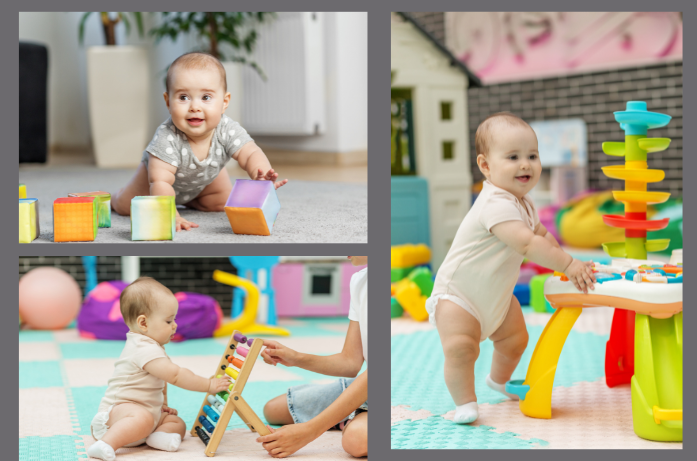
Key Early Childhood Development Milestones
Birth to 6 Months
The first few months of life are filled with rapid growth and development. During this stage, babies start becoming aware of the world around them.
This is the beginning of the child development 0–5 years journey, where early experiences play a major role in brain growth and emotional bonding.
According to the Centers for Disease Control and Prevention, babies around two months begin smiling at people, cooing, and lifting their heads during tummy time.
Physical Development
During the first few months of life, babies gradually gain better control over their bodies. They begin strengthening their neck and shoulder muscles by lifting their heads during tummy time. As their muscles grow stronger, they may start rolling from one side to the other and making more coordinated movements with their arms and legs.
Cognitive Development
At this stage, babies are learning about the world around them. They begin to recognize familiar faces, voices, and everyday sounds. They may turn their heads toward interesting noises, watch moving objects, and show curiosity about their surroundings. These early experiences help support brain development and learning.
Language Development
Although babies cannot speak yet, they are already developing important communication skills. They express their needs through crying and gradually begin making cooing, gurgling, and other simple sounds. Listening to voices and hearing language regularly helps lay the foundation for future speech and language development.
Social and Emotional Development
Babies start forming strong emotional connections with their parents and caregivers. They often smile in response to familiar faces, enjoy being held and comforted, and may become calmer when they hear a soothing voice. Positive interactions help babies feel safe, loved, and secure.
How Parents Can Help
Parents play a vital role in supporting their baby’s early development. Simple everyday activities can make a big difference:
Respond warmly to your baby’s smiles, sounds, and needs.
Talk to your baby frequently throughout the day.
Make eye contact while feeding, playing, or talking.
Sing songs, nursery rhymes, or lullabies.
Provide supervised tummy time to strengthen muscles.
6 to 12 Months
Between six and twelve months, babies become more active, curious, and eager to explore their surroundings. They learn new skills quickly and begin interacting with people and objects in more meaningful ways.
Physical Development
During this stage, babies develop greater strength, balance, and coordination. Many learn to sit independently without support and begin crawling to explore their environment. Some babies may pull themselves up to stand while holding onto furniture, and a few may even take their first steps with support.
Cognitive Development
Babies become little explorers, using their senses to learn about the world. They enjoy touching, shaking, banging, and putting objects in their mouths to discover how things work. They also begin to understand simple cause-and-effect relationships, such as pressing a button to make a toy produce a sound.
Language Development
Communication skills continue to grow rapidly during this period. Babies babble more frequently, combining sounds such as “ba-ba,” “ma-ma,” and “da-da.” They start recognizing familiar words and may respond to their own name. Some babies may begin saying simple words like “mama” or “dada” with meaning.
Social and Emotional Development
Babies form stronger emotional bonds with their parents and caregivers. They often seek comfort from familiar people and may become shy or anxious around strangers, a behavior known as stranger anxiety. They also enjoy social interactions and love playing simple games such as peek-a-boo, which help them learn about relationships and communication.
How Parents Can Support This Stage
Parents can encourage healthy development through everyday activities such as:
- Providing safe and age-appropriate toys for exploration.
- Reading simple picture books and talking about the images.
- Encouraging crawling, reaching, and other forms of movement.
- Playing interactive games like peek-a-boo and pat-a-cake.
- Talking, singing, and responding to the baby’s sounds and gestures.
- Creating a safe environment that allows the baby to explore freely.
1 to 2 Years
The period between one and two years of age is an exciting stage of growth and discovery. Toddlers become more independent, curious, and confident as they learn new skills and explore the world around them. Many important developmental milestones occur during this time, helping to build the foundation for future learning and development.
Physical Development
Most toddlers begin walking independently and gradually develop better balance and coordination. As their confidence grows, they may start running, climbing on furniture, pushing toys, and exploring their surroundings more actively. Fine motor skills also improve, allowing them to stack blocks, turn pages in a book, and pick up small objects with greater control.
Cognitive Development
Toddlers are naturally curious and eager to learn. They enjoy exploring their environment, experimenting with objects, and discovering how things work. During this stage, children begin recognizing familiar objects, identifying basic shapes and colors, and understanding simple instructions. Their problem-solving skills also start to develop through everyday play and exploration.
Language Development
Language skills grow rapidly between one and two years of age. Toddlers begin learning new words every day and may start using simple words and short phrases to express their needs and feelings. They also become better at understanding what others say and can follow simple directions. Regular conversations, songs, and stories help support their language development.
Social and Emotional Development
Toddlers begin expressing their emotions more clearly and developing stronger relationships with family members and caregivers. They may show affection through hugs and kisses, imitate the actions of adults, and enjoy being involved in everyday activities. Although they may play near other children, they are often more focused on their own activities than on playing together.
Ways Parents Can Help
Parents can support healthy development by providing a safe, loving, and stimulating environment. Helpful activities include:
- Encouraging safe exploration and movement.
- Talking to your child throughout the day about everyday activities.
- Reading books and stories together every day.
- Providing simple toys, puzzles, and hands-on activities.
- Praising effort, curiosity, and new achievements.
- Offering opportunities for play, learning, and social interaction.
2 to 3 Years
Between the ages of two and three, children become more active, independent, and expressive. This is an important stage of early childhood development as they continue to build new skills and gain confidence.
Physical Development
Children develop stronger motor skills and better coordination. They may begin jumping, kicking a ball, climbing stairs with support, and participating in more active play.
Cognitive Development
Problem-solving skills continue to improve. Children enjoy activities such as puzzles, sorting objects, matching games, and simple pretend play, which help develop their thinking and imagination.
Language Development
Language skills grow rapidly during this stage. Children begin using short sentences, asking questions, and expressing their thoughts, feelings, and needs more clearly.
Social and Emotional Development
Children start learning important social skills, such as sharing, taking turns, and interacting with others. Although sharing may still be challenging, they gradually learn how to cooperate and express emotions appropriately.
How Parents Can Encourage Development
- Engage in storytelling and conversations.
- Encourage creative and imaginative play.
- Allow children to make simple choices.
- Practice patience and provide positive guidance.
- Praise their efforts and achievements.
These activities help support healthy physical, cognitive, language, and social-emotional development during this important stage.
3 to 5 Years
The preschool years are a period of rapid growth, learning, and creativity. During this stage, children develop stronger language, thinking, and social skills as they become more independent and confident.
Physical Development
Children become more active and coordinated. They can run, jump, climb, and use simple tools such as crayons, pencils, and child-safe scissors with greater control.
Cognitive Development
Curiosity increases as children begin asking many questions about the world around them. Their imagination grows, and they enjoy pretend play, storytelling, and activities that encourage problem-solving and creativity.
Language Development
Vocabulary expands quickly during this stage. Children can speak in longer sentences, share their thoughts and experiences, and understand more complex instructions and conversations.
Social and Emotional Development
Children learn to cooperate with others, make friends, and follow simple rules. They begin understanding emotions, taking turns, and developing important social skills through play and interaction.
Ways Parents Can Support This Stage
- Encourage drawing, coloring, and creative activities.
- Read books together regularly.
- Provide opportunities to play and interact with other children.
- Encourage curiosity by answering questions and exploring new ideas.
- Praise effort and support learning through play.
These experiences help children build the skills they need for school and future development.
Signs That May Need Extra Attention
While every child develops at their own pace, parents should pay attention if a child consistently misses important milestones or shows difficulties over time.
Some signs that may need professional guidance include:
- Limited eye contact or social interaction
- Difficulty speaking or understanding simple words
- Trouble walking or coordinating movements
- Lack of interest in playing or exploring
- Loss of previously learned skills
If parents notice these concerns, it is a good idea to speak with a pediatrician or child development specialist. Early support can make a meaningful difference.
Tips for Supporting Healthy Early Childhood Development
Parents play the most important role in a child’s development. Simple daily interactions can help build strong skills and confidence.
Some helpful tips include:
Parents play a key role in supporting early childhood development milestones.
Simple activities like talking, reading, and playing help improve toddler development milestones and overall learning.
Talk and Communicate Often
Children develop language skills by listening to the people around them, especially their parents and caregivers. Regular conversations, storytelling, singing, and responding to their questions help build vocabulary, communication skills, and confidence.
Encourage Play and Exploration
Play is a natural way for children to learn about the world. Through playing, they develop creativity, problem-solving abilities, social skills, and critical thinking. Giving children opportunities to explore and discover new things supports their overall development.
Create a Safe and Loving Environment
Children thrive when they feel loved, secure, and supported. A positive environment helps them build trust, confidence, and emotional well-being, allowing them to learn and grow more effectively.
Read Books Regularly
Reading with children introduces them to new words, ideas, and experiences. It strengthens language development, improves listening skills, stimulates imagination, and helps build a strong foundation for future learning.
Maintain Healthy Routines
Consistent routines, including adequate sleep, nutritious meals, and regular physical activity, are essential for healthy growth and development. Healthy habits support children’s physical health, emotional well-being, and ability to learn successfully.
Final Thoughts
Early childhood is a crucial period for growth and learning. The experiences children have during these early years shape future development, confidence, behavior, and relationships.
By understanding developmental milestones by age and supporting children with love, patience, and encouragement, parents can help build a strong foundation for lifelong learning and well-being.
Remember, every child develops at their own pace. The most important gift parents can provide is a nurturing environment where their child feels safe, supported, and loved.
For more helpful parenting insights, visit totadvice
Frequently Asked Questions (FAQ)
1. What are early childhood development milestones?
They are skills and abilities that most children achieve at certain ages, such as walking, talking, and interacting socially.
2. Why are developmental milestones important?
They help parents and doctors track a child’s growth and identify any developmental delays early.
3. Do all children reach milestones at the same age?
No. Every child develops at their own pace, so slight differences are completely normal.
4. How can parents support their child’s development?
Parents can support development by talking, reading, playing, and providing a loving environment.
Disclaimer
This article is for informational purposes only. Child development can vary for every child. Parents should consult pediatricians or qualified healthcare professionals for specific developmental concerns or medical advice.