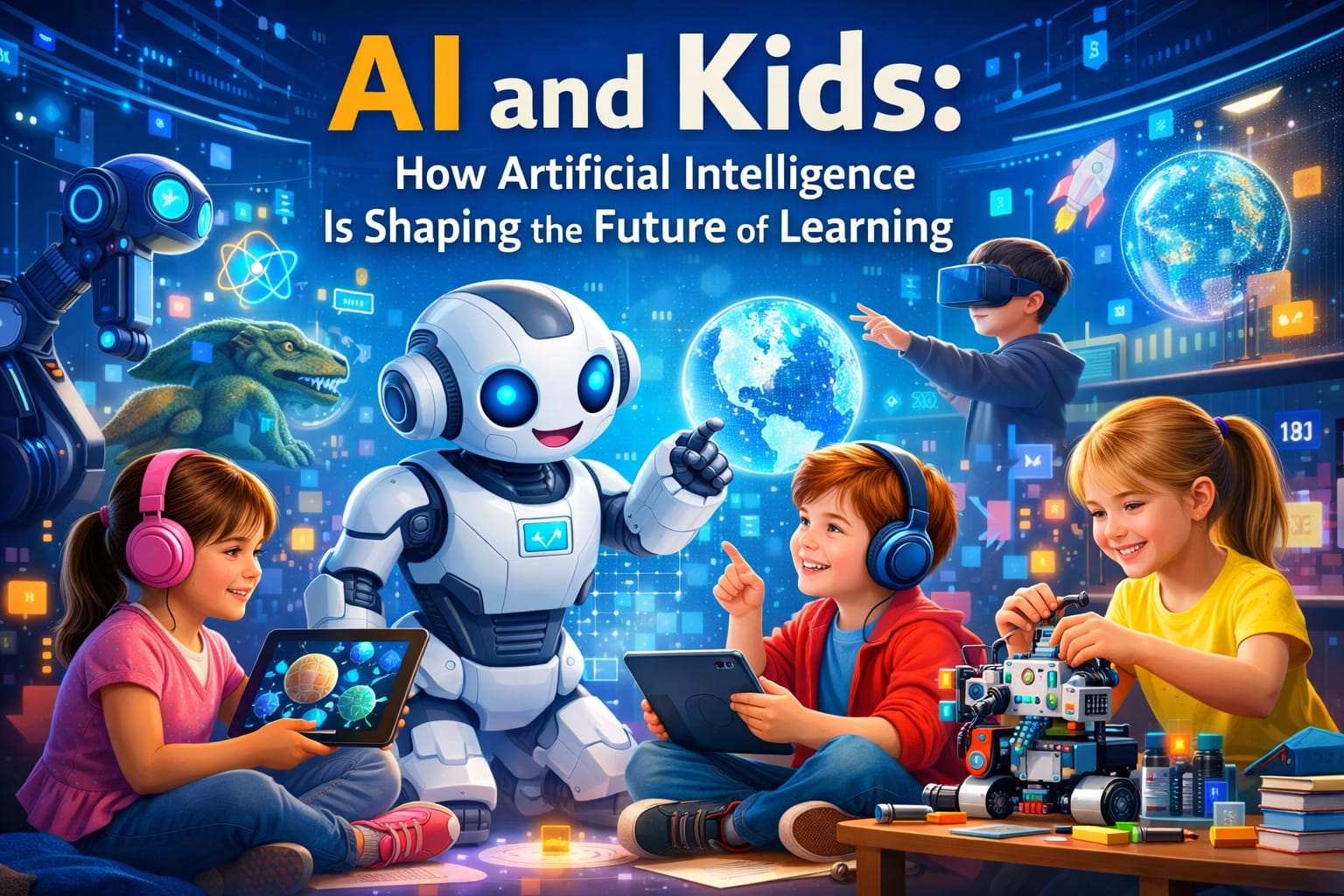
Today’s children are growing up in a world where technology is everywhere. From smartphones and smart TVs to voice assistants and learning apps, digital tools have become part of daily life. One of the most powerful technologies shaping this environment is Artificial Intelligence (AI). The growing connection between AI and kids is transforming how children learn, explore, and interact with the digital world.
AI is no longer limited to big companies or science fiction. It now influences how children learn
AI platforms do more than provide information; they encourage children to think critically.
What Does AI Mean for Children?
In simple words, AI is a technology that allows machines to think and learn like humans. When we talk about artificial intelligence for children, it means using smart technology that helps kids learn, solve problems, and explore their curiosity in new ways.
For many children, AI has become a kind of digital companion that supports their learning, play, and creativity. Whenever a child asks a question to a voice assistant or uses a learning app that adjusts content according to their level, AI is working behind the scenes.
These experiences show how AI in education is gradually becoming a part of everyday learning for children.
Personalized Learning Experience
Every child is different, and each one learns at their own pace. In the past, many children were taught using the same methods. However, AI learning tools for kids are changing this approach.
AI-based learning apps understand a child’s ability. If a child struggles with a subject, the app focuses more on that area. If the child is doing well, it introduces slightly advanced content. This allows children to learn comfortably, without pressure, and at their own speed.
Making Learning Fun and Interactive
Today’s children are naturally drawn to interactive and engaging activities. This is where technology and child development intersect in meaningful ways.
Through interactive games, animations, and quizzes, children learn while playing. When learning feels fun, children become more interested and motivated to explore new things. This approach is often more effective than traditional methods.
Boosting Creativity
AI also helps enhance children’s imagination and creativity. There are many tools available today that allow kids to create drawings, compose music, or write their own stories.
These tools demonstrate the growing benefits of AI for children, especially when it comes to creativity and experimentation.
Children are encouraged to try new ideas without fear of failure. Even if they make mistakes, they can try again and learn from the experience. This builds confidence and inspires them to keep exploring their creative potential.
Developing Problem-Solving Skills
AI platforms do more than just provide information, they encourage children to think.
Puzzles, logic games, and small challenges push children to use their minds actively. This helps improve their problem-solving abilities, which are valuable skills in everyday life as well as future careers.
These activities highlight another important aspect of technology and child development, where digital tools can help strengthen thinking and reasoning skills.
Preparing for the Future
The world is changing quickly, and AI is becoming part of almost every industry. As a result, children who are exposed to AI and kids learning technologies early often develop strong digital skills.
Understanding artificial intelligence for children today can help prepare them for tomorrow’s careers. Children become comfortable using new technologies, adapting to digital tools, and exploring innovative solutions.
This early exposure gives them a valuable advantage in a technology-driven world.
Improving Language and Communication Skills
AI can also help improve children’s language and communication skills. With speech recognition technology and interactive learning tools, children can practice pronunciation and expand their vocabulary.
Many AI learning tools for kids include language exercises that help children communicate more clearly and confidently.
These tools support technology and child development by improving both language skills and self-expression.
Balancing Benefits and Challenges
While the benefits of AI for children are significant, there are also some challenges to consider. Too much screen time can reduce physical activity. There are also concerns about overdependence on technology and data privacy.
That’s why it is important to maintain a healthy balance. Children should experience both digital learning and real-life activities.
Another challenge is the possibility of children becoming overly dependent on technology. While AI can support learning, it should never replace real-world experiences, social interaction, and creative play. Parents should encourage children to balance digital learning with outdoor activities, reading, and spending time with friends and family. Research published through PubMed Central has also explored how digital technology and screen exposure may influence child development and emotional well-being when not balanced carefully.
Why the Role of Parents Matters
No matter how advanced AI in education becomes, it can never replace parents. Parents play the most important role in guiding children as they interact with technology.
They should spend quality time with their kids, monitor their activities, and teach them how to use technology responsibly. Encouraging outdoor play and family interaction is equally important.
Final Thoughts
Technology is becoming a bigger part of children’s lives every day, and Artificial Intelligence is one of the most powerful changes shaping how kids learn and explore the world. When used thoughtfully, AI can make learning more engaging, help children develop problem-solving skills, and spark creativity in ways that traditional tools sometimes cannot.
At the same time, it’s important to remember that technology should support childhood, not replace it. Kids still need time for outdoor play, imagination, friendships, and family moments. With the right balance and guidance from parents, AI and kids can work together in a positive way that supports learning while keeping childhood joyful and meaningful.
If you’d like to explore more helpful parenting tips, child development insights, and guides on raising children in today’s digital world, visit TotAdvice
Conclusion
Artificial Intelligence is transforming how children learn, explore, and develop new skills. The relationship between AI and kids continues to grow as technology becomes more integrated into education and daily life.
However, balance is essential. Parents and educators must guide children in using technology responsibly while also encouraging outdoor play, social interaction, and real-world experiences.
When combined with proper guidance, AI can become a powerful tool that supports technology and child development, helping the next generation grow into creative, confident, and responsible individuals.