
Baby belly button sticking out can look worrying, especially when the bulge becomes more noticeable while your baby cries or strains. Fortunately, it is often caused by the natural shape of the belly button or a common umbilical hernia.
A belly button that sticks out is quite common in babies. Sometimes it’s simply the shape of the belly button, while a noticeable soft bulge can be an umbilical hernia. Most umbilical hernias in babies are painless and close naturally as children grow.
So, when will baby’s belly button go in? There isn’t one exact age for every child. Let’s look at why this happens, what you can expect as your little one grows, and the signs that deserve a call to your pediatrician.
Why Does My Baby’s Belly Button Stick Out?
During pregnancy, the umbilical cord passes through a small opening in your baby’s abdominal muscles. After birth, the cord is cut, and eventually the little stump dries up and falls off.
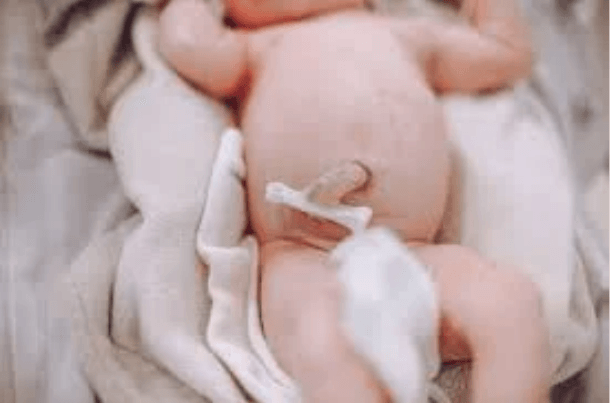
Normally, the opening in the abdominal wall gradually closes. Sometimes, however, it doesn’t close completely right away. A small amount of tissue can then push through the opening, creating a soft bump around the belly button.
This is known as an umbilical hernia in babies.
You might notice that the bump becomes much more obvious when your baby cries, coughs, strains, or stretches. When your baby relaxes, the belly button may become smaller or almost flat again.
Is an Outie Belly Button Always a Hernia?
Not necessarily.
Some babies naturally have an outie belly button without having a hernia. Belly buttons come in different shapes, just like noses, ears, and toes.
However, if you notice a distinct baby belly button bulge, particularly one that gets larger when your baby cries or strains, your pediatrician may check for an umbilical hernia.
Thankfully, this is usually something doctors can identify easily during a routine physical examination.

Baby’s Belly Button Sticking Out: When Will It Go In?
This is probably the question you most want answered.
If the protruding belly button is caused by an umbilical hernia, there is a very good chance it will gradually become smaller as the opening in the abdominal wall closes with growth.
Most childhood umbilical hernias close on their own during the early years. The American Academy of Pediatrics notes that most have closed by age 4, while many children’s surgical services use age 4–5 as a point to review a hernia that persists. Smaller openings may close earlier. Your child’s clinician can explain the monitoring plan for their particular hernia.
That means you may see your baby’s belly button changing slowly rather than suddenly going from an “outie” to an “innie.”
Your pediatrician will usually monitor it during regular checkups instead of rushing into treatment when your baby is otherwise comfortable and healthy.
Newborn Belly Button Sticking Out After the Cord Falls Off
Seeing a newborn belly button sticking out can be especially surprising if you expected a tiny flat belly button after the umbilical stump disappeared.
Remember that the area has just gone through a lot of change.
After the cord falls off, your baby’s belly button may not immediately look the way you expected. Give the area time to heal, and avoid pulling, pressing, or trying to reshape it yourself.
Spreading redness, warmth, swelling, pus, or a foul smell around the healing cord needs urgent medical assessment, especially if your newborn feeds poorly or seems unwell. Cord infections can become serious quickly and are different from an uncomplicated hernia.
For a baby younger than 3 months, a temperature of 38°C (100.4°F) or higher needs immediate medical advice and assessment, even if they otherwise seem comfortable. Do not wait for the next routine appointment.
A small moist pink or red lump after the stump falls off may instead be an umbilical granuloma. A clinician should check it, particularly if discharge persists. Do not assume it is a hernia or start a home treatment before the cause is confirmed.
Why Does the Umbilical Hernia Get Bigger When My Baby Cries?
This can look scary the first time you notice it.
An umbilical hernia when baby cries may suddenly appear larger because crying increases pressure inside the abdomen. The same thing can happen when your baby coughs, strains during a bowel movement, or moves vigorously.
Once your baby settles down, the bulge will often become smaller again.
Crying itself isn’t usually causing the hernia or making your baby cry because of pain. The increased abdominal pressure simply makes an existing opening easier to see.
Still, pay attention to how your baby behaves. A painful or firm bulge, vomiting, or discoloration needs immediate assessment rather than waiting to see whether your baby settles. Normal crying does not need to be prevented to make an uncomplicated hernia heal.
Does an Umbilical Hernia Go Away on Its Own?
In many babies, yes.
One of the reassuring things about umbilical hernia in babies is that most cases don’t require treatment. As your child grows, the small opening in the abdominal wall can gradually close. This is not something parents need to speed up with exercises, massage, or pressure.
Doctors often recommend watching and waiting when the hernia is small, painless, and uncomplicated.
Surgery may be considered if the hernia is very large, causes complications, or remains open beyond the age when spontaneous closure would normally be expected. Your child’s doctor can make that decision based on the opening’s size, symptoms, age, and overall health. The size of the muscle opening matters more than how far the belly button sticks out. A pediatric surgeon can explain why earlier repair is or is not appropriate; appearance alone does not tell parents how urgent treatment is.
Can You Push a Baby’s Belly Button Back In?
A soft bulge may become flatter when your baby relaxes, and a doctor may examine whether it can return through the opening. Parents should not press it repeatedly, force it inward, or try to treat a painful bulge at home. Pushing does not close the opening.
More importantly, don’t tape a coin, button, bandage, or other object over your baby’s belly button.
You may hear this traditional advice from well-meaning relatives, but covering or tightly binding the area doesn’t make the abdominal opening close faster. It can instead irritate your baby’s delicate skin.
The safest approach is usually the simplest: leave the belly button alone and let your pediatrician monitor it.
When Should I Worry About My Baby’s Belly Button?
Most protruding belly buttons aren’t emergencies. Still, knowing when to worry about baby’s belly button can help you feel more confident instead of second-guessing every change.
Go for emergency medical assessment now if your baby’s belly button bulge:
- Suddenly becomes hard, very swollen, or tender
- Stays unusually prominent and firm when your baby relaxes; do not press it to test this
- Changes noticeably in color, particularly becoming red, purple, or dark
- Is accompanied by repeated vomiting
- Appears painful and your baby is unusually distressed
- Occurs with a swollen abdomen or your baby seems very unwell
These symptoms can occasionally mean tissue has become trapped in the hernia. This complication is uncommon in children, but it needs immediate medical assessment. Do not try to push the bulge back in or wait for the next checkup. If your baby collapses, is difficult to wake, or has trouble breathing, call your local emergency number.
And remember, you don’t need to wait for an emergency sign before talking to your pediatrician. If something about your baby’s belly button simply doesn’t look right to you, asking is always reasonable.
How Can I Care for My Baby’s Belly Button at Home?
Usually, you don’t need a special treatment routine for an uncomplicated outie or umbilical hernia.
Keep your baby’s belly button clean and dry, especially while the umbilical stump is still healing. Fold the front of the diaper down if necessary so it doesn’t constantly rub against the area.
Diaper changes are also a big part of those early newborn days, and you may find yourself wondering when a fresh diaper is needed. Our guide on how often to change a newborn diaper walks you through wet and dirty diapers, nighttime changes, and gentle care for your baby’s delicate skin.
Choose comfortable clothes that do not rub the healing area. Do not use tight wraps, hernia belts, adhesive patches, powders, oils, or other remedies to reshape the belly button. If the stump is still attached, let it separate naturally rather than pulling it off. Follow the cord-care advice given by your maternity team.
Most importantly, try not to check or press the bulge over and over throughout the day. That can be difficult when you are worried. Watching for meaningful changes is useful, but constantly touching it won’t help it close any sooner.
You can even take an occasional photo if you want to keep track of how it changes over several months. That can also be useful to show your pediatrician.

Will My Baby Always Have an Outie Belly Button?
Not necessarily, but there is also nothing wrong with having an outie.
If your baby’s protruding belly button is related to an umbilical hernia, its appearance may change considerably once the opening closes. In other children, the belly button may continue to stick out somewhat simply because of its natural shape.
Whether your child eventually has an innie or an outie doesn’t determine whether their belly button is healthy.
As parents, it can be easy to compare every little detail of our babies with other children. But tiny bodies don’t all develop in exactly the same way or on exactly the same schedule.
What Will the Pediatrician Check?
If you mention the baby’s belly button sticking out at a routine appointment, your pediatrician will usually examine the area and determine whether an umbilical hernia is present.
They may look at the size of the opening, whether the bulge is soft, and whether it changes when your baby relaxes or strains.
In most straightforward cases, imaging tests aren’t necessary.
Your pediatrician may simply continue checking the belly button during future visits while giving your baby’s body time to close the opening naturally.
Questions You Can Ask at the Appointment
If you’re feeling worried, write down your questions before the visit. Sleep-deprived parent brain has a funny way of making every question disappear the second the doctor walks into the room!
You might ask:
- Does this look like an umbilical hernia?
- How large is the opening?
- Do we need to do anything at home?
- What changes should I watch for?
- At what age would you consider treatment if it hasn’t closed?
Getting clear answers about your own baby’s situation can be far more reassuring than comparing photos online.
When Will Baby’s Belly Button Go In?
If you’re waiting for a specific month when you’ll suddenly wake up and see a flat belly button, unfortunately, babies don’t make it quite that predictable.
Small umbilical hernias can close during infancy or toddlerhood, while others take several years. Most close naturally by around 4 to 5 years of age.
The important thing isn’t whether the belly button becomes an “innie” quickly. What matters is that your baby is comfortable, growing normally, and the hernia isn’t showing signs of complications.
Regular pediatric checkups give your child’s doctor plenty of opportunities to follow its progress.
Frequently Asked Questions
1. When will my baby’s belly button go in?
2. Is every outie an umbilical hernia?
3. Does crying make the hernia worse?
4. Can I tape a coin over the belly button?
5. Should I push the bulge back in?
6. Will my baby need surgery?
7. What is an umbilical granuloma?
8. Which symptoms need immediate care?
9. Can my baby have normal cuddles and play?
10. Should I wait until age five before showing it to a doctor?
Final Thoughts
Finding an unexpected little bump on your baby’s tummy can quickly make you worry. But in most cases, a baby’s belly button sticking out is much less alarming than it first appears.
If it’s an umbilical hernia, there’s a good chance it will gradually close as your little one grows. You usually don’t need to tape it, push it down, or try home remedies, just keep an eye on it and let your pediatrician check it during routine visits.
And whether your little one eventually ends up with an innie or keeps the cutest little outie, remember that belly buttons don’t all have to look the same.
Keep watching your baby rather than worrying about achieving the “perfect” belly button. If your little one is comfortable and your pediatrician is happy with how things are progressing, you can give that tiny tummy plenty of time to grow and change.
For more gentle guidance through those early parenting days, explore Tot Advice for baby care tips and support as your little one grows. You don’t have to figure out every new worry alone, take it one day, one cuddle, and one small milestone at a time.
Resources
American Academy of Pediatrics: Umbilical Hernia in Babies and Children
American Academy of Pediatrics: Umbilical Cord Care in Newborns
Disclaimer
This article is for general educational and parenting information only and does not replace individualized medical advice. Have a new, persistent, or uncertain belly-button bulge checked by your baby’s pediatrician. Seek urgent medical care for spreading redness, warmth, swelling, pus, foul-smelling discharge, poor feeding, or an unwell newborn. A baby younger than 3 months with a temperature of 38°C (100.4°F) or higher needs immediate medical assessment. Seek emergency care if the bulge becomes hard, very swollen, painful, discolored, remains unusually firm when your baby relaxes, or occurs with repeated vomiting, a swollen abdomen, collapse, difficulty waking, or breathing problems.
About the Author
Geeta Yogi writes warm, practical parenting content about newborn care, baby development, feeding, sleep, health, and everyday family concerns. She focuses on clear, reassuring guidance that helps parents understand common baby changes while recognizing when professional medical advice may be needed.