
Pregnancy changes your body in the most beautiful and overwhelming ways at the same time. One day you’re glowing with excitement, and the next you’re wondering why you suddenly feel tired, dizzy, or constantly thirsty.
As a mom who has been through those long, emotional pregnancy days, I can honestly say that learning simple hydration tips for pregnant women made a huge difference in how I felt physically and emotionally.
Staying hydrated while pregnant is not just about drinking water. It’s about caring for your growing baby, supporting your changing body, and giving yourself the gentle love you truly deserve.
Motherhood often begins with small acts of care, and healthy hydration during pregnancy is one of the easiest yet most important habits you can build.
Why Hydration Matters So Much During Pregnancy
Your body works harder during pregnancy than ever before. Blood volume increases, your baby needs amniotic fluid for protection, and your organs are constantly adjusting to support your little one’s growth.
That’s why proper hydration becomes essential.
The pregnancy hydration benefits go far beyond simply quenching thirst. Drinking enough fluids can help:
- Reduce headaches and dizziness
- Prevent constipation
- Lower the risk of urinary tract infections
- Support healthy amniotic fluid levels
- Help nutrients reach your baby
- Reduce swelling and overheating
- Improve energy levels
Many moms don’t realize that even mild dehydration can leave you feeling exhausted and uncomfortable. During pregnancy, your body sends stronger signals when it needs fluids, so listening to those signs matters.
According to this comprehensive pregnancy hydration guide, staying well hydrated supports healthy circulation, helps nutrients reach your growing baby, and plays an important role in maintaining amniotic fluid levels throughout pregnancy.
Hydration Tips for Pregnant Women Every Mom Should Know
Every pregnancy is different, but these simple and comforting habits can make staying hydrated while pregnant feel much easier and more natural.
Start Your Morning with Water
Before reaching for tea or breakfast, drink a glass of water first thing in the morning.
Pregnancy often causes dehydration overnight, especially if you wake up sweating, dealing with nausea, or making multiple bathroom trips. Starting your day with water helps your body feel refreshed and balanced.
A little trick that helped me personally was keeping a bottle beside the bed every night. Some mornings, even taking small sips before standing up helped ease nausea.
Carry a Water Bottle Everywhere
This sounds simple, but it truly works.
Pregnancy brain is real, and busy days can make it easy to forget water intake during pregnancy. Keeping a reusable water bottle nearby acts as a gentle reminder throughout the day.
Choose a bottle you actually enjoy using. Sometimes something as small as a cute straw bottle or an insulated tumbler makes hydration feel less like a task and more like self-care.
Sip Slowly If You Feel Nauseous
Morning sickness can make drinking water difficult, especially in the first trimester.
Instead of forcing large amounts at once, take small sips throughout the day. Cold water, ice chips, or fruit-infused water may feel easier on your stomach.
Many moms also find that adding lemon, cucumber, strawberries, or mint makes water more refreshing and manageable.
Remember, doing your best is enough. Some days are harder than others.
How Much Water to Drink During Pregnancy
One of the most common questions moms ask when looking for hydration tips for pregnant women is how much water to drink during pregnancy.
While every woman’s needs are slightly different, most pregnant women benefit from around 8–12 cups of fluids daily. Hot weather, exercise, vomiting, or breastfeeding preparation may increase those needs even more.
Healthcare organizations such as St. Joseph’s/Candler Health System also emphasize that hydration needs can increase during pregnancy as your body works harder to support blood volume, circulation, and your baby’s development.
If carrying a large water bottle feels easier, try choosing one with measurement markers to help track your daily intake without stress.
But instead of stressing over exact numbers, focus on consistency.
A good pregnancy hydration guide is to:
- Drink regularly throughout the day
- Avoid waiting until you feel very thirsty
- Check urine colour, pale yellow usually means good hydration
- Increase fluids during hot days or activity
Your body is incredibly smart. Learning to notice its signals helps more than obsessing over measurements.
Signs of Dehydration During Pregnancy
Sometimes dehydration sneaks up quietly, especially during busy days.
Knowing the signs of dehydration during pregnancy can help you respond early before symptoms become more serious.
Common Signs Include:
- Dark yellow urine
- Dry mouth or lips
- Headaches
- Dizziness
- Fatigue
- Muscle cramps
- Feeling overheated
- Rapid heartbeat
- Reduced urination
Leg cramps during pregnancy are also common for many expectant mothers, and staying properly hydrated may help reduce their frequency and discomfort.
More severe dehydration may even trigger contractions or increase the risk of complications, which is why hydration deserves real attention during pregnancy.
If you ever feel extremely weak, faint, or unable to keep fluids down, contact your healthcare provider immediately.
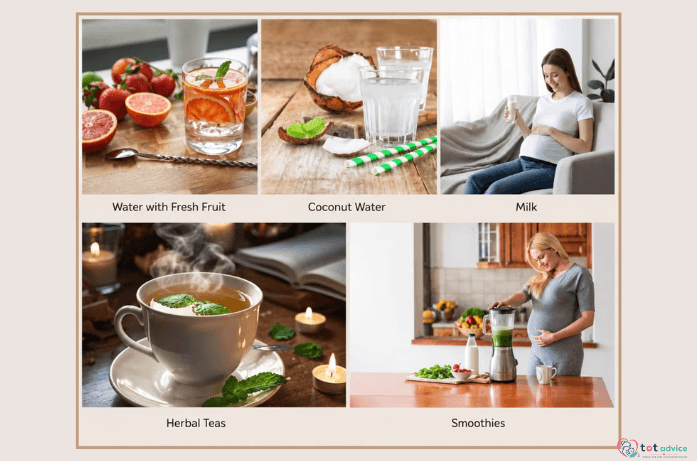
Best Drinks for Pregnancy Hydration
Water will always be the gold standard, but let’s be honest, drinking plain water all day can become boring.
The good news is there are several safe and nourishing options that support healthy hydration during pregnancy.
Water with Fresh Fruit
Adding fruit naturally boosts flavor without artificial sugars.
Try combinations like:
- Lemon and mint
- Orange slices
- Strawberry and basil
- Cucumber and lime
These small touches can make hydration feel refreshing and enjoyable.
Coconut Water
Coconut water contains natural electrolytes that may help replenish fluids, especially during hot weather or after vomiting.
Just choose varieties without added sugars whenever possible.
Milk
Milk supports both hydration and nutrition. It provides calcium, protein, and important nutrients your growing baby needs.
Cold milk also feels soothing for many pregnant moms dealing with heartburn.
Herbal Teas
Some caffeine-free herbal teas can be comforting during pregnancy.
Warm ginger tea may help nausea, while peppermint tea can feel calming after meals. Always check with your healthcare provider before regularly consuming herbal teas, since not all are pregnancy-safe.
Smoothies
Homemade smoothies can help hydrate while adding vitamins, fiber, and protein.
A simple banana smoothie with yogurt and berries can be both nourishing and gentle on sensitive stomachs.
Drinks to Limit During Pregnancy
Healthy hydration during pregnancy also means being mindful of certain drinks that may leave you feeling more tired or dehydrated later.
Sugary Drinks
It’s completely okay to enjoy a sweet drink once in a while during pregnancy. But having too many sodas or sugary beverages regularly can cause energy crashes and increased thirst. Try balancing them with water, coconut water, or fresh fruit-infused drinks whenever possible.
Too Much Caffeine
That comforting cup of coffee can still be part of your routine in moderation. However, too much caffeine may contribute to dehydration during pregnancy. If you enjoy coffee or tea, simply drink extra water throughout the day to help your body stay balanced and refreshed.
You do not have to give up every little joy to be a good mom.
Easy Ways to Stay Hydrated Throughout the Day
These hydration tips for pregnant women can make daily water intake feel much easier and more manageable.
Some moms naturally love drinking water, while others struggle with it every single day, especially during pregnancy. If staying hydrated feels difficult sometimes, you are definitely not alone. A few small and gentle habits can make it much easier without feeling overwhelming.
Eat Water-Rich Foods
Hydration doesn’t only come from what you drink. Many fruits and healthy foods naturally contain a lot of water and can help support your fluid intake during pregnancy.
Foods like watermelon, cucumbers, oranges, strawberries, lettuce, celery, and warm soups can all help your body stay refreshed. Cold fruits especially feel comforting during pregnancy cravings, hot weather, or moments when plain water feels boring.
Set Small Goals
Instead of worrying about drinking a huge amount of water all at once, focus on simple little habits throughout the day. Try having one glass after waking up, one with meals, and small sips whenever you take a break.
These tiny routines feel much easier to manage and slowly become part of your everyday pregnancy care.
Use Gentle Reminders
Pregnancy can make even simple things easier to forget. Phone reminders, marked water bottles, or hydration apps can gently encourage you to drink more water without adding pressure.
Sometimes all you need is a small reminder to pause, breathe, and take care of yourself too.
Staying Hydrated While Pregnant During Different Trimesters
Your body’s hydration needs can change throughout pregnancy, and each trimester brings its own challenges and experiences. Some stages may feel easier, while others require a little extra care and patience.
First Trimester
Nausea and morning sickness can make drinking water difficult during early pregnancy. Small sips, ice chips, electrolyte drinks if recommended, and water-rich fruits may feel easier on your stomach. Some days are simply about getting through, and that’s okay.
Second Trimester
Energy often improves during the second trimester, making it easier to build healthy hydration habits. You may notice increased thirst, more sweating, and a bigger appetite as your baby continues to grow.
Third Trimester
During the final months, your body needs even more support. Staying hydrated while pregnant may help reduce swelling, prevent overheating, support circulation, and ease Braxton Hicks contractions. Regular fluid intake becomes especially important as your due date gets closer.
Emotional Self-Care and Hydration
Pregnancy is emotional.
Some days you feel deeply connected to your baby, while other days you simply feel exhausted and uncomfortable. In those moments, hydration can become an act of emotional care too.
Sitting down with a cold drink, resting your feet, and taking a few quiet moments for yourself matters more than you think.
Motherhood often teaches us to care for everyone else first, but your body deserves kindness too.
You are growing an entire human being.
That is extraordinary.
A Gentle Pregnancy Hydration Guide for Busy Moms
Pregnancy can feel overwhelming at times, so try to keep hydration simple and manageable. Small habits throughout the day can help you feel more refreshed without adding extra stress to your routine.
Morning
- Start your day with a glass of water
- Eat a hydrating breakfast like fruit, yogurt, or oatmeal
Afternoon
- Keep a water bottle nearby during work or errands
- Try drinking water before meals
Evening
- Choose herbal tea or infused water
- Snack on water-rich foods like fruits
- Sip water slowly before bedtime
You do not need to do everything perfectly. Small consistent efforts are more than enough.
When to Talk to Your Doctor
Mild dehydration can happen during pregnancy, especially during hot weather or morning sickness. But some symptoms should always be taken seriously.
Reach out to your healthcare provider if you notice:
- Severe dizziness
- Fainting
- Strong contractions
- Very dark urine
- Rapid heartbeat
- Trouble keeping fluids down
- Reduced baby movement later in pregnancy
Trust your instincts. If something doesn’t feel right, it’s always okay to ask for help.
FAQs About Hydration During Pregnancy
1. How much water should pregnant women drink daily?
Most pregnant women benefit from around 8–12 cups of fluids daily, though needs can vary depending on weather, activity, and symptoms.
2. What are signs of dehydration during pregnancy?
Common signs include dark urine, dizziness, headaches, dry mouth, fatigue, and reduced urination.
3. Can dehydration affect pregnancy?
Yes, severe dehydration may increase discomfort and can sometimes contribute to complications like contractions or dizziness.
4. What are the best drinks for pregnancy hydration?
Water, milk, coconut water, smoothies, and doctor-approved herbal teas can help support healthy hydration during pregnancy.
5. How can I stay hydrated if I feel nauseous during pregnancy?
Small sips, cold water, ice chips, fruit-infused water, and water-rich foods may feel easier to tolerate during nausea.
Final Thoughts
Pregnancy is filled with tiny daily choices that quietly shape your health and your baby’s well-being. And honestly, hydration is one of the simplest but most powerful ways to support both.
If you’re struggling to drink enough water, please don’t be hard on yourself. Some days pregnancy feels graceful, and other days it simply feels exhausting. What matters most is continuing to care for yourself little by little.
Take the small sip of water.
Rest when you need to.
Listen to your body.
Give yourself grace.
For more expert-backed parenting and pregnancy guidance, visit TotAdvice and explore helpful resources designed to support moms through every beautiful stage of motherhood.