
Bringing a little structure into your baby’s day can feel like a big task, especially when you’re still finding your own rhythm as a new mom. But honestly, creating a daily routine for a 3-month-old baby doesn’t have to be rigid or overwhelming. At this stage, your baby is slowly starting to notice the world around them, and even a gentle, flexible routine can make them feel safe and settled. And the beautiful part? It helps you feel a bit calmer and in control too.
As a mom, I truly understand how unpredictable these early months can be. Some days everything flows so smoothly, and other days feel like one long cycle of feeding, rocking, and trying to find a few quiet moments to rest. And that’s okay, really. You’re not doing anything wrong. You’re simply learning your baby, and your baby is learning you too.
So instead of chasing a “perfect” schedule, let’s look at a simple, realistic way to shape your baby’s day, something that gently supports their needs while also giving you a little space to breathe, rest, and just be.
Understanding a 3-Month-Old Baby Routine
At this stage, your baby is slowly beginning to develop patterns in sleep, feeding, and awake time. A 3-month-old baby routine doesn’t have to be strict; it’s more about creating a gentle flow that supports your baby’s natural rhythm.
Instead of following the clock too closely, focus on simple patterns like feeding, short playtime, and restful sleep. Over time, these small, consistent habits help your baby feel more secure and settled throughout the day.
And remember, every baby is different. What matters most is not perfection, but finding a rhythm that feels right for both you and your little one.
Why a Daily Routine for a 3-Month-Old Baby Matters
At around three months, you might start noticing little changes in your baby. They begin to recognize familiar voices, respond to your touch, and slowly pick up on patterns in their day. This is where a gentle baby routine for 3 months can quietly make a big difference.
Now, this doesn’t mean following a strict clock or trying to control every moment. It’s more about creating a soft, predictable flow, something your baby can begin to trust. When their day has a bit of rhythm, it often helps them feel more relaxed and secure.
Over time, a simple routine can:
- Help your baby settle into better sleep patterns (and yes, that helps you too)
- Reduce those fussy, hard-to-understand moments
- Give you a small sense of structure in your day
- Support your baby’s overall growth and development
But here’s something I always remind myself: routine isn’t about getting everything “right”—it’s about finding what works for you and your baby.
It’s not about perfect timing or comparing your day to someone else’s. It’s about finding a gentle rhythm that feels natural for your baby and for you.
Some days will go as planned, and some days will completely surprise you. Both are perfectly okay.
A simple daily routine for a 3-month-old baby helps support better sleep, feeding patterns, and overall development while making your day more manageable.
Understanding Your 3-Month-Old Baby’s Needs
Before trying to shape any kind of routine, it really helps to pause and understand what your baby actually needs at this stage. At three months, your little one is still growing so quickly, and their needs can change from week to week. When you tune into these needs, creating a 3-month-old baby routine starts to feel much more natural.
Sleep Needs
Sleep is a big part of your baby’s world right now. Most babies at this age sleep around 14–17 hours in a full day, but it’s usually broken up into smaller chunks.
This often includes:
- Around 3 to 5 naps during the day
- Slightly longer stretches of sleep at night (though waking up is still completely normal)
Some nights your baby may sleep a little longer, and other nights they may wake more often, and both are okay. Their sleep is still maturing, so try not to worry too much about consistency just yet.
Feeding Needs
Feeding is still the heart of your baby’s routine. Whether you’re breastfeeding or formula feeding, your baby will usually want to eat every 2.5 to 3.5 hours.
But more than the clock, it’s your baby’s cues that matter most.
You might notice:
- Rooting or turning their head
- Sucking on hands
- Becoming a little fussy
These are gentle ways your baby is telling you, “I’m hungry.” Following these cues helps build a routine that feels responsive and comforting.
Awake Time
At this age, babies can only handle a short window of being awake, usually around 1 to 1.5 hours at a time.
During this time, keep things simple and calm:
- A little tummy time
- Talking or singing
- Just letting your baby look around
If your baby stays awake too long, they can become overtired, which often leads to fussiness and difficulty settling down. That’s why short, gentle play sessions work best in a baby routine at 3 months.
The key here is not to follow strict rules, but to understand your baby’s natural rhythm. When you do that, everything, from sleep to feeding, starts to fall into place a little more easily.
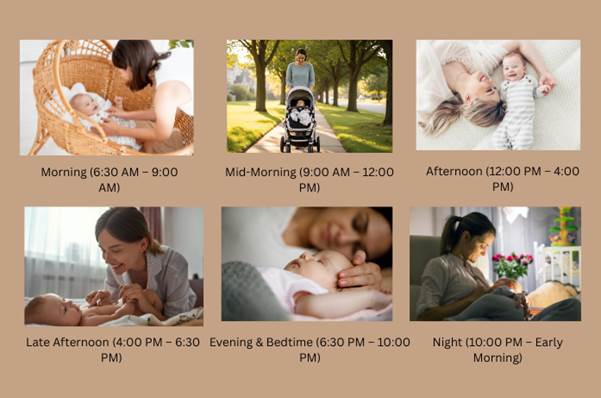
A Simple Daily Routine for a 3-Month-Old Baby
Let’s be real: no two days with a baby look the same. Some days feel smooth and predictable, and other days feel like everything is a little off. That’s why this schedule for a 3-month-old baby is not something you have to follow strictly. Think of it as a gentle guide, something you can shape around your baby’s mood, sleep, and feeding cues.
A simple flow like this can slowly turn into a comforting daily routine 3 month old baby, without any pressure to get it perfect.
Morning (6:30 AM – 9:00 AM)
Wake Up + Feed + Gentle Play
Most babies naturally wake up somewhere between 6:30 and 7:30 in the morning. Try to begin the day calmly, with a peaceful feeding session. There’s no rush; just hold your baby close and ease into the day together.
After feeding, this is a lovely time to connect:
- Talk softly to your baby
- Make eye contact and smile
- Try a few minutes of tummy time
Mornings are often when babies feel the most content and alert, so it’s a beautiful window for bonding.
Nap 1
After about an hour or so of being awake, your baby will start showing sleepy signs. This is usually the perfect time for the first nap of the day.
Mid-Morning (9:00 AM – 12:00 PM)
Feed + Activity + Nap
Once your baby wakes up, they’ll likely be ready to feed again. After that, keep playtime light and gentle.
You might:
- Sing softly
- Offer a soft toy
- Simply cuddle and talk
If you feel up to it, this is also a great time to step outside for a short walk. A little fresh air can be so calming, for both your baby and you.
Nap 2
After another short awake window (around 60–90 minutes), your baby will be ready for their next nap.
Afternoon (12:00 PM – 4:00 PM)
Feed + Calm Play + Nap
Afternoons can feel a bit slower, and that’s perfectly okay. You don’t need to plan anything big; simple moments are more than enough.
You can:
- Give a gentle baby massage
- Talk or read in a soft voice
- Let your baby quietly observe their surroundings
These little interactions help your baby learn and feel secure without overwhelming them.
Nap 3
This nap may be shorter than the earlier ones, and that’s completely normal in a baby’s routine at 3 months. Every baby’s nap pattern is a little different.
Late Afternoon (4:00 PM – 6:30 PM)
Feed + Short Awake Time
This part of the day can sometimes feel a bit challenging. Many babies get a little fussy in the evening; it’s often called the “witching hour.”
If your baby seems unsettled, try to keep things extra calm:
- Gentle rocking
- Soft, soothing music
- Skin-to-skin cuddles
Sometimes your baby may take a short catnap here, and sometimes they won’t. Either way is okay.
Evening & Bedtime (6:30 PM – 10:00 PM)
Wind Down + Feed + Sleep
As the day comes to an end, start slowing everything down. A simple, calming bedtime routine can really help your baby settle.
You might include:
- A warm bath (if your baby enjoys it)
- Dim lighting
- Quiet cuddles and soft talking
After feeding, gently help your baby drift off to sleep. At this age, bedtime can vary quite a bit; some babies sleep earlier, while others settle closer to 9 or 10 PM.
Night (10:00 PM – Early Morning)
At this stage, waking up during the night is still completely normal in a 3-month-old baby’s routine.
Your baby may wake:
- 1 to 3 times for feeding
- Or sometimes just needing comfort and closeness
During night wakings, try to keep everything quiet and calm, with low lights, soft voices, and minimal stimulation. This slowly helps your baby understand that nighttime is for rest.
The most important thing to remember is this: your baby doesn’t need a perfect schedule. They just need you, your presence, and a gentle rhythm to their day. Over time, this simple routine will start to feel more natural, and both you and your baby will find your own comfortable flow.
Tips to Make Your Baby Routine Work in Real Life
One thing I’ve learned as a mom is this: no two babies are the same. What works beautifully for one baby might not work at all for another, and that’s completely okay. Your baby is unique, and your routine will naturally grow around their little personality.
Follow Your Baby’s Cues
Instead of constantly watching the clock, try gently shifting your focus to your baby. They have their own quiet way of telling you what they need; you just start noticing it more over time.
You might see:
- Your baby rubbing their eyes or looking away when they’re getting sleepy
- Turning their head or becoming fussy when they feel overstimulated
- Sucking on their hands or rooting when they’re hungry
These small signals are your baby’s way of communicating with you. And the more you tune into them, the easier your baby routine at 3 months will start to feel.
It may not always be perfect, and some days will still feel unpredictable, but when you follow your baby instead of forcing a schedule, everything begins to flow a little more naturally.
Trust yourself and trust your baby. You’re both learning together.
Keep It Flexible
One of the most important things to remember is that a daily routine 3 month old baby should support you, not stress you out. It’s there to make your days feel a little smoother, not to box you into a rigid schedule.
The truth is, some days will look completely different from what you planned. And that’s just part of life with a baby.
On some days:
- Naps might be shorter than usual
- Your baby may want to feed more often
- Or they might simply need extra cuddles and closeness
And you know what? That’s perfectly okay.
Babies go through little changes all the time, growth spurts, mood shifts, and new developments, and your routine will naturally adjust along the way. Instead of trying to make everything go “by the book,” allow yourself to go with the flow.
Let go of the idea of perfection. What matters most is that your baby feels loved, comforted, and cared for, and you’re already doing that beautifully, just by being there.
Focus on Gentle Patterns, Not Strict Timing
Instead of trying to follow exact timings throughout the day, it can feel much easier and more natural to focus on a simple flow. At this stage, your baby doesn’t need a strict schedule. What really helps is a gentle, predictable pattern like:
Feed → Play → Sleep
This rhythm works beautifully for most babies because it matches their natural needs. They wake up, feed when they’re hungry, spend a little time exploring or bonding with you, and then drift off to sleep when they’re tired.
Over time, this simple pattern becomes the heart of your baby’s’s routine for 3 months, without you even needing to think too much about the clock.
Create a Calm Sleep Environment
Sleep can sometimes feel like the trickiest part of the day, but a calm and consistent environment can make a big difference, even for daytime naps.
Try to keep things soft and soothing:
- Use gentle lighting instead of bright lights
- Reduce noise as much as possible
- Swaddle your baby if they find comfort in it
These small touches help signal to your baby that it’s time to rest. When the environment feels familiar and peaceful, your baby can relax more easily and settle into sleep with less fuss.
It doesn’t have to be perfect; just a quiet, comforting space filled with your presence is more than enough.
Take Care of Yourself Too
In the middle of feeding, soothing, and caring for your little one, it’s so easy to forget about yourself. But the truth is, you matter just as much. Your well-being plays a big role in how your baby feels, too.
Try to give yourself a little care wherever you can:
- Rest when your baby naps, even if it’s just closing your eyes for a while
- Ask for help when you need it; there’s no need to do everything alone
- Take small breaks during the day, even a few quiet minutes for yourself
You don’t have to be “on” all the time. It’s okay to slow down.
A calm, cared-for mom creates a peaceful space for her baby to grow and feel safe. So be gentle with yourself; you’re doing an incredible job, even on the days that feel hard.
What If My Baby Doesn’t Follow a Routine?
Let me say this gently: that’s completely okay.
It’s so easy to feel like something is wrong when your baby doesn’t fit into a routine you’ve seen or read about. But the truth is, babies are not the same. Some naturally settle into patterns early on, while others take their own sweet time, and both are perfectly normal.
If your baby:
- Skips naps or naps for very short periods
- Feeds at different times every day
- Has fussy moments, especially in the evening
…it doesn’t mean you’re doing anything wrong at all.
A baby routine at 3 months isn’t something that happens overnight. It slowly builds, little by little, as your baby grows and their body starts to understand day and night, hunger and sleep.
Some days will feel unpredictable, and that’s okay. You’re not failing; you’re responding, adjusting, and learning. And that’s exactly what your baby needs from you.
So take a deep breath, trust your instincts, and trust your baby too. With time, things will gently fall into place.
Signs Your Routine Is Working
It’s easy to wonder, “Am I doing this right?” especially when every day with a baby feels a little different. But the truth is, you don’t need a perfectly timed schedule to know that things are moving in the right direction.
Sometimes, it’s the small, quiet signs that tell you your 3 month old baby routine is gently falling into place.
You might notice:
- Your baby seems more content and settled throughout the day
- Sleep, even if not perfect, is slowly getting better
- Feedings start to feel a bit more predictable
- And most importantly, you feel a little less overwhelmed
These little changes may not feel big in the moment, but they truly are. They show that your baby is adjusting, and you are finding your rhythm together.
And that right there… is success. Not perfection, not strict timing, just a growing sense of comfort and connection between you and your baby.
Gentle Reminder for Moms
There’s so much advice out there, and honestly, it can start to feel a little overwhelming. Everyone seems to have a “perfect” routine or the “right” way of doing things. But in the middle of all that noise, it’s important to come back to something simple: you know your baby better than anyone else.
Your routine doesn’t have to look like someone else’s to be right. What works for your baby, your home, and your day is what truly matters.
Some days will feel calm and easy, where everything seems to fall into place. And then there will be days that feel a bit messy, unpredictable, and tiring. Both kinds of days are completely normal; they’re part of real motherhood.
So be gentle with yourself. You’re not meant to do this perfectly. You’re just meant to love, care, and show up for your baby, and you’re already doing that so beautifully.
Frequently Asked Questions (FAQs)
1. What is a good routine for a 3-month-old baby?
A flexible routine with feeding every 2–3 hours, short playtime, and regular naps works best.
2. How many naps should a 3-month-old take?
Usually 3–5 naps per day.
3. How long should a 3-month-old stay awake?
Around 1 to 1.5 hours.
4. Should I follow a strict schedule?
No, a flexible routine based on your baby’s cues is better.
5. When do babies start following a routine?
Around 3–4 months, babies begin to develop natural patterns.
Final Thoughts
Creating a daily routine for a 3-month-old baby isn’t about controlling every moment of the day. It’s really about bringing a sense of comfort, connection, and gentle flow into your baby’s life, and yours too. It’s about slowly finding a rhythm that feels right for your little one and fits naturally into your daily life.
Some days will go just as you imagined, and other days will feel a little all over the place. That’s completely okay. This journey is not about getting everything perfect; it’s about showing up with love, patience, and care.
So be kind to yourself. You’re learning something new every single day, and your baby is learning right along with you. Even on the hard days, you’re doing more than enough.
And always remember, you don’t have to do motherhood perfectly to do it beautifully.
Looking for simpler baby care tips and realistic routines? Explore helpful guides on totadvice to support your parenting journey with confidence.
Resources
• Harvard Center on the Developing Child – Serve and Return Interaction
• UNICEF Parenting – Child Care Resources