
Those first few nights with a newborn can make you question almost everything. You may find yourself standing beside the bassinet at 2 a.m., checking whether your baby’s chest is moving and wondering whether the position she has wriggled into is really safe. One question many new parents quietly worry about is, can a newborn sleep on her side?
As cozy and natural as side sleeping may look, newborns should be placed flat on their backs for every sleep, including nighttime sleep and naps. Side sleeping isn’t considered a safe starting position because a tiny baby can more easily roll or tip forward onto her tummy.
If you’ve already noticed your little one leaning to one side, though, don’t panic. There are simple things you can do to create a safer sleep space and feel more confident when you finally close your own tired eyes.

Can a Newborn Sleep on Her Side Safely?
The simple answer is no, not when you are placing her down to sleep.
Current safe-sleep guidance recommends putting babies completely on their backs for every sleep throughout the first year. Side sleeping is not recommended because it is an unstable position. A baby lying on her side may roll forward onto her stomach before she has the strength and coordination to move herself back.
This recommendation applies to naps too. Even if you’re sitting nearby folding laundry or answering messages, your newborn’s safest starting sleep position is still flat on her back.
I know this can feel stricter than the advice some of us grew up hearing. Your mom, grandmother, or another well-meaning relative may tell you that they always placed babies on their sides.
Safe-sleep recommendations have changed as researchers have learned more about reducing the risk of sudden infant death syndrome (SIDS) and other sleep-related infant deaths. Following today’s guidance isn’t about judging what previous generations did. It’s simply about using the best information we have now.

Why Is Side Sleeping Risky for a Newborn?
A newborn doesn’t have the same head, neck, and body control that an older baby has.
When you carefully lay your baby on her side, she may look perfectly settled. But that position can change surprisingly quickly.
Side sleeping is considered unstable because babies can roll from their side toward their stomach. Stomach and side sleeping are associated with a higher risk of SIDS compared with sleeping on the back.
A newborn also cannot reliably reposition herself if her face ends up close to the mattress or another object.
This is why safe sleep isn’t simply about finding the position in which your baby appears most comfortable. It’s about creating an environment where there are fewer opportunities for her breathing to become obstructed.
“But My Baby Sleeps Better on Her Side”
Oh, I understand why this one is tempting.
Sometimes babies seem to settle beautifully against a parent’s chest, curled sideways after a feed. The moment we transfer them to the bassinet and place them on their backs, those tiny eyes suddenly pop open.
It can feel terribly unfair when you’ve spent forty minutes rocking them to sleep.
But sleeping more deeply isn’t necessarily a reason to choose a less-safe position. Babies naturally wake frequently, particularly during the newborn weeks. Safe to Sleep guidance notes that nighttime waking is developmentally normal, even though it can be exhausting for parents.
Instead of changing her sleep position, focus on making her safe sleep routine feel familiar: dim lights, a quiet voice, feeding, cuddling, and then gently settling her onto her back.
What If My Newborn Naturally Rolls Onto Her Side?
This is where many parents become confused.
You place your baby carefully on her back, walk away for a few minutes, and return to find her slightly tilted onto one side.
During the early newborn period, babies can sometimes curl or shift because of the tucked-up position they became used to in the womb. This does not mean that your newborn has suddenly mastered intentional rolling.
The important part is that you should continue putting her down on her back each time she sleeps.
If she repeatedly ends up fully on her side during the newborn stage, mention it to your pediatrician, particularly if you’re unsure whether she’s actually rolling or simply leaning.
And don’t try to hold her in place using rolled blankets, towels, pillows, cushions, wedges, or sleep positioners. A baby’s sleeping area should stay clear rather than being surrounded by objects intended to stop her from moving.

What Happens When My Baby Learns to Roll?
Eventually, the situation changes.
Once your baby can confidently roll from back to tummy and from tummy back to her back by herself, you don’t normally need to spend your entire night turning her over whenever she chooses a different position.
You should still place her on her back at the beginning of every sleep. But once she can roll comfortably in both directions on her own, Safe to Sleep guidance says she may be left in the position she gets herself into.
That distinction matters.
There is a big difference between an adult deliberately placing a young baby on her side and an older, developmentally ready baby rolling herself into another position.
Swaddling and Rolling Need Extra Attention
Swaddling can feel like magic during those unsettled newborn weeks. Some babies adore the cozy, enclosed feeling and settle much more easily when wrapped securely.
But swaddling and rolling are not a safe combination.
Once your baby begins showing signs of trying to roll, it’s time to stop swaddling her for sleep. A baby who rolls onto her stomach while her arms are restricted may not be able to use them to reposition herself effectively. Safe to Sleep specifically recommends stopping swaddling once babies start rolling on their own.
You can transition to an appropriately sized wearable sleep sack that leaves your baby’s arms free instead.
What Is the Safest Sleeping Position for a Newborn?
For a healthy newborn, the safest routine is beautifully simple:
Back for every sleep.
Place your baby completely on her back on a firm, flat, level sleep surface covered with a fitted sheet. Keep pillows, loose blankets, stuffed animals, bumpers and other soft objects out of her sleeping area.
She doesn’t need an elaborate nest.
In fact, one of the surprising things about newborn sleep is that the safest setup often looks almost too simple: baby, fitted sheet, firm mattress, and very little else.
It may not resemble the beautifully styled nursery photos we see online, but safe sleep doesn’t need to be decorative.
Your baby’s cot or bassinet is meant for sleeping, not styling.
What If My Baby Has Reflux or Spits Up?
This worry comes up constantly, and understandably so.
After watching milk suddenly pour back out of such a tiny baby, placing her flat on her back can feel counterintuitive. You might wonder whether turning her onto her side would stop her from choking.
For most babies, it isn’t necessary.
AAP and NIH guidance recommends back sleeping even for babies with gastroesophageal reflux. A baby’s airway anatomy and natural protective reflexes help protect her while she sleeps, and back sleeping has not been shown to increase the risk of choking in healthy infants.
If your baby’s reflux seems severe, she appears distressed during feeds, isn’t gaining weight as expected, has breathing problems, or your doctor has identified another medical condition, talk directly with her pediatrician.
There are uncommon medical situations where a healthcare professional may recommend different positioning, but that decision should come from your baby’s medical team rather than from general advice online.
Please Skip Sleep Positioners and Wedges
When you’re running on broken sleep, products promising to keep a baby in the “perfect” position can sound incredibly reassuring.
But newborn sleep doesn’t become safer by surrounding your baby with more equipment.
Avoid placing rolled towels, nursing pillows, cushions, wedges or positioning devices around your baby to keep her on her back or side.
Your baby’s sleeping surface should stay firm, flat and uncluttered.
If your newborn keeps leaning dramatically to one side or consistently turns her head in only one direction, don’t try to physically prop her into another position while she sleeps. Bring it up with your pediatrician instead so they can check her movement and neck comfortably.
A Simple Safe-Sleep Check Before You Leave the Room
Those first weeks are tiring enough without turning bedtime into a complicated checklist.
I like to think of safe sleep in a few simple questions:
- Is my baby starting sleep on her back?
- Is she sleeping on a firm, flat and level surface designed for infant sleep?
- Is there only a fitted sheet around her?
- Are pillows, loose blankets, toys, bumpers and positioning devices somewhere else?
- If she is swaddled, is she still at a stage where she isn’t attempting to roll?
If those basics are covered, you don’t need to keep rearranging your sleeping newborn because her head naturally turns slightly left or right.
Her entire body doesn’t have to point straight upward like a little statue.
The key is that you place her body on her back rather than intentionally settling her on her side or stomach.
Don’t Forget Safe Sleep During Daytime Naps
Night sleep gets most of our attention, but newborns seem to nap everywhere.
Your baby might fall asleep after feeding, during a cuddle, while visiting grandparents or halfway through the quietest five minutes of your afternoon.
The same sleep-position guidance applies during the day.
Place her on her back for every nap, even if the nap seems likely to last only twenty minutes. And make sure anyone caring for your baby knows the same routine.
Grandparents and relatives may remember completely different recommendations from when their own babies were small.
Rather than turning it into an argument, you can simply say, “The current recommendation is back sleeping for every sleep, so that’s what we’re following.”
Consistency makes things easier for everyone, and safer for your little one.
What About Contact Naps?
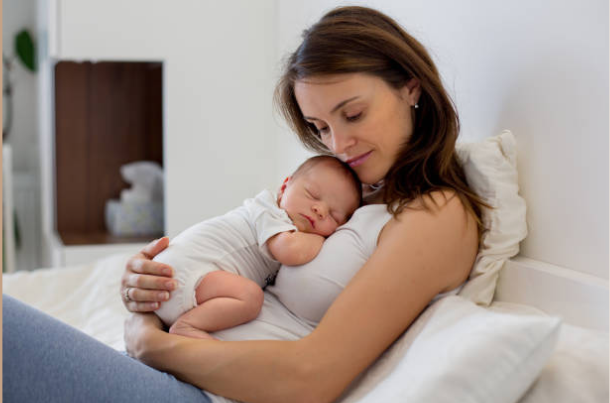
There is something incredibly peaceful about a newborn sleeping against your chest.
Those warm little breaths, curled fingers and milk-drunk expressions are memories many of us wish we could bottle forever.
Cuddling your baby while you are fully awake and attentive is very different from falling asleep together.
If you feel yourself becoming drowsy while holding your baby, move her to her own safe sleep space and place her on her back.
Extreme tiredness can creep up quickly in the newborn period. You can be scrolling your phone one minute and fighting to keep your eyes open the next.
Planning ahead is much safer than assuming you’ll manage to stay awake.
When Should You Talk to Your Pediatrician?
Most questions about newborn sleep positioning are part of completely normal new-parent worry.
Still, you should never feel silly for asking your baby’s healthcare professional about something that doesn’t look right.
Contact your pediatrician if your baby consistently seems unable to turn her head in both directions, always tilts to one side, seems uncomfortable lying flat, has significant breathing concerns, struggles badly with reflux, or you’re worried about how she moves during sleep.
If your baby’s breathing during sleep is also worrying you, this guide on baby breathing fast while sleeping explains common breathing patterns and signs that may need medical attention.
And if your baby ever appears to have trouble breathing, turns blue or unusually pale, becomes limp or difficult to wake, or seems seriously unwell, seek urgent medical care rather than waiting to see whether things improve.
Your instincts matter. Safe-sleep guidelines give us a strong foundation, but you still know your baby’s usual behavior better than anyone.
Frequently Asked Questions
Can a newborn sleep on her side if I watch her?
What if my newborn rolls onto her side by herself?
Can a baby with reflux sleep on her side?
When can babies sleep in the position they choose?
Should I use a wedge to stop my newborn rolling?
A Gentle Word From One Mom to Another
So, can a newborn sleep on her side? When you’re putting your little one down for a nap or bedtime, the safest answer is to place her on her back.
You don’t have to position her perfectly all night long, and you certainly don’t need to stare into the bassinet every five minutes wondering whether you’ve missed something.
Start each sleep with the basics: baby on her back, a firm and flat sleep surface, a fitted sheet, and a clear sleeping space.
As she grows stronger and eventually learns to roll both ways independently, you’ll enter another stage where she has much more control over the position she chooses for herself.
For now, keep things simple.
And if you were placing your baby on her side before reading this, don’t spend tonight feeling guilty about yesterday. Parenting is full of moments when we learn something new and adjust what we do next.
The newborn stage can make even the calmest mom question herself. You’re caring for someone so tiny and precious that it’s completely natural to wonder whether every little choice is the right one.
Follow current safe-sleep guidance, ask your pediatrician whenever something feels unusual, and remember that you don’t need to parent perfectly to care for your baby thoughtfully.
Tonight, place that sweet little body safely on her back, give her one last gentle goodnight, and allow yourself some rest too.
For more practical baby sleep, newborn care, and everyday parenting guidance, explore TotAdvice for helpful resources as your little one grows.
Trusted Resources
Disclaimer
This article is for general educational and informational purposes only and is not a substitute for personalised medical advice from your pediatrician or another qualified healthcare professional. Babies should generally be placed flat on their backs for every sleep on a firm, flat sleep surface unless their medical team has given different instructions for a specific health condition. Contact your pediatrician if your baby consistently tilts to one side, seems uncomfortable lying flat, has significant reflux or breathing concerns, or you are worried about how she moves during sleep. Seek urgent medical care if your baby has trouble breathing, turns blue or unusually pale, becomes limp or difficult to wake, or appears seriously unwell.
About the Author
Geeta Yogi writes warm, practical, and supportive parenting content about newborn care, baby sleep, feeding, development, and everyday family life. She focuses on helping parents understand safe routines, recognise important warning signs, and feel more confident while caring for their babies through the early months.