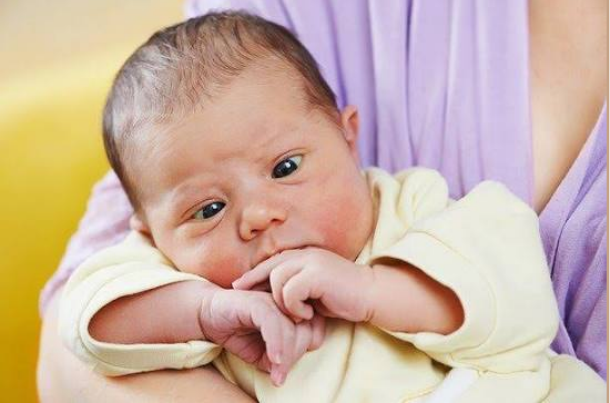
Newborn crossed eyes can look alarming, especially when one eye briefly turns inward or appears misaligned in a photograph. Although occasional crossing may happen in early infancy, constant or persistent crossing needs assessment.
You’re admiring your baby’s face when one eye briefly turns inward. Then it happens again in a photograph, and you start wondering whether something is wrong. Newborn crossed eyes can look alarming, especially when you’re still learning what to expect during those first weeks.
It is understandable to check another photo or ask someone, “Did you see that too?” Brief, occasional crossing can happen in early infancy, but constant crossing needs assessment at any age. Crossing that continues beyond the first few months should also be checked.
The helpful next step is understanding the difference and knowing when to contact your baby’s clinician.
This guide explains what parents may notice, what an examination can clarify, and which changes deserve urgent advice. You do not need to identify the cause before making an appointment.
Newborn Crossed Eyes: What Can Be Normal?
During the earliest months, a baby’s eyes may occasionally appear to turn inward or drift out of alignment.
Moorfields Eye Hospital explains that occasional crossing can happen in newborns, particularly when tired. It advises speaking with a doctor if this continues after three months.
However, “occasional” is an important distinction. An eye that stays turned should not be dismissed as normal newborn development.
The American Association for Pediatric Ophthalmology and Strabismus, or AAPOS, recommends assessment for constant crossing at any age and any crossing that persists beyond four months.
You don’t need to wait for an age cutoff if something worries you. Bring up what you’ve noticed, even if the eyes look straight during the appointment.

What Does “Crossed Eyes” Mean?
Parents often use “crossed eyes” to describe several different appearances.
The medical term strabismus means that the eyes are not aligned with each other. An inward turn is called esotropia; an outward turn is called exotropia.
One eye may turn while the other looks straight ahead. The appearance may come and go, remain constant, or alternate between eyes.
You don’t have to work out the exact medical term before asking for help. “Her right eye turns toward her nose several times a day” gives the clinician a useful starting point.
Focus on describing what happens rather than trying to diagnose it from pictures.

Why Can a Baby Look Cross-Eyed When Their Eyes Are Straight?
Some babies have an appearance called pseudostrabismus, meaning the eyes look misaligned even though they are straight.
AAPOS explains that a broad, flat nasal bridge and skin folds near the inner eye corners can hide some of the visible white of the eye. This can make an eye appear turned inward, especially in certain photographs or when looking sideways.
This appearance does not require treatment once a clinician has confirmed it.
However, parents cannot reliably distinguish it from a true eye turn at home. Some children can also develop genuine strabismus later, so follow-up advice still matters.
A family member saying, “All our babies looked like that,” may be comforting, but it doesn’t replace an examination.
When Should Occasional Crossing Be Checked?
Guidance uses slightly different early-age thresholds, but the practical message is consistent: constant crossing needs assessment, and recurring crossing should not continue unchecked beyond early infancy.
The NHS advises seeking medical advice if a child has a squint all the time or if intermittent crossing continues after three months.
If your baby is approaching that age and you’re still noticing it, arrange an appointment. There is no need to wait another month because you’ve seen a different cutoff elsewhere.
Also contact your clinician sooner if the turn is becoming more frequent, seems pronounced, or comes with concerns about vision or eye movement.
A Practical Guide to the Next Step
| What you notice | What to do |
|---|---|
| Brief, occasional crossing in the first weeks | Mention it to your baby’s clinician, especially if you are unsure how often it happens. |
| An eye that stays turned at any age | Contact your clinician promptly to arrange an eye assessment. |
| Intermittent crossing continuing after three months | Arrange a review rather than waiting for it to settle indefinitely. |
| A sudden new turn, limited eye movement, a white pupil, or new cloudiness | Seek urgent clinical advice about where and when your baby should be examined. |
| Eye changes with serious illness, difficulty waking, or breathing problems | Seek emergency medical care. |
This is a guide to seeking help, not a way to diagnose the appearance at home. If you cannot tell whether a change is sudden or constant, describe that uncertainty when you call.
Why Early Assessment Matters
Eye alignment is about more than appearance.
When the eyes don’t work together, the developing brain may rely more on one eye. This can contribute to amblyopia, often called lazy eye, in which vision does not develop normally in the affected eye.
Not every baby with an eye turn has the same problem or needs the same treatment.
An assessment helps identify whether there is true misalignment, a focusing problem, or another concern.
An eye turn and amblyopia are related but different: strabismus describes alignment, while amblyopia describes reduced vision from abnormal visual development. A baby can need help with one or both. That is why improving how the eyes look and treating how well each eye sees may involve different parts of a care plan. It also gives you a plan rather than leaving you to interpret every glance.
Asking for an eye check is a sensible way to get a clearer answer.
What to Notice Before the Appointment
You don’t need to watch your baby’s eyes continuously or turn everyday interactions into a series of checks. A few observations during ordinary activities, such as feeding, cuddling, or playing, can help you describe what concerns you. Focus on what you naturally notice: when the eye turns, whether it straightens again, and whether anything else seems different.
Does It Come and Go or Stay Present?
Notice whether the eye turns briefly and then straightens, or appears turned most of the time.
If it seems constant, contact your baby’s clinician promptly rather than spending days collecting examples.
Is It Always the Same Eye?
Describe whether you notice the right eye, left eye, or either eye turning.
You don’t need to cover an eye or perform your own tests to find out. Simply report what you naturally see.
If the turn switches between eyes, mention that too. Alternating does not prove that both eyes see equally well, so it should not be used as a reason to skip the appointment.
Are There Other Changes?
Mention difficulty moving an eye, regularly holding the head to one side, keeping one eye closed, or concerns about looking at faces and objects.
For a broader look at early learning and interaction, explore our guide to child development stages by age. Keep any concerns about eye alignment or vision on your clinician’s appointment list, even when other milestones seem on track.
The NHS includes repeated head turning and closing one eye among reasons to discuss vision concerns.
Would a Short Video Help?
A brief, ordinary video can show an intermittent turn that isn’t visible during the visit.
Use normal lighting and avoid repeatedly provoking the appearance. You don’t need dozens of photographs.
Your observation is still worth discussing even if you cannot capture it.
A useful note might be: “I first noticed this last week. It happens several times a day, usually in the right eye, and I also see it when she looks across the room.” Keep the description factual rather than trying to measure the angle yourself.
Does It Come and Go or Stay Present?
Notice whether the eye turns briefly and then straightens, or appears turned most of the time.
If it seems constant, contact your baby’s clinician promptly rather than spending days collecting examples.
Are There Other Changes?
Mention difficulty moving an eye, regularly holding the head to one side, keeping one eye closed, or concerns about looking at faces and objects.
For a broader look at early learning and interaction, explore our guide to child development stages by age. Keep any concerns about eye alignment or vision on your clinician’s appointment list, even when other milestones seem on track.
The NHS includes repeated head turning and closing one eye among reasons to discuss vision concerns.
Would a Short Video Help?
A brief, ordinary video can show an intermittent turn that isn’t visible during the visit.
Use normal lighting and avoid repeatedly provoking the appearance. You don’t need dozens of photographs.
Your observation is still worth discussing even if you cannot capture it.
A useful note might be: “I first noticed this last week. It happens several times a day, usually in the right eye, and I also see it when she looks across the room.” Keep the description factual rather than trying to measure the angle yourself.
What Happens During a Baby’s Eye Examination?
The clinician may ask when you first noticed the crossing, how often it occurs, and whether there is a family history of eye conditions.
An eye specialist can assess alignment, eye movements, and visual behavior using methods suitable for a baby.
AAPOS describes light-reflection and cover tests among the ways ophthalmologists distinguish true strabismus from an appearance of crossing.
You don’t need to recreate these tests yourself. Small movements and reflections can be difficult to interpret without training.
The team may include an ophthalmologist, an orthoptist, or an optometrist, depending on local services. An ophthalmologist is a medical eye specialist; an orthoptist assesses eye movements and how the eyes work together. Ask who will coordinate follow-up if more than one professional is involved.
The specialist may also use drops to widen the pupils and check the eyes’ focusing needs and internal structures. Ask beforehand what the appointment may involve and whether you should bring anything. Bring any earlier eye reports and a short video if you already have one.
Ask the clinician to explain the findings and what follow-up is needed. It’s reasonable to say, “Could you show me what you’re looking for?”
What If Your Baby Needs Treatment?
Treatment depends on the cause and examination findings.
Some children need glasses. Some need treatment for amblyopia, such as prescribed patching. Certain eye-alignment conditions may require surgery or other specialist treatment.
These options are not interchangeable. Patching, for example, should not be started simply because an eye looks turned.
If treatment is recommended, ask:
- What problem is this treatment addressing?
- How should we use it at home?
- When will progress be reviewed?
- What should make us contact you sooner?
You don’t have to understand everything immediately. Clear instructions and follow-up can make an unfamiliar plan easier to manage.
If glasses, a patch, or drops are prescribed, ask for written instructions and follow the exact schedule. Do not swap which eye is patched or increase the duration yourself. If your baby struggles with the plan, contact the team so they can help you carry it out safely.
Keep review appointments even if the eyes appear straighter. Appearance alone cannot show whether each eye’s vision is developing as expected.
Should You Try Eye Exercises at Home?
Don’t start exercises, patching, or eye drops without a clinician’s instructions.
Different eye conditions need different approaches. A video promising to “strengthen newborn eye muscles” cannot establish what your baby needs.
You can continue ordinary, gentle interaction, talking, sharing faces, and offering suitable toys during awake time, without turning play into treatment.
Avoid repeatedly moving objects very close to make the eyes cross, shining bright lights into the eyes, or testing how long your baby can follow something.
If you’ve already tried a home remedy, tell the clinician what it involved so they have the full picture.
Signs That Need Urgent Attention
Some eye changes need a quicker response than a routine appointment.
Contact a clinician urgently if you notice a white or grey appearance in the pupil, including an unusual white reflection in photographs. Show them the image rather than assuming it is only the camera angle. Abnormal pupil reflections require assessment.
Seek urgent advice for a newly sudden eye turn, restricted eye movement, or an eye change accompanied by unusual behavior or loss of previously acquired abilities. Moorfields identifies sudden-onset squint and associated neurological changes as reasons for urgent referral.
A cloudy-looking eye also needs prompt assessment. White or cloudy eyes can occur with childhood cataracts and other eye conditions. You cannot determine the cause from a photograph.
When calling, describe the specific change: “The pupil looks white in this photo,” or “His eye suddenly turned today and is not moving normally.” Ask how urgently your baby should be seen. Do not delay the call to collect more pictures or repeatedly test the eye.
If your baby also seems seriously unwell, is difficult to wake, or has breathing problems, seek emergency medical care.
What If Your Baby Was Born Prematurely?
Tell the eye-care team about prematurity, any neonatal treatment, and any eye follow-up already arranged.
Corrected age may be relevant to developmental discussions, but it should not be used at home to postpone assessment of constant crossing or another concerning eye sign.
Keep scheduled eye appointments and ask which team should review a new concern.
You don’t need to decide whether it belongs with the pediatrician or eye specialist before calling; explain the change and ask where your baby should be seen.
Frequently Asked Questions
Is it normal for a newborn’s eyes to cross occasionally?
Can photographs make my baby look cross-eyed?
Will my baby grow out of crossed eyes?
Can my baby have an eye examination before they can talk?
Should I wait until the next routine check?
Does an eye turn mean my baby will need surgery?
What if the examination was reassuring but I notice a change?
Can a wide nasal bridge make the eyes look crossed?
Does looking at a close toy cause permanent crossed eyes?
What should I do if one pupil looks white in a photograph?
A Gentle Reminder for the Parent Studying Every Photo
One unusual glance can easily become a worry you carry through the day.
Occasional early crossing may settle, but you don’t have to work out the explanation alone. Note what you see, ask for an assessment when needed, and let a qualified clinician guide the next step.
Your careful attention is useful. Pair it with clear advice rather than constant checking, and give yourself permission to enjoy your baby’s face while you get the answers you need.
For now, choose one useful step: note when the crossing happens, save an example you already have, and contact your baby’s clinician about the right review timing. If an urgent sign is present, make the call first.
For more gentle guidance on everyday parenting questions, explore Tot Advice as you find your way through your baby’s early months.
Resources
Nemours KidsHealth: Strabismus (Crossed Eyes)
Cleveland Clinic: Newborn Crossed Eyes
Children’s Hospital of Philadelphia: Crossed Eyes (Strabismus)
Disclaimer
This article is for general educational and parenting information only and does not replace individualized medical, pediatric, ophthalmology, or vision-care advice. Contact your baby’s clinician if an eye remains turned, recurring crossing continues beyond early infancy, or you have concerns about eye movement or vision. Seek urgent clinical advice for a sudden new eye turn, restricted eye movement, a white or grey pupil or unusual white reflection in a photograph, or new cloudiness of the eye. If your baby is difficult to wake, has breathing problems, or appears seriously unwell, seek emergency medical care. Do not begin eye exercises, patching, drops, or other treatments unless they have been specifically recommended by a qualified clinician.