

When you bring your newborn home, diaper changes suddenly become a surprisingly big part of your day. You may find yourself wondering, Did I just change this baby? Do I need to change them again already? If you have been searching for how often to change newborn diaper, you are definitely not alone. In those sleepy first weeks, it can feel like you are feeding, burping, changing, settling, and then starting the whole little routine all over again.
As a mom, I remember how something as simple as a diaper could make me second-guess myself. Was it wet enough to change? Should I wake my baby at night? Was that many dirty diapers normal?
The reassuring answer is that there is no perfect schedule you need to follow minute by minute. Newborns simply need frequent changes, plenty of gentle care, and a parent who is paying attention, and you are already doing that by being here.
How Often to Change Newborn Diaper
In the early weeks, you can expect to change your newborn’s diaper quite often. Some young babies may need around 10 to 12 diaper changes in a day, especially when they are feeding frequently and passing stool often. The NHS recommends changing babies as soon as possible after they wet or soil their diaper to help protect their delicate skin.
That does not mean you need to hover over your baby checking their diaper every ten minutes.
A simple approach is to check the diaper around feeds, after naps, whenever your baby seems uncomfortable, and anytime you notice or smell that they have had a bowel movement.
As the days pass, you will begin learning your baby’s rhythm. Some babies seem to poop halfway through every feed. Others wait until you have lovingly put on a fresh diaper before immediately filling it again, which somehow seems to be a newborn talent.
Try not to worry about creating the perfect diaper-changing timetable. Your baby’s needs are a much better guide than the clock.
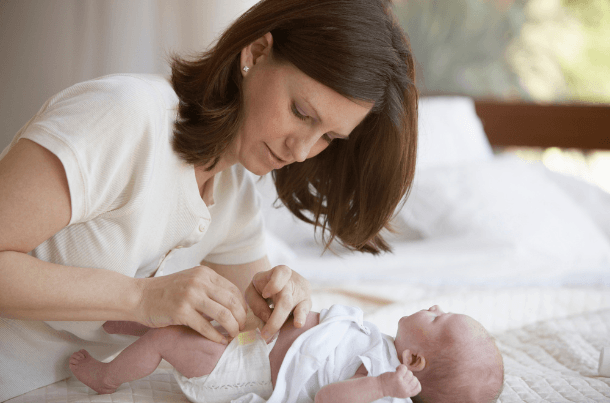
Should You Change a Newborn After Every Pee?
Ideally, you want your baby’s skin to stay as clean and dry as reasonably possible.
Newborn skin is delicate, and spending too long in a wet diaper can contribute to irritation. Pediatric guidance recommends frequent diaper changes because prolonged contact with urine and stool can increase the likelihood of diaper rash.
Modern disposable diapers are very absorbent, though, so there may be moments when you do not realize immediately that your baby has peed.
That is okay.
Check regularly rather than feeling as if every tiny wee requires an emergency diaper change the second it happens.
If the diaper feels noticeably wet, heavy, or uncomfortable, change it.
Dirty Diapers Are Different
When your newborn has pooped, try to change the diaper as soon as you reasonably can.
Stool can be especially irritating to a baby’s skin, and leaving it against the skin for long periods can contribute to soreness and diaper rash.
This is especially important if your baby has frequent loose stools.
Even if you changed the diaper five minutes ago, a fresh poop generally means it is time for another one.
Yes, you may occasionally use three diapers within half an hour.
Welcome to newborn life.
How Often Should You Check Your Baby’s Diaper?
During the daytime, I found it easiest to make diaper checks part of things I was already doing rather than constantly watching the clock.
For example, you might check:
- Before or after each feeding
- When your baby wakes from a nap
- Before putting your baby down for sleep
- Whenever your baby becomes unusually fussy
- If you smell or hear a bowel movement
- Any time the diaper looks full or feels heavy
Newborns usually feed frequently, so checking around feeding time naturally gives you plenty of opportunities.
You will also become surprisingly good at knowing when a diaper needs changing just by touching the front of it through your baby’s clothes.
Motherhood teaches many glamorous skills. Apparently, this is one of them.
Do You Need to Change a Newborn Diaper During Every Feed?
Not necessarily.
Some parents like changing their baby’s diaper before a feeding because it helps wake a sleepy newborn enough to eat.
Others change halfway through a feed, especially if their baby becomes sleepy at the breast or bottle. The little break can gently wake them enough to finish feeding.
And some babies almost always poop while eating, which means changing them afterward makes more sense.
There is no single correct order.
Experiment for a few days and notice what seems to work best for your baby.
If changing before a feed leads to another dirty diaper ten minutes later, you may decide that after feeding works better.
Should You Change Your Newborn’s Diaper at Night?
This is one of those questions that suddenly becomes extremely important at 2:47 in the morning.
If your newborn has pooped, I would change the diaper even during the night.
For a wet diaper, things can be a little more flexible depending on how wet it is, your baby’s skin, whether your baby is already awake for a feed, and whether diaper rash is present.
If your newborn wakes to feed, that is often a convenient time to quietly check the diaper.
Keep nighttime changes calm and boring. Use soft lighting, speak quietly, and avoid turning diaper time into playtime.
Nighttime care often comes with other little worries too. If you have ever found yourself watching your newborn sleep and wondering whether their breathing looks normal, this guide on baby breathing fast while sleeping explains common patterns and when it is worth seeking medical advice.
You are sending a gentle little message: We are taking care of you, sweetheart, but it is still nighttime.
What If My Baby Finally Fell Asleep?
Every tired parent knows this dilemma.
Your newborn has finally drifted off after what feels like hours of feeding and rocking. Then you realize the diaper might be wet.
Do you really wake them?
If there is poop, yes, it is best to change them.
If it is only mildly wet, your baby is comfortable, their skin is healthy, and you are using a highly absorbent diaper, you may not always need to wake a peacefully sleeping baby immediately. However, babies with diaper rash may need more frequent overnight changes to keep irritated skin clean and dry. Mayo Clinic notes that during an active diaper rash, more frequent changes, even overnight, may sometimes be necessary.
When in doubt, follow your pediatrician’s advice for your particular newborn.
How Many Wet Diapers Should a Newborn Have?
Diapers do more than create laundry and fill the trash bin. They can also offer helpful clues about whether your newborn is getting enough milk.
During the first couple of days, babies naturally have fewer wet diapers.
After about day four or five, most newborns who are feeding adequately should be producing roughly five to six or more wet diapers every 24 hours. The American Academy of Pediatrics notes that after the first four to five days, at least five or six wet diapers daily is generally expected.
The NHS similarly advises that from around day five onward, parents can expect at least six heavy wet diapers in 24 hours.
Remember that these numbers are guides rather than a competition.
You do not need to proudly announce that your baby achieved eight wet diapers before dinner.
But keeping a rough mental note during those first days can be genuinely useful.
When Fewer Wet Diapers May Matter
If your newborn suddenly produces far fewer wet diapers than usual, seems very sleepy, has a dry mouth, is feeding poorly, or simply seems unwell, contact your baby’s healthcare professional.
Fewer than expected wet diapers can sometimes be a sign that a baby is not taking in enough fluid.
For a brand-new baby, I would always rather make the call and be reassured than spend the entire night worrying.
That is not overreacting. That is parenting a tiny human who cannot yet tell you what they need.
What Should Newborn Poop Look Like?
If nobody warned you how much attention you would eventually give to someone else’s poop, consider this your warning.
Newborn stool changes quite dramatically during the first several days.
The first bowel movements are usually dark, sticky meconium. Over the following days, the color gradually changes, eventually becoming lighter as feeding becomes established. Breastfed babies commonly have soft, loose yellow stools, while formula-fed babies’ stools may look somewhat different in color and texture.
Frequency can vary widely too.
Some newborns poop after almost every feeding.
Others go less often.
What matters most is your baby’s overall feeding, growth, hydration, comfort, and whether their stools are following a healthy pattern for them.
If you notice blood in the stool, very pale or white stool, persistently hard stool, or a major unexplained change, speak with your healthcare provider.
How to Change a Newborn Diaper Without Irritating Their Skin
Newborn bottoms are incredibly soft, which unfortunately means they can become irritated fairly easily.
The gentler you can make diaper changes, the happier that little bottom usually stays.
Clean Gently
For routine cleaning, use warm water with soft cotton or a gentle washcloth, or choose baby wipes that are free from alcohol and fragrance.
There is no prize for scrubbing every trace away aggressively.
Gentle wiping is enough.
If your baby’s skin is already sore, rubbing can make things more uncomfortable.
Pat Instead of Rubbing
When possible, gently pat the skin dry or give your baby a short moment of diaper-free air time before putting the fresh diaper on.
Keeping the diaper area clean and dry is one of the simplest ways to prevent and calm everyday irritation.
Those thirty seconds of naked-bottom freedom may also become your baby’s favorite part of the day.
Just keep a clean towel nearby.
I learned that lesson the messy way.
Consider a Barrier Cream
If your baby’s bottom is becoming red or irritated, a thin protective layer of a baby-safe barrier ointment can help protect the skin from moisture.
A thin layer of a baby-safe barrier ointment, such as one containing zinc oxide or petrolatum, may help protect irritated skin. Follow your pediatrician’s advice if the rash is persistent or severe.
If a rash is severe, spreading, blistering, bleeding, accompanied by fever, or simply not improving, contact your pediatrician rather than repeatedly trying different creams at home.
A Simple Newborn Diaper-Changing Routine
When you are sleep-deprived, even small routines make life easier.
Before beginning, gather your clean diaper, wipes or warm water, cloth, barrier cream if needed, and fresh clothing if you suspect there may have been a leak.
Then place your baby safely on the changing surface and keep one hand near them throughout the change.
Open the dirty diaper slowly.
I emphasize slowly because babies occasionally choose that exact moment to finish what they started.
Clean gently from front to back, especially for baby girls, carefully clean around folds, and allow the skin to dry for a moment.
Slide the fresh diaper underneath and fasten it snugly without making it tight.
You should be able to fit a little space between the diaper and your baby’s tummy.
And when you’re finished, wash your hands well.
Eventually, you will be able to complete this entire routine half asleep in surprisingly little time.
What If My Newborn Hates Diaper Changes?
Some babies absolutely protest diaper changes.
The cold air hits their skin, their warm swaddle disappears, and suddenly Mom or Dad is lifting their legs around.
From the baby’s perspective, it is understandable.
Try talking softly while you change them.
Place your warm hand gently on their tummy for reassurance. You can sing the same little song each time, make eye contact, or keep one special high-contrast card near the changing area for your baby to look at.
You may even find that what begins as the most dreaded part of your day becomes one of those tiny bonding moments you secretly love.
Not every diaper change will be peaceful.
Some will involve crying.
Some will involve poop in locations that seem physically impossible.
And occasionally you will put your baby’s onesie back on only to realize you forgot to fasten the new diaper properly.
That does not mean you are doing anything wrong.
How Many Newborn Diapers Should You Keep at Home?
New parents often ask how many diapers they should buy before the baby arrives.
My suggestion is to have enough to feel prepared, but avoid filling an entire closet with one newborn size.
Babies grow surprisingly quickly, and some little ones barely fit newborn diapers at all.
Since young babies may need around 10 or more changes a day, having a reasonable supply ready for those first weeks saves many exhausted late-night shopping trips.
Keep a few diapers in multiple places too.
A small basket beside your bed can be wonderful during nighttime feeds.
Another downstairs means you do not need to climb the stairs carrying a baby every time nature calls.
And always put more diapers in the diaper bag than you think you will need.
Babies have an uncanny ability to sense when you packed only two.
Signs Your Baby May Need a Different Diaper Size
Leaks do not always mean you are changing too slowly.
Sometimes the diaper simply no longer fits.
If you repeatedly notice leaks around the legs or back, deep marks around your baby’s waist or thighs, tabs that barely reach, or frequent blowouts, it may be time to try the next size.
Every diaper brand fits a little differently, so do not worry if your baby moves up sooner than the weight guide on the package suggests.
The best diaper is simply the one that fits comfortably, contains the mess, and works for your family.
What About Diaper Rash?
A little redness happens to many babies at some point, even when parents are wonderfully attentive.
In fact, diaper rash is extremely common in infancy.
If you notice mild redness, focus on more frequent changes, gentle cleaning, plenty of drying time, and a protective barrier ointment.
Avoid heavily fragranced products if your baby’s skin seems sensitive.
Seek medical advice if the rash becomes very painful, develops blisters, open sores or yellow crusts, spreads, comes with fever, or continues getting worse despite home care.
Trust that little voice in your head too.
You know your baby better each day.
If something does not look right to you, it is completely reasonable to have it checked.
Finding Your Own Rhythm With Diaper Changes
When you first become a parent, it feels like there should be instructions for absolutely everything.
Feed every certain number of hours.
Sleep this many minutes.
Change exactly this many diapers.
But real babies rarely follow neat spreadsheets.
When figuring out how often to change newborn diaper, think less about hitting an exact number and more about keeping your baby comfortable, clean, dry, and well hydrated.
Change dirty diapers promptly.
Change wet diapers regularly.
Check around feeds and sleep.
Watch your baby’s skin.
Pay attention to wet-diaper patterns.
And then give yourself permission to stop counting every tiny thing once you begin recognizing your baby’s normal rhythm.
Frequently Asked Questions
How often should I change a newborn diaper?
Should I change a newborn diaper after every pee?
Should I wake my newborn to change a wet diaper?
How many wet diapers should a newborn have?
When should I worry about fewer wet diapers?
A Gentle Word From One Mom to Another
Those first weeks with a newborn can feel beautifully strange.
Your whole world suddenly revolves around tiny feeds, tiny cries, tiny sleeps, and an astonishing number of tiny diapers.
You may stand at the changing table at three in the morning with messy hair, tired eyes, and a baby who has somehow managed to poop immediately after you changed them.
Someday, strangely enough, you may miss pieces of this.
Not necessarily the poop.
But perhaps the tiny curled toes, the sleepy stretches, the way your baby’s whole hand wrapped around one of your fingers while you fastened their diaper.
For now, remember that you do not need to handle every diaper change perfectly.
Keep your newborn clean and comfortable. Change wet diapers regularly and dirty ones promptly. Watch their skin and their usual wet-diaper pattern, and reach out to your pediatrician whenever something worries you.
Most importantly, trust yourself a little more with every passing day.
Your baby does not need a parent who knows every answer.
They need the loving parent already standing right there beside them, learning their little ways one feed, one cuddle, and yes, one diaper change, at a time.
For more practical newborn-care tips, baby health guidance, and everyday parenting support, explore TotAdvice for helpful resources as your little one grows.
Medical note: This article is intended for general educational information and does not replace advice from your pediatrician or another qualified healthcare professional.
Trusted Resources
Disclaimer
This article is intended for general educational information and does not replace advice from your pediatrician or another qualified healthcare professional. Contact your baby’s healthcare provider if wet diapers suddenly decrease, your baby is feeding poorly, seems unusually sleepy, has a very dry mouth, appears dehydrated, or you are concerned about their overall wellbeing. Seek medical advice for diaper rash that becomes severe, spreads, develops blisters, open sores or yellow crusts, is accompanied by fever, or does not improve with appropriate home care.
About the Author
Geeta Yogi writes warm, practical, and supportive content about newborn care, feeding, diapering, baby health, and everyday parenting. She focuses on helping new parents understand common newborn routines, recognise important warning signs, and feel more confident while caring for their baby during those busy early weeks.