There’s nothing sweeter than hearing your toddler say a new word for the very first time. Those tiny little “mama,” “bye-bye,” or “more” moments stay in a mother’s heart forever. But when speech seems delayed or your child is not talking as much as other toddlers, it can quietly fill your heart with worry. Many parents search for simple and gentle ways to help their little ones communicate better without putting pressure on them.
The good news is that small daily moments can make a big difference. Simple speech exercises for toddlers can naturally support communication, build confidence, and encourage language growth through play, connection, and routine. You do not need to create strict lessons or spend hours teaching. Toddlers learn best when they feel safe, loved, and engaged.
In our home, I learned that talking during ordinary moments, singing silly songs, and slowing down to truly connect helped my toddler open up little by little. If you are looking for warm and practical ways to encourage speech at home, these ideas may gently help your child along the way.
Why Early Speech Support Matters
Many parents searching for how to help toddler talk often find that slow conversations, repetition, songs, and playful interaction make a meaningful difference over time.
Many parents wait and wonder if their toddler will eventually “catch up” with speech on their own. While every child develops differently, gentle support during the early years can make communication easier and more natural for toddlers. The early stage of language growth is when children absorb words, sounds, emotions, and social interaction very quickly. Creating a language-rich environment at home helps toddlers feel more confident expressing themselves little by little.
Every toddler develops differently. Some children begin chatting early, while others take more time to feel confident using words. That difference does not automatically mean something is wrong. Still, supporting communication early can help toddlers express their needs, emotions, and thoughts more comfortably.
Language develops best through interaction. Children learn words from hearing them repeated during meaningful everyday experiences. The more connected and responsive those moments are, the more naturally speech begins to grow.
Communication specialists from the American Speech-Language-Hearing Association also emphasize that everyday conversations, reading, singing, and responsive interactions help support healthy speech and language development in young children.
Parents often think they need expensive tools or perfect teaching methods, but toddlers truly learn through love, repetition, and playful communication.
Speech Exercises for Toddlers That Feel Natural at Home
Simple speech activities for toddlers at home can help children build confidence and communication skills through everyday play and conversation.
Toddlers learn best when speech practice feels playful instead of forced. You do not need to sit your child down for formal lessons or make learning feel stressful. In fact, some of the most effective speech-building activities happen during normal family routines. Small conversations, playful sounds, and simple interactions throughout the day can naturally encourage communication skills.
The best speech-building moments usually happen during regular daily routines. Small interactions throughout the day can become powerful learning opportunities without feeling stressful for your child.
Talk Through Your Day
One of the easiest ways to improve toddler speech is simply describing what you are doing while your child is nearby.
While preparing breakfast, folding clothes, or walking outside, speak slowly and clearly.
You can say things like:
“Mommy is cutting apples.”
“Let’s wash your hands.”
“The bird is flying.”
Even if your toddler does not answer, they are listening, processing, and learning how language works.
Encourage Simple Sound Play
Before toddlers say full words, they often begin by copying sounds. Animal noises, funny expressions, and playful sounds are wonderful talking exercises for toddlers because they feel fun instead of educational.
Try making sounds together during playtime:
“Woof woof”
“Beep beep”
“Moo moo”
“Pop pop”
Your child may feel more comfortable imitating sounds first, and those little attempts are important building blocks for speech.
Read Slowly and Repeatedly
Reading is one of the most effective early language learning activities for toddlers. Children benefit from hearing the same books over and over again because repetition helps words stick.
Choose simple books with colorful pictures and repeating phrases. Pause before familiar words and let your toddler try to finish them. Even pointing or attempting sounds is valuable communication practice.
Reading together also creates emotional closeness, which helps children feel relaxed and open to learning.
Simple Speech Therapy Activities for Toddlers
Many parents think speech therapy only happens inside a clinic, but there are so many gentle activities you can try at home every day. These small moments help toddlers hear language more clearly, practice responding, and slowly build confidence using words. Consistency matters much more than perfection.
You do not always need structured therapy sessions to support language growth. Many speech therapy activities for toddlers can easily fit into normal family routines.
Offer Choices Throughout the Day
Instead of automatically giving your toddler what they want, gently encourage communication by offering two choices.
For example:
“Do you want milk or juice?”
“Blue ball or red ball?”
Your child may answer with a word, gesture, sound, or even eye contact. All communication attempts matter.
Use Songs and Rhymes
Toddlers naturally respond to rhythm and repetition. Singing familiar songs helps children hear language patterns more clearly.
Songs like “Wheels on the Bus” or “If You’re Happy and You Know It” encourage listening, imitation, and movement at the same time.
Children often try singing words before they feel confident speaking them in conversation.
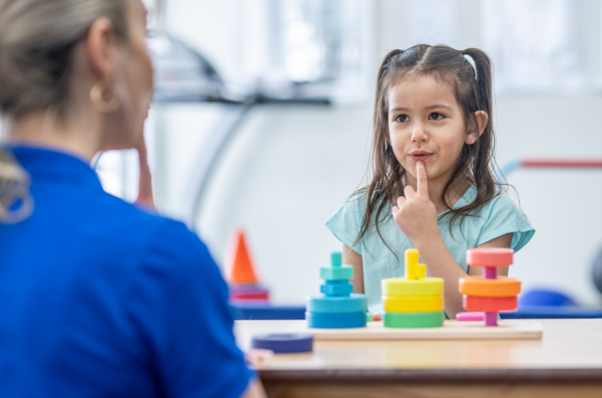
Get Face-to-Face When Talking
Toddlers learn by watching facial expressions and mouth movements.
Try kneeling or sitting at your child’s level while speaking. Slow down slightly and use warm expressions. This makes communication feel more personal and easier for toddlers to understand.
Eye-level conversations also help children stay focused and connected.
Language Development Exercises for Toddlers Through Play
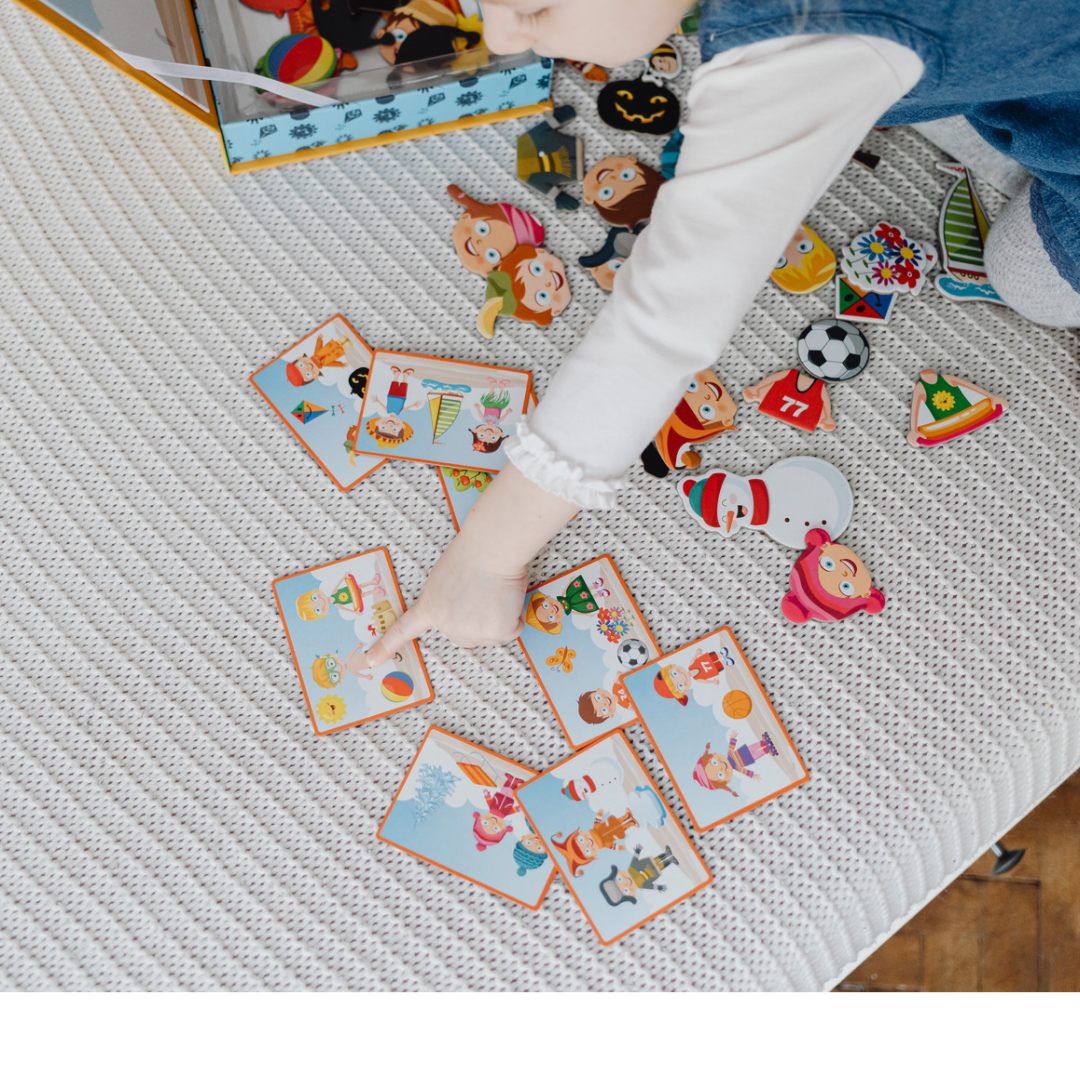
Play is one of the most powerful ways toddlers learn language. When children are relaxed, curious, and emotionally connected, they are much more likely to communicate naturally. Simple games and pretend activities create opportunities for toddlers to hear new words, copy sounds, and practice expressing themselves without pressure.
Many important communication and social skills develop naturally during play, which is why understanding how kids learn through play can be so valuable for parents.
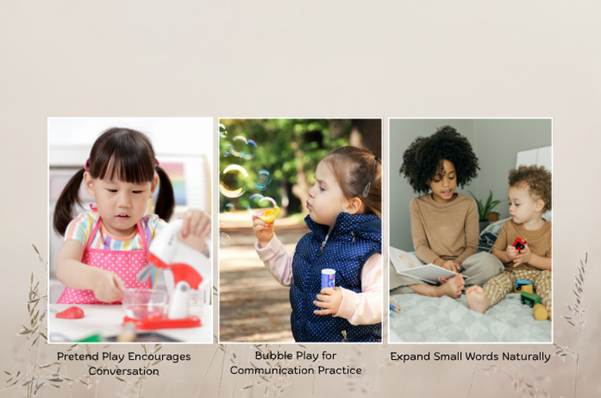
Pretend Play Encourages Conversation
Pretend kitchens, dolls, toy animals, and stuffed bears can create endless opportunities for speech practice.
Simple phrases during play may include:
“Baby is sleepy.”
“Let’s cook soup.”
“Teddy wants food.”
Pretend play supports imagination while teaching toddlers how to use words during social interaction.
Bubble Play for Communication Practice
Bubbles may seem simple, but they are amazing for toddler communication activities.
Hold the bubble wand and wait before blowing. Encourage your child to say:
“More”
“Go”
“Pop”
Children are often more motivated to communicate when something exciting is involved.
Expand Small Words Naturally
If your toddler says one word, gently add another word to it.
For example:
Toddler: “Car.”
Parent: “Fast car.”
Toddler: “Dog.”
Parent: “Big dog.”
This helps toddlers hear slightly more advanced language without feeling corrected or pressured.
Helpful Speech Delay Activities for Toddlers
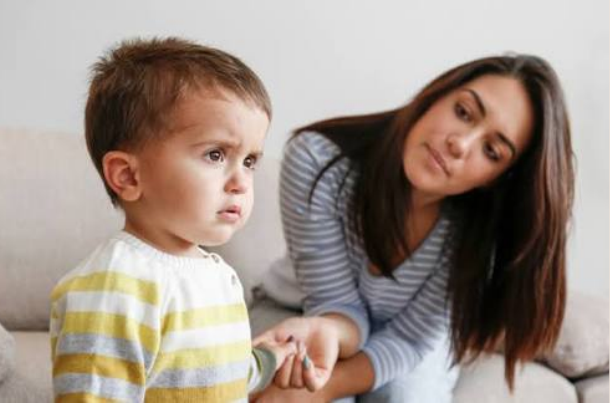
If your toddler is not talking as much as expected, it can feel emotionally overwhelming as a parent. It is important to remember that speech delays can happen for many different reasons, and many children improve beautifully with patience and support. Gentle encouragement at home can help create a calm and safe space for communication growth.
If your toddler is struggling with speech, it is easy to feel anxious. Many loving parents quietly wonder if they are doing enough.
Please remember that some children simply need extra time and support.
Pause and Give Time to Respond
Parents often answer for toddlers too quickly without realizing it.
After asking a question, pause for several seconds. Your child may need extra time to process language and attempt a response.
Those quiet pauses can create valuable opportunities for communication.
Reduce Background Noise
Too much television or constant background sound can make it harder for toddlers to focus on speech.
Creating calm moments during meals, reading time, and playtime can help children pay closer attention to language.
Simple and quiet interactions are often more powerful than overstimulating activities.
Celebrate Small Progress
Speech development does not always happen overnight.
Maybe today your toddler:
Made a new sound.
Tried copying a word.
Responded to their name.
Used gestures more clearly.
These little milestones matter more than you realize.
Children build confidence when they feel encouraged instead of pressured.
Toddler Communication Activities for Everyday Life
The best communication practice often happens during ordinary moments you already share with your child. Daily routines give toddlers repeated opportunities to hear words connected to real experiences. These simple interactions help language feel meaningful, familiar, and easier to understand.
Communication skills grow best during real-life moments with people children trust.
Talk During Walks
Walks outside create natural conversation opportunities.
Point to dogs, birds, trees, flowers, and cars while naming them slowly.
Toddlers are naturally curious about the world around them, and outdoor experiences often inspire more communication.
Use Mealtime for Language Practice
Mealtime conversations are wonderful for speech practice for toddlers.
Talk about colors, textures, temperatures, and tastes.
“The banana is soft.”
“Your soup is warm.”
“Crunchy carrots!”
Simple words connected to real experiences are easier for toddlers to understand and remember.
Make Bath Time Interactive
Bath time can become one of the most fun talking exercises for toddlers.
Use words like:
“Splash”
“Wash”
“Pour”
“Bubbles”
You can also sing songs, count toys, and encourage simple word repetition while your child is relaxed and playful.
Mistakes Parents Should Avoid
When parents become worried about speech development, it is completely natural to try harder and push more. But sometimes too much correction or pressure can make toddlers feel frustrated or withdrawn. A calm, encouraging approach usually works much better for building confidence and communication skills.
When parents worry about speech delays, they sometimes unintentionally create pressure.
Avoid Constant Correction
If your child says a word incorrectly, repeat it back correctly in a gentle and natural way.
Toddler: “Nana.”
Parent: “Yes, banana!”
This keeps communication positive and encouraging.
Avoid Comparing Your Child
Every child develops differently.
Comparing your toddler to siblings, cousins, or children online can create unnecessary stress for both parent and child.
Focus on your child’s individual growth and progress instead.
Avoid Turning Practice Into Pressure
Children learn best when they feel emotionally safe.
If speech activities start feeling frustrating, take a break and reconnect through cuddles, laughter, or quiet play.
Connection always matters more than perfection.
When Parents Should Seek Extra Support
While many toddlers simply need extra time to develop speech, some children benefit from professional guidance and early intervention. Trusting your instincts as a parent is important. If something feels concerning, reaching out for support can provide reassurance, clarity, and helpful tools for your child’s development.
Some toddlers benefit from additional help through professional speech support.
You may want to speak with a pediatrician or speech therapist if your toddler:
Has very limited words for their age.
Rarely responds to their name.
Struggles to understand simple directions.
Stops using words they previously knew.
Seems frustrated when trying to communicate.
Seeking support does not mean you failed as a parent. In many cases, early support simply gives children extra tools and guidance.
A Gentle Reminder for Parents
Parenting through speech concerns can feel emotional and exhausting at times. It is easy to question yourself or wonder if you are doing enough. But the truth is that your love, patience, and daily connection already play a huge role in helping your child feel secure and supported while learning to communicate.
If you have been worrying about your toddler’s speech lately, please know you are not alone.
So many loving parents quietly carry this concern in their hearts. It can feel emotional watching other children talk easily while your little one is still learning.
But children grow in their own timing.
The conversations you have during breakfast, the bedtime stories, the silly songs in the car, and the cuddles while reading books all matter deeply.
Your child does not need a perfect parent.
They need a patient, loving, responsive one.
And by searching for ways to help your toddler communicate, you are already showing how deeply you care.
Frequently Asked Questions
1. What are the best speech exercises for toddlers?
Talking during daily routines, reading books, singing songs, pretend play, and simple sound imitation games are some of the best speech exercises for toddlers.
2. How can I help my toddler talk more?
You can help your toddler talk more by speaking slowly, repeating words often, reading together, singing songs, and creating playful communication opportunities throughout the day.
3. Are speech delays common in toddlers?
Yes, many toddlers develop speech at different speeds. Some children naturally take longer to begin speaking confidently.
4. What are some speech therapy activities for toddlers at home?
Offering choices, bubble play, pretend play, reading books, and singing nursery rhymes are simple speech therapy activities parents can try at home.
5. When should I worry about my toddler’s speech?
If your toddler rarely responds to their name, has very few words for their age, or struggles to understand simple instructions, it may help to speak with a pediatrician or speech therapist.
Conclusion
Helping your child communicate does not require complicated lessons or strict routines. The most effective speech exercises for toddlers are often the simple, loving interactions that happen naturally throughout the day.
Talking during daily routines, reading favorite books, singing songs, and creating playful communication opportunities can gently support your toddler’s language development over time.
Some children begin speaking quickly, while others need more patience, repetition, and encouragement. No matter where your child is right now, progress is still possible.
Keep showing up with warmth, connection, and love.
Your little one is learning more from you every single day than you may even realize.
Looking for more gentle parenting tips, toddler development ideas, and speech support activities? Visit totadvice for more helpful guidance created with parents and little learners in mind.