

As a parent, there’s nothing more precious than watching your baby sleep peacefully. But sometimes, in those quiet moments, you may notice something that makes your heart skip a beat, baby breathing fast while sleeping. You might find yourself leaning closer, counting breaths, and wondering, “Is this normal?”
If you’ve ever felt that gentle wave of worry, you’re not alone. Many parents notice fast breathing in babies during sleep and feel unsure about what it means. and feel unsure about what it means. Let’s walk through this together, calmly and clearly, so you can feel more confident and reassured.
Understanding baby breathing fast while sleeping can help you stay calm and respond with confidence instead of worry.
Baby Breathing Fast While Sleeping: Is It Normal for Newborns?
It’s completely natural to feel a little worried when you notice baby breathing fast while sleeping. But in many cases, this is actually normal, especially for newborns.
Babies have smaller lungs and naturally faster breathing than adults. You might see their breathing speed up, slow down, or even pause for a moment during sleep. This can look unusual, but it’s often just part of how their little bodies are developing.
What matters most is how your baby looks and behaves. If your baby appears comfortable, has a normal skin color, feeds well, and is not struggling to breathe, occasional changes in breathing are often less concerning. However, breathing that remains consistently fast or looks difficult should always be discussed with a healthcare professional.
According to University of Rochester Medical Center’s infant health resources, newborn breathing patterns can vary significantly during sleep, and brief changes in breathing speed are often a normal part of early development.
As a parent, it’s okay to watch closely. Your instincts matter. If something feels off, trust that feeling, but most of the time, this fast breathing is simply a normal part of your baby growing.
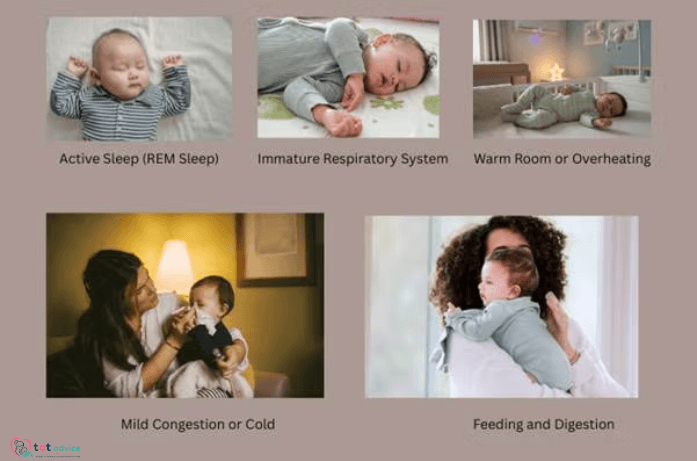
Why Is My Baby Breathing Fast While Sleeping?
It’s natural to wonder why your baby is breathing fast while sleeping. There can be several possible reasons, and many are connected with normal sleep, development, temperature, feeding, or mild congestion.
These newborn breathing patterns during sleep are usually part of normal development.
Let’s gently go through some of the most common causes:
1. Active Sleep (REM Sleep)
Babies spend a lot of time in what’s called active sleep. During this stage, their breathing can become a bit faster and uneven.
You might notice tiny movements, little twitches, or even soft sounds. It can look unusual at first, but it’s completely normal and nothing to worry about.
2. Immature Respiratory System
Newborns are still learning how to breathe in a steady rhythm. Their lungs and breathing patterns are developing day by day.
Because of this, baby breathing fast can simply be part of this natural learning phase. Over time, their breathing becomes more regular.
3. Warm Room or Overheating
Sometimes, babies breathe faster if they’re feeling too warm. Their bodies can’t adjust temperature as easily as ours.
If you notice a sweaty neck, a warm chest, or a bit of restlessness, it might be a sign they’re too warm. Keeping the room cool and comfortable can really help.
4. Mild Congestion or Cold
If your baby has even a slight cold, you may notice baby breathing quickly while sleeping with a cold symptoms.
Since babies mostly breathe through their noses, a blocked nose can make their breathing seem quicker or a bit noisy. Gentle care like clearing the nose can make them more comfortable.
5. Feeding and Digestion
After feeding, it’s quite normal for babies to breathe a little faster for a short time.
This can happen if they’ve fed quickly or swallowed some air. Usually, it settles on its own once they relax, and there’s no need to worry.
As a mom, it’s completely natural to notice these little changes and feel concerned. But most of the time, these are just small, normal parts of your baby growing and adjusting to the world.
Baby Breathing Fast While Sleeping With a Cold
When your little one has a cold, you may notice your baby breathing fast while sleeping, along with sniffling, noisy breathing, coughing, or a stuffy nose. Because babies have small nasal passages, even mild congestion can make their breathing sound louder or appear quicker.
Mild congestion does not always mean your baby is having difficulty breathing. Look at your baby’s overall condition. Check whether they appear comfortable, are feeding normally, have their usual skin color, and are not pulling in around the ribs or neck while breathing.
There are a few gentle ways you can help your baby feel more comfortable:
- Use saline drops to softly clear their nose
- Keep the room air slightly humid to ease breathing
- Always place your baby on their back on a firm, flat, and level sleep surface. For congestion, ask your pediatrician about safe options such as saline drops or nasal suction.
In most cases, mild colds get better within a few days, and your baby’s breathing returns to normal on its own. Still, if you ever feel unsure or something doesn’t seem right, it’s always okay to check with your doctor for peace of mind.
Sometimes, just a little reassurance can make all the difference, for both you and your baby
Baby Breathing Fast While Sleeping: When to Worry
Even though baby breathing fast while sleeping is often completely normal, there are moments when it’s important to pause and look a little closer. As parents, we often feel when something isn’t quite right, and that instinct is worth trusting.
The St. Louis Children’s Hospital guide to newborn breathing explains that while variations in breathing can be normal, signs such as persistent rapid breathing, chest retractions, or bluish skin should be evaluated by a healthcare professional.
If your baby’s breathing seems unusually fast all the time or looks like it’s taking extra effort, it’s okay to be concerned and seek help.
Warning Signs to Watch For
Keep an eye out if you notice:
- Breathing consistently faster than usual (over 60 breaths per minute)
- The chest pulling in deeply with each breath
- Nostrils flaring while breathing
- Soft grunting sounds
- Lips or skin looking slightly bluish
- Trouble feeding or seeming too tired to feed
These signs can mean your baby is working harder than normal to breathe and may need medical attention.
As a mom, I know how easy it is to second-guess yourself, wondering if you’re overthinking or worrying too much. But when it comes to your baby’s health, it’s always okay to be cautious. If something feels off, don’t wait it out for too long.
Reaching out to your pediatrician can bring clarity and peace of mind, and sometimes, that reassurance is exactly what you need
How to Count a Baby’s Breathing Rate While Sleeping
Sometimes, just knowing how to check your baby’s breathing can bring a lot of comfort. In those quiet moments, instead of worrying, you can gently observe and feel more in control.
Here’s a simple and calm way to do it:
- Watch your baby’s chest rise and fall slowly
- Count their breaths for a full 60 seconds (one rise and fall counts as one breath)
- Notice the pattern, does it feel steady, slightly uneven, or like they’re working hard to breathe?
You don’t need to rush this. Sit close, stay calm, and just observe.
It’s important to remember that occasional faster breathing is usually okay, especially in babies. What really matters is whether it stays consistent and whether your baby seems comfortable while breathing.
Sometimes, these small checks can give you the reassurance your heart needs
How to Help Your Baby Breathe Comfortably During Sleep
As a mom, I’ve truly felt that it’s often the smallest, gentle steps that make the biggest difference in our baby’s comfort. When it comes to breathing, a few simple habits can help your little one rest more peacefully, and help you feel more at ease too.
Create a Comfortable Sleep Environment
Try to keep your baby’s room cool, fresh, and well-ventilated. A space that feels light and airy can make breathing easier. Dressing your baby in soft, breathable clothing also helps them stay comfortable through the night.
Creating gentle and consistent sleep routines can also help babies feel more settled and comfortable during sleep.
Keep the Air Clean and Moist
Babies are sensitive to their surroundings, so it’s best to avoid smoke, dust, or strong smells around them. If the air feels dry, using a humidifier can gently add moisture and make breathing smoother, especially during colder days.
Keep Baby’s Nose Clear
A tiny blocked nose can make a big difference for a baby. If needed, you can use saline drops to help clear their nose. Gently wiping away any mucus can also help your baby breathe more comfortably.
Feed in a Calm Position
Feeding time can affect breathing too. Try to keep your baby relaxed while feeding and avoid rushing. Taking a moment to burp your baby afterward can also prevent discomfort and help their breathing settle naturally.
Stay Observant, Not Anxious
It’s completely natural to check on your baby again and again, I’ve done it so many times myself. But try to balance that with calmness. Most breathing changes are harmless and temporary, and your baby is simply adjusting and growing.
Understanding the Emotional Side of It
Let’s be real for a moment, seeing your baby breathe fast can feel a little scary. Even when everything is perfectly fine, your mind can quickly fill with questions and worries. That’s something almost every parent goes through.
It’s simply a part of loving your baby so deeply. You notice the tiny changes, the little movements, the things others might miss, and that attentiveness comes from a place of care.
At the same time, it helps to gently remind yourself:
- Not every small change means something is wrong
- Babies are still learning how their little bodies work
- By staying aware, you’re already doing exactly what your baby needs
And in those moments of worry, pause for a second. Take a slow breath. Sometimes, you need that calm just as much as your baby does
When to Call Your Doctor
It’s always okay to seek reassurance, you never have to wait for something serious to reach out. Sometimes, just talking to your doctor can ease your mind and help you feel more confident.
You can consider calling your doctor if:
- You’re unsure about your baby’s breathing pattern
- The symptoms last longer than you expected
- Your baby seems uncomfortable, unsettled, or distressed
No concern is ever too small when it comes to your baby. Trust yourself, you know your little one best, and asking for help is always a sign of care, not worry.
FAQs About Baby Breathing Fast While Sleeping
1. Is it normal for a baby to breathe fast while sleeping?
Yes, babies naturally breathe faster than adults, especially during active sleep.
2. How fast is too fast for a baby’s breathing?
Breathing over 60 breaths per minute consistently may need medical attention.
3. Can a cold cause fast breathing in babies?
Yes, congestion can make breathing appear faster or noisier.
4. When should I worry about my baby’s breathing?
If breathing looks strained, irregular, or comes with bluish skin, consult a doctor.
5. Should I wake my baby if they are breathing fast?
No, unless they show signs of distress or discomfort.
A Gentle Reminder for Every Parent
Parenting is full of moments like these, small things you notice that suddenly turn into big questions in your heart. One little change, like baby breathing fast while sleeping, can make you pause and wonder if everything is okay.
Most of the time, it truly is. Your baby’s body is still growing, adjusting, and learning how to do all these tiny but important things on its own. Each day, they’re becoming a little stronger, a little more settled.
But your feelings matter too. It’s okay to watch closely, to feel unsure, and to ask questions when something doesn’t feel right. That’s not worry, that’s love.
Just remember, you’re not alone in these moments. Every caring parent has been there, quietly watching their baby and hoping everything is just fine
Conclusion: Trust, Observe, and Breathe Easy
If you’ve been feeling worried about baby breathing fast while sleeping, take a soft breath, you’re not alone, and in most cases, it’s completely normal. From active sleep patterns to a little congestion, there are many gentle and harmless reasons behind it.
Try to be kind to yourself in these moments. Parenting comes with questions, and that doesn’t mean something is wrong, it simply means you care. Keep observing your baby with calm awareness rather than fear. Over time, you’ll start to recognize what’s normal for your little one, and that confidence will grow naturally.
And remember, you don’t have to figure everything out on your own. Every parent is learning step by step, just like their baby.
If this guide helped ease your mind, you can explore more simple, real, and comforting parenting tips at Totadvice because sometimes, a little guidance and reassurance can make this journey feel a lot lighter.