
Baby hiccups after feeding are usually harmless and often stop on their own. Gentle burping, holding your baby upright, slowing the feeding pace, and avoiding overfeeding may help. If hiccups regularly interfere with feeding or come with vomiting or poor weight gain, speak with your pediatrician.
There’s something both adorable and worrying about those tiny little hiccups babies get after feeding. One moment your little one is peacefully snuggled in your arms, and the next hic, hic, hic, their tiny body keeps jumping every few seconds. If you’ve ever searched for how to stop baby hiccups after feeding, you’re definitely not alone. Most parents experience this during the newborn stage, especially during late-night feeds when every tiny sound feels bigger than it is.
The good news is that baby hiccups are usually completely normal and harmless. In fact, many babies hiccup often during the first few months of life. Still, as moms, we naturally want to comfort our babies and help them feel calm and settled again. In this guide, I’m sharing gentle, mom-tested advice to help you understand why hiccups happen, how to soothe them, and simple ways to prevent them in the future.
Why Do Babies Hiccup After Feeding?
One of the biggest questions parents ask is: why do babies hiccup after feeding?
Baby hiccups happen when the diaphragm, the muscle under the lungs, gets irritated or suddenly contracts. When this muscle tightens quickly, the vocal cords close, creating that familiar “hic” sound.
For babies, this can happen very easily because their digestive systems are still developing. Feeding too quickly, swallowing air, overeating, or even excitement during feeding can trigger hiccups.
Newborns especially tend to hiccup often because everything in their tiny bodies is still learning how to work smoothly together. Sometimes it can feel like they hiccup after every feeding session.
The comforting part is this: most babies are not bothered by hiccups nearly as much as parents are.
Are Baby Hiccups Dangerous?
In most cases, no. Baby hiccups after feeding are usually harmless and temporary.
Many babies continue sleeping peacefully through hiccups. Others may briefly fuss but settle quickly once they relax. Hiccups are actually very common during infancy and can even happen while babies are still in the womb.
However, if hiccups seem excessive, cause vomiting, interfere with sleep constantly, or your baby seems very uncomfortable, it’s always okay to check with your pediatrician for reassurance.
Trust your instincts. Moms notice when something feels off.
How to Stop Baby Hiccups After Feeding
Baby hiccups after feeding are very common and usually harmless. They often happen when babies swallow air while feeding or when their developing diaphragm becomes irritated. In most cases, hiccups go away on their own, but gentle burping, holding your baby upright after feeds, and feeding at a calm pace can help reduce them and keep your little one comfortable.
Quick Ways to Help Baby Hiccups After Feeding
- Pause and burp your baby to help release swallowed air.
- Hold your baby upright after feeding for a little while.
- Slow down feeding sessions and give your baby short breaks.
- Avoid feeding too quickly, especially during bottle feeds.
- Watch your baby’s fullness cues to help prevent overfeeding.
- Offer a pacifier if your baby already uses one, as gentle sucking may help them relax.
- Give the hiccups a little time to settle, since most episodes stop naturally.
Pause and Burp Your Baby
One of the easiest ways to help hiccups is simply burping your baby.
During feeds, babies often swallow air along with milk. That trapped air can irritate the diaphragm and trigger hiccups.
Try pausing halfway through feeding to burp your baby gently before continuing. After the feed, spend a few extra minutes holding them upright while softly patting or rubbing their back.
This small habit can make a huge difference with baby burping and hiccups.
Gentle Burping Positions to Try
- Over your shoulder
- Sitting upright on your lap
- Face-down across your forearm
- Sitting slightly leaned forward while you support their chin
Every baby responds differently, so don’t worry if one position works better than another.
Keep Baby Upright After Feeding
One simple trick many experienced moms swear by is holding baby upright for 15–20 minutes after feeding.
This helps milk settle properly in the stomach and reduces pressure on the diaphragm. It can also help reduce spit-up and gas.
If your baby frequently spits up after feeds, learning more about when babies stop spitting up can help reassure you about what’s normal during infancy.
Rocking gently in a dim room while holding your baby against your chest often works beautifully. It’s calming for both baby and mom.
For many families, this becomes part of their comforting bedtime routine.
Offer a Pacifier
Sometimes sucking helps relax the diaphragm and stop hiccups naturally.
Offering a pacifier for a few minutes may help calm those tiny spasms. The gentle sucking motion can soothe the diaphragm and comfort your baby emotionally at the same time.
Not every baby likes pacifiers, and that’s perfectly okay too.
Feed More Slowly
Feeding too quickly is one of the most common reasons newborns get hiccups after feeding. When babies gulp milk fast, they often swallow extra air along with it, which can trigger those little hiccups. Slowing things down during feeds can make a noticeable difference and help your baby feel more comfortable.
Gentle Ways to Slow Feeding
- Use a slow-flow bottle nipple to help milk come at a steadier pace
- Pause for short breaks during feeding so your baby can breathe and settle
- Try feeding before your baby becomes extremely hungry and starts gulping
- Keep feeding time calm, quiet, and relaxed
- Limit distractions or overstimulation during feeds
Sometimes, even small adjustments to your feeding routine can make a noticeable difference in reducing hiccups and helping your baby feel more comfortable.
Avoid Overfeeding
A very full tummy can sometimes put pressure on a baby’s diaphragm, which may lead to hiccups after feeding. This doesn’t mean you should stop feeding a hungry baby, it’s simply about paying attention to your baby’s natural hunger and fullness cues.
As babies begin to feel satisfied, they often give small signs that they’ve had enough. You may notice:
- Turning away from the breast or bottle
- Relaxed hands and body
- Slower, gentler sucking
- Naturally drifting off to sleep during feeding
In the beginning, these signals can be easy to miss, but with time you’ll start recognizing your baby’s patterns more confidently. Little by little, feeding becomes easier as you learn what your baby needs.Top of Form
Safe Baby Hiccup Remedies After Feeding
Parents often hear all kinds of strange advice online about baby hiccups remedies. Some suggestions can actually be unsafe for infants.
Avoid startling your baby, pulling their tongue, giving water to newborns, or trying adult hiccup tricks.
Instead, focus on soothing, natural approaches.
Safe Remedies Moms Often Find Helpful
- Skin-to-skin cuddles
- Gentle rocking
- Calm feeding environment
- Frequent burping
- Upright holding
- Slower feeding pace
Sometimes the best remedy is simply time and comfort.
Infant Hiccups After Bottle Feeding
Many parents notice that hiccups happen more often after bottle feeding than breastfeeding. One common reason is that babies can swallow extra air while drinking from a bottle, especially if the milk flows too quickly.
The good news is that a few simple feeding adjustments can often help reduce hiccups and make feeding more comfortable for your baby.
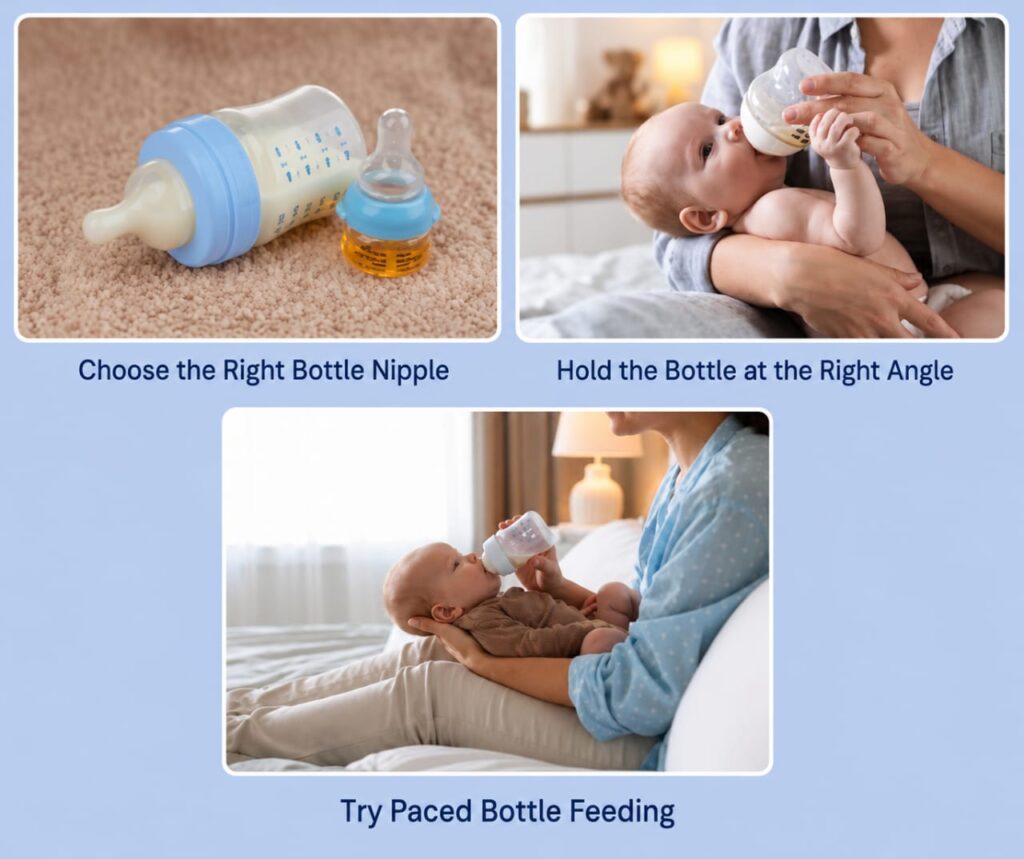
Choose the Right Bottle Nipple
If the nipple flow is too fast, babies may gulp milk quickly and take in more air at the same time. Using a slow-flow nipple allows milk to come more gently and at a pace that feels more natural for newborns.
Hold the Bottle at the Right Angle
Try keeping the bottle tilted so the nipple stays full of milk during feeding. This helps reduce air bubbles and limits the amount of air your baby swallows.
Try Paced Bottle Feeding
Paced feeding gives your baby natural pauses during feeds, similar to breastfeeding. These short breaks allow babies to slow down, breathe comfortably, and recognize when they’re full. It can also help prevent overeating and reduce swallowed air.
Small changes like these may seem simple, but over time they can make a big difference in reducing infant hiccups after bottle feeding.
Preventing Hiccups in Babies Before They Start
If you’re wondering how to stop baby hiccups after feeding, prevention is often the easiest approach.
Sometimes the easiest way to deal with baby hiccups is to prevent them before they begin. A few small, consistent feeding habits can go a long way in helping your baby feed more comfortably and swallow less air.
Watch for Early Hunger Cues
When babies become very hungry, they tend to feed quickly and eagerly, which can lead to gulping and extra air intake. Feeding a little earlier, before your baby becomes upset or crying, often helps feeds feel calmer and smoother.
Some early hunger signs to look for include:
- Rooting or turning toward the breast or bottle
- Lip smacking
- Sucking on hands or fingers
- Mild restlessness or stirring
A calm baby usually feeds at a gentler pace, which may help reduce hiccups before they even start.
Create a Calm Feeding Environment
Babies can become overstimulated very easily.
Bright lights, loud sounds, or too much movement during feeding may lead to rushed eating and swallowed air.
A peaceful feeding space can help baby relax and feed slowly.
Many moms notice nighttime feeds naturally go smoother because the environment is quieter and calmer.
Keep Feeding Positions Comfortable
No matter how you feed your baby, breastfeeding or bottle feeding, a comfortable feeding position can make a big difference. Good positioning helps your baby feed more smoothly and may reduce the amount of air swallowed during feeds.
Try to keep your baby’s head slightly elevated rather than completely flat while feeding. This gentle angle can help milk flow more comfortably and support easier swallowing.
A relaxed, well-supported feeding position is often more comfortable for both baby and parent, and it can also help lower the chances of hiccups after feeding.
How Long Do Baby Hiccups Usually Last?
Most hiccup episodes last only a few minutes.
Sometimes they continue for 10–15 minutes before disappearing on their own. Some babies hiccup several times a day, especially during the newborn stage.
As your baby’s digestive system matures, hiccups usually become less frequent.
Many parents suddenly realize one day, “Wow, I haven’t heard hiccups in weeks.”
Like so many baby phases, this one eventually passes too.
Understanding how to stop baby hiccups after feeding becomes easier as you learn your baby’s feeding patterns.
When Should Parents Worry About Hiccups?
WhBaby hiccups are usually harmless, but it’s a good idea to speak with your pediatrician if they seem to be affecting your baby’s comfort, feeding, or growth.
Contact your baby’s healthcare provider if:
- Hiccups regularly interfere with feeding
- Your baby has frequent or forceful vomiting
- Your baby seems unusually distressed or uncomfortable
- Hiccups happen along with trouble breathing
- Your baby is not gaining weight as expected
- Hiccup episodes are unusually frequent or last for long periods
Most hiccups will pass on their own, but if something about your baby’s symptoms worries you, checking with your pediatrician can help you understand what may be causing them.
A Gentle Reminder for New Parents
One of the hardest parts of early motherhood is learning which baby behaviors are normal and which deserve concern.
Tiny noises, funny movements, hiccups, sneezes, grunts, everything can feel alarming at first.
In this guide, you’ll find gentle, practical ways to manage hiccups after feeding and signs that may be worth discussing with your pediatrician.
Most of the time, hiccups are simply part of your baby adjusting to life outside the womb.
Your calm presence comforts your baby more than you realize.
What to Do If Baby Hiccups Won’t Stop After Feeding
Sometimes parents become more anxious about hiccups than the baby actually is.
If your little one seems happy, comfortable, and continues feeding normally, you usually don’t need to rush to stop the hiccups immediately.
Instead:
- Hold your baby close
- Burp gently
- Stay calm
- Offer comfort
- Give it a little time
Often, hiccups disappear naturally when babies relax.
Learning how to get rid of baby hiccups is really about gentle soothing rather than “fixing” something dangerous.
FAQs
1. Why does my baby get hiccups after feeding?
Babies often swallow small amounts of air while feeding, which can contribute to hiccups. According to Cleveland Clinic’s guide on why babies get hiccups, hiccups are usually harmless and commonly occur after feeding sessions.
2. Are baby hiccups dangerous?
In most cases, baby hiccups are completely normal and harmless during infancy.
3. How can I stop baby hiccups naturally?
Burping your baby, holding them upright after feeds, slowing feeding pace, and offering a pacifier may help reduce hiccups naturally.
4. How long do baby hiccups usually last?
Most baby hiccups last only a few minutes, though some episodes may continue for around 10–15 minutes before stopping naturally.
5. When should I worry about baby hiccups?
You should contact your pediatrician if hiccups seem painful, interfere with feeding regularly, or happen alongside vomiting or poor weight gain.
Conclusion
These simple tips on how to stop baby hiccups after feeding can make feeding time more comfortable for both you and your baby.
In most cases, hiccups are simply a normal part of babyhood and nothing to fear.
Simple habits like burping during feeds, holding your baby upright afterward, slowing feedings, and creating calm feeding routines can help reduce hiccups naturally.
Your cuddles, patience, and gentle care already provide enormous comfort.
These early months can feel overwhelming sometimes, but you’re doing better than you think.
Take a deep breath, snuggle your little one close, and trust yourself a little more each day.
Baby hiccups after feeding can look uncomfortable, but in most cases they are a normal part of infancy. Gentle burping, slower feeds, upright holding, and paying attention to your baby’s fullness cues may help. If hiccups regularly interfere with feeding or your baby seems uncomfortable, your pediatrician can help rule out problems such as reflux.
If this guide helped ease your worries as a parent, explore more gentle baby care tips, newborn guidance, and parenting support at TotAdvice, created to support families through every stage of early childhood.
Resources
NHS: Reflux in Babies, Practical guidance about reflux symptoms in babies, feeding tips, and signs that may require advice from a healthcare professional.
American Academy of Pediatrics (HealthyChildren.org): Baby Burping, Hiccups, and Spit-Up, Helpful guidance for parents about common baby hiccups, burping during feeds, and normal spit-up.
National Institute of Diabetes and Digestive and Kidney Diseases (NIDDK): Acid Reflux (GER & GERD) in Infants, Information about infant reflux, common symptoms, possible causes, and when medical care may be needed.